Plastic welding rods and hot-air guns
Plastic parts fail at seams, corners and mounting points long before the whole item is finished. We stock the rods, hot-air tools and workshop extras needed to repair or build in PP, PE, HDPE, ABS, PVC and bumper plastics with the right match for the job.
Rods and tools that match the job on the bench
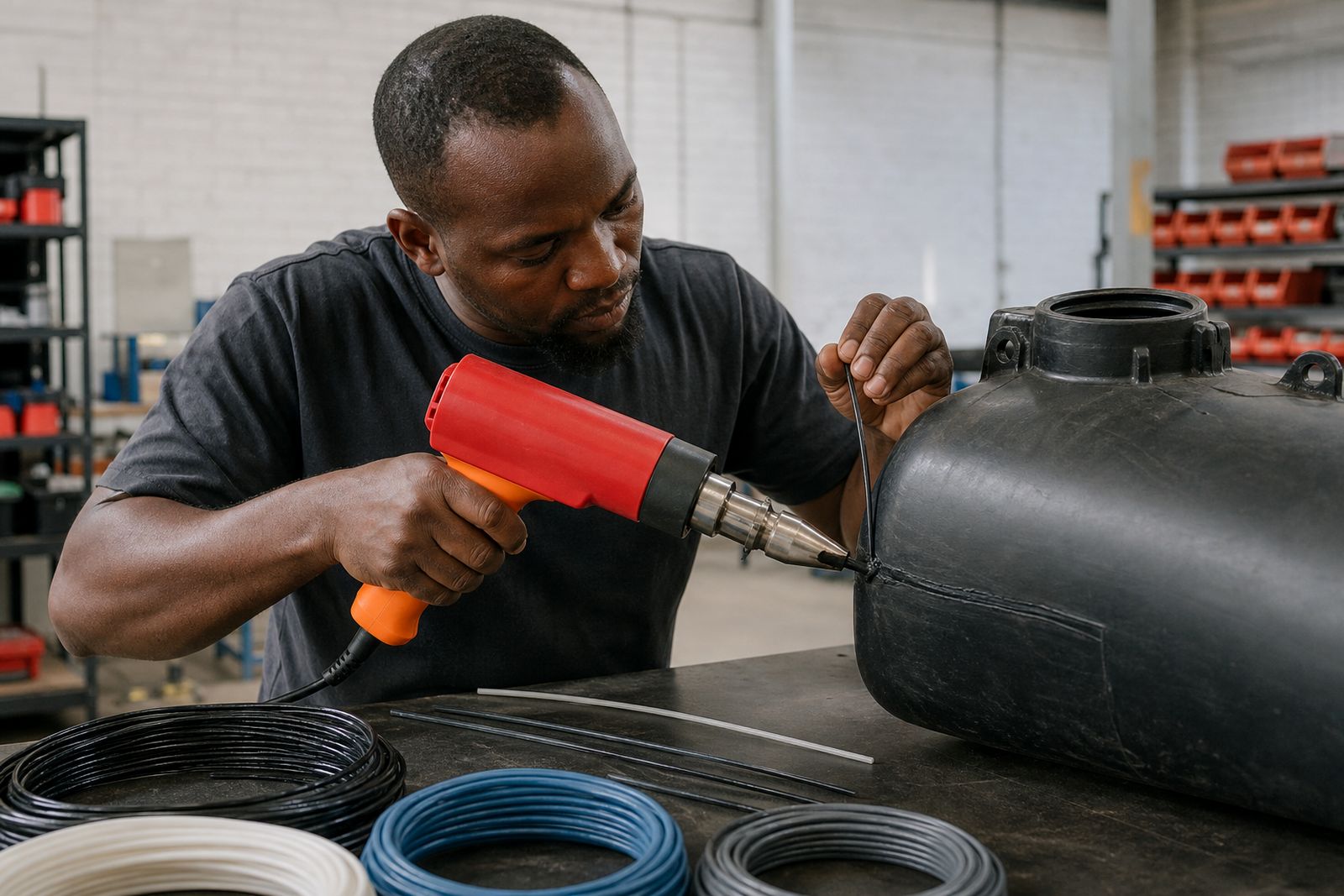
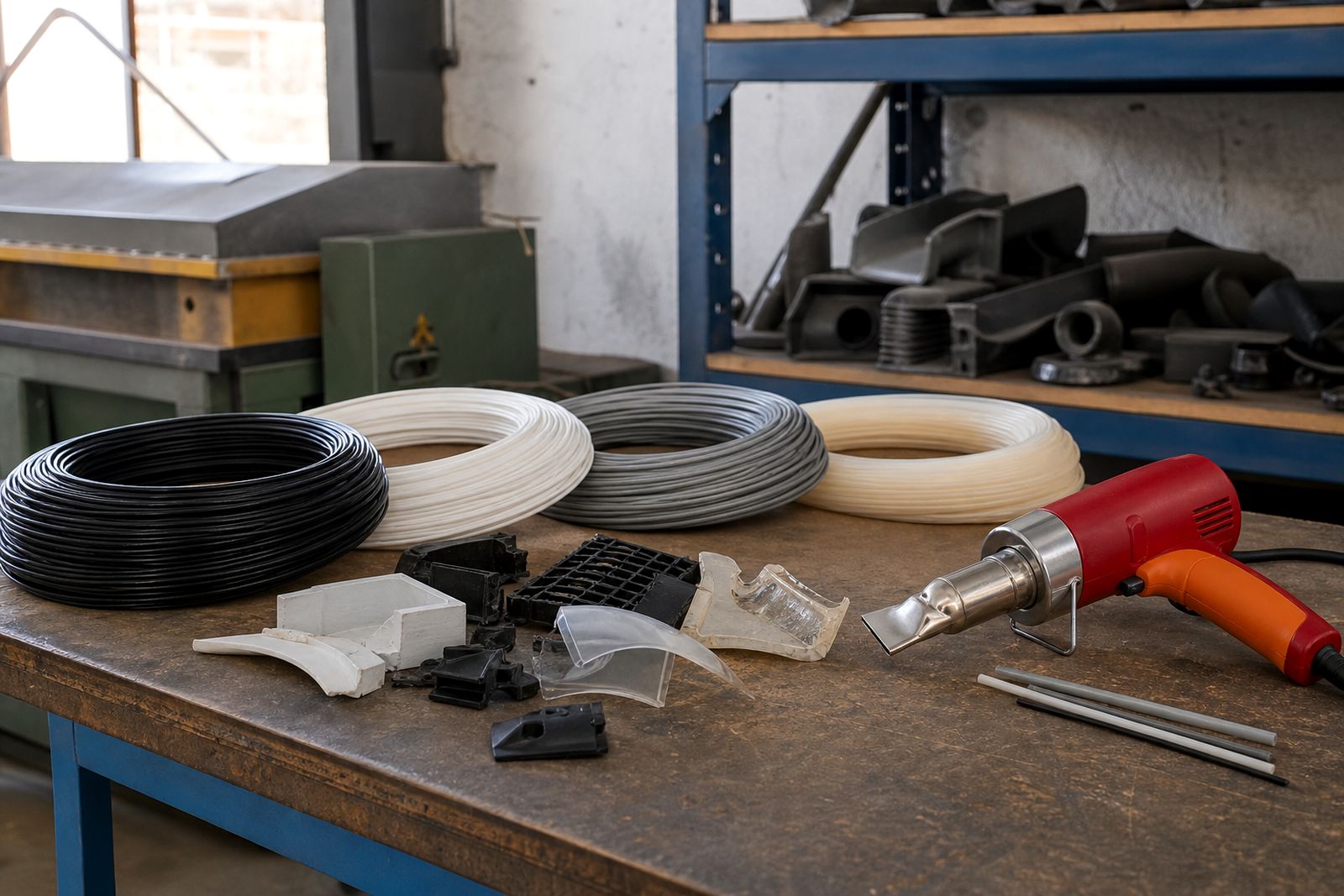
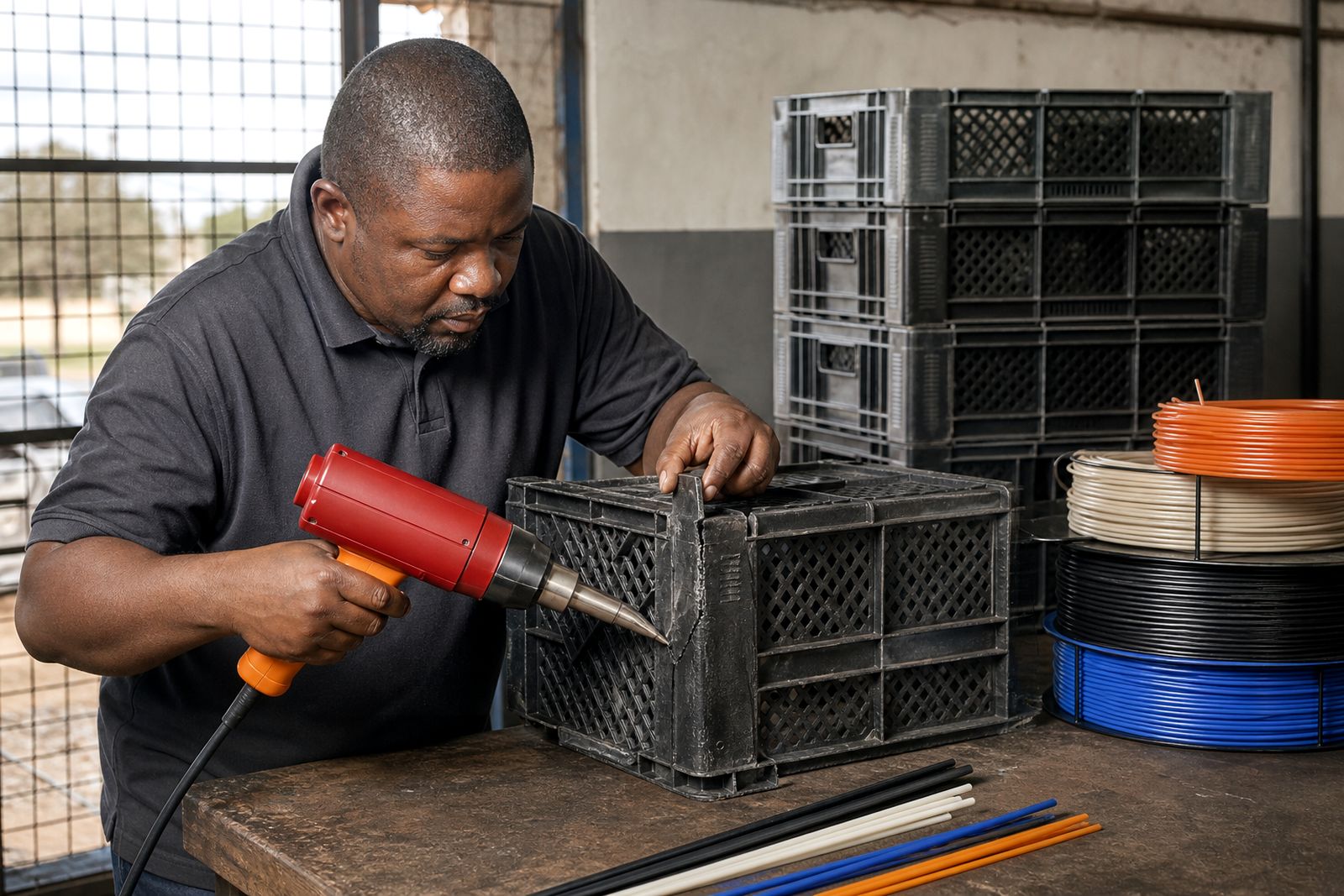
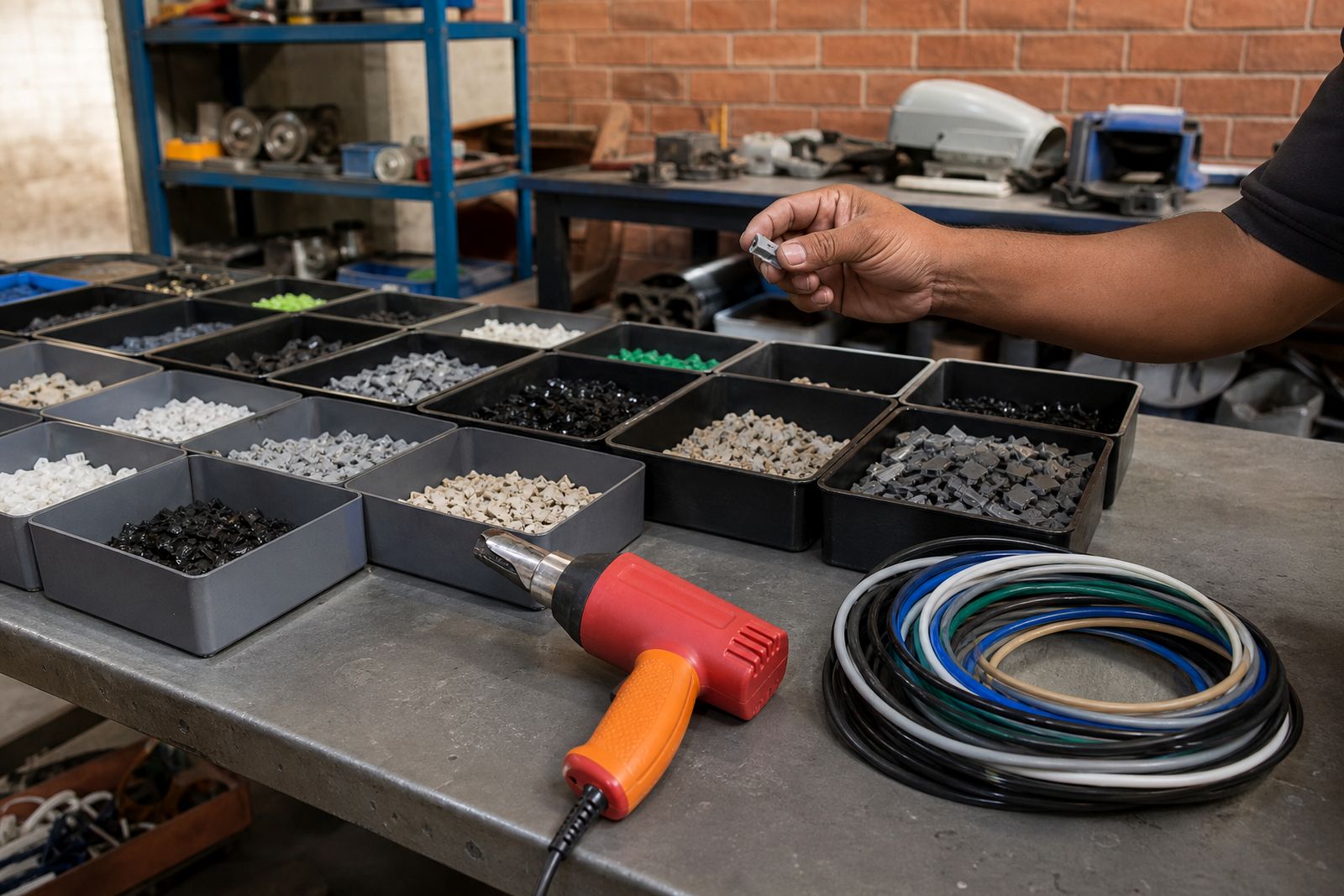
Our range is built around the parts most workshops reach for every week: plastic welding rods, hot-air welding guns, speed nozzles, tacking nozzles, scrapers, stainless reinforcing mesh and starter kits. The aim is practical workshop use, whether you are repairing a cracked tank, rebuilding a bin edge, plastic-welding a bumper tab or joining fabricated sheet for a small production run.
Rod choice matters more than many first-time users expect. A neat bead with the wrong rod can still fail once the part flexes, carries weight or sees heat in service. We help customers identify the base plastic and pair it with a rod profile that suits the joint, whether that calls for round rod, triangular rod or a bumper repair option for mixed automotive plastics.
- PP, PE and HDPE rods for tanks, crates, bins and fabricated parts
- ABS and bumper repair rods including PP/EPDM options for vehicle plastics
- PVC rods for compatible pipe and fabricated PVC work
- Hot-air guns with nozzle options for speed welding and controlled tacking
- Starter kits for workshops and DIY users setting up a first plastic welding station
Where to start
Plastic welding rods
Plastic rod grades, shapes and matching advice for workshop repairs, fabrication jobs and home projects.
Read more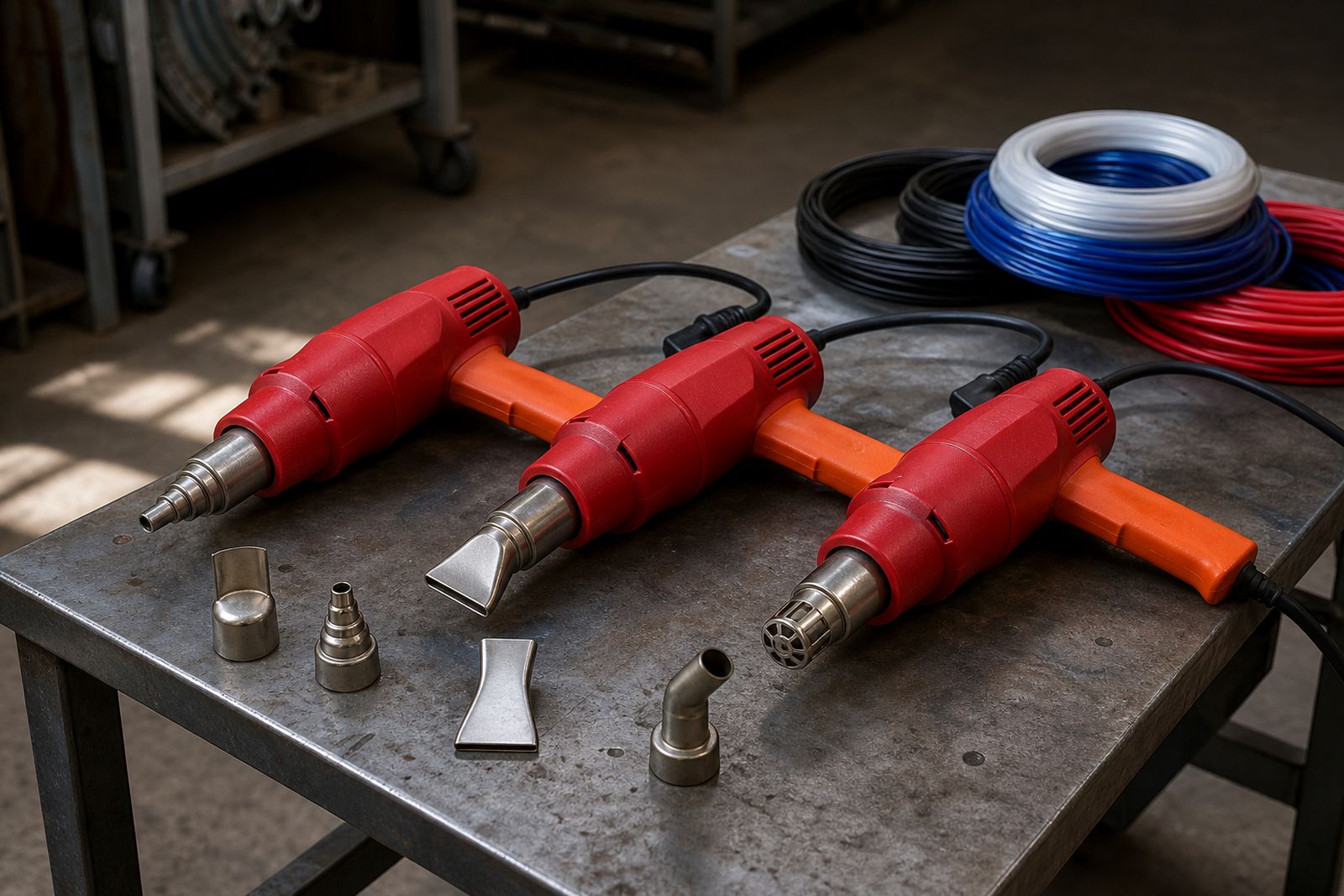
Hot-air welding guns
Compare hot-air guns by power, airflow, handling and the kind of plastic repair work you do most often.
Read more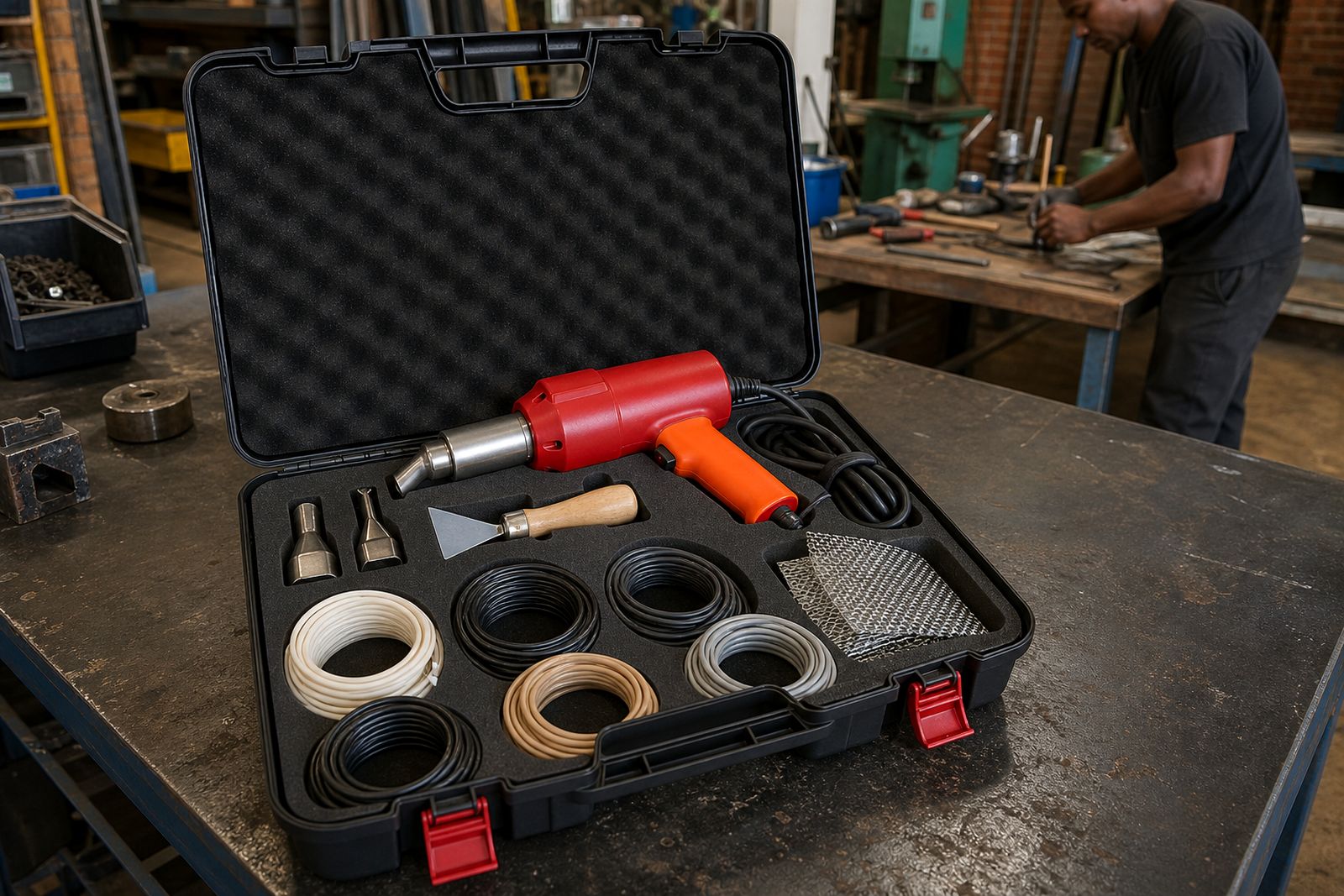
Plastic welding starter kits
Starter kits combine rods, a hot-air gun and key accessories for practical plastic repair work.
Read more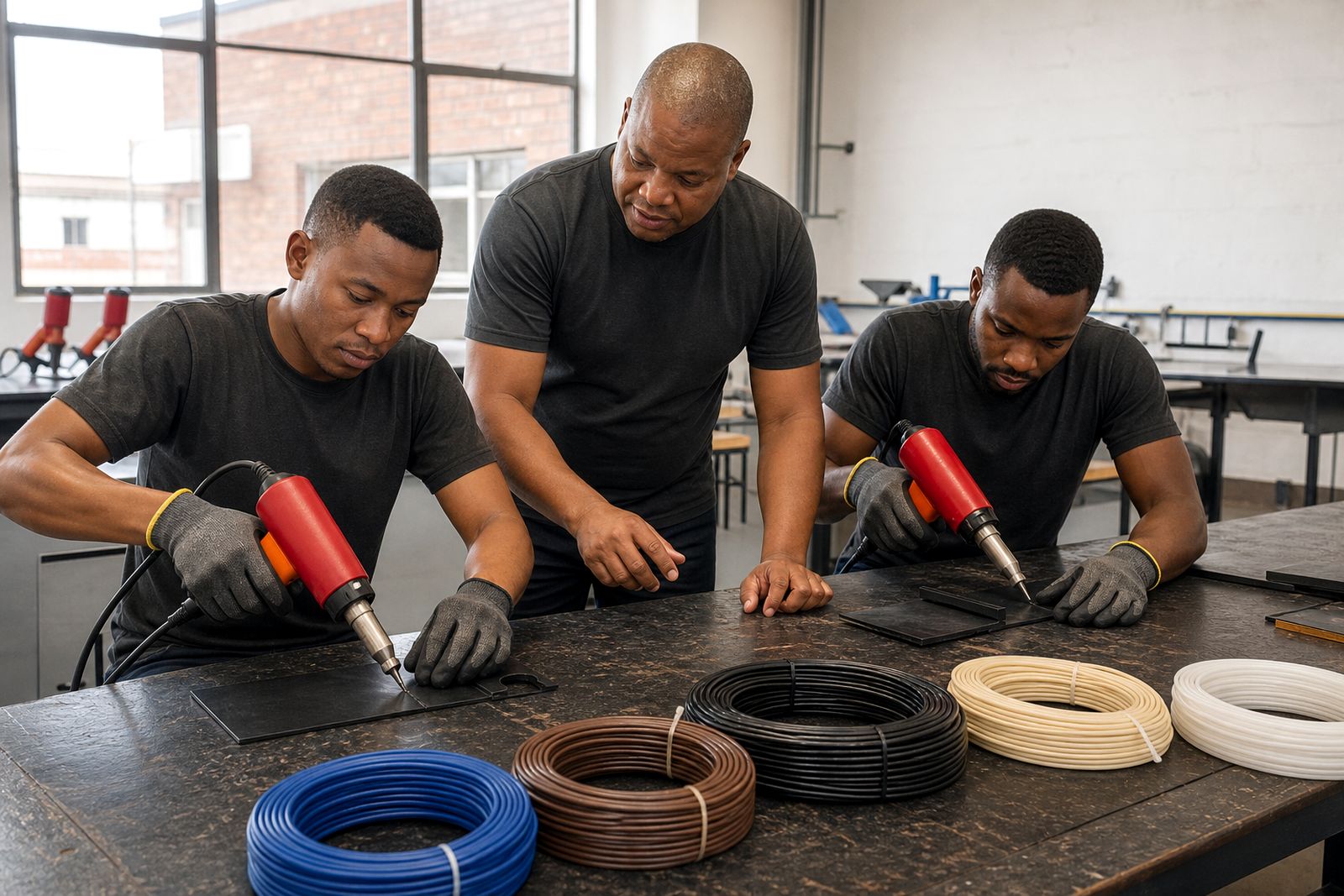
Plastic welding training
Practical training for plastic repairs and fabrication using the right rod, nozzle and welding method.
Read more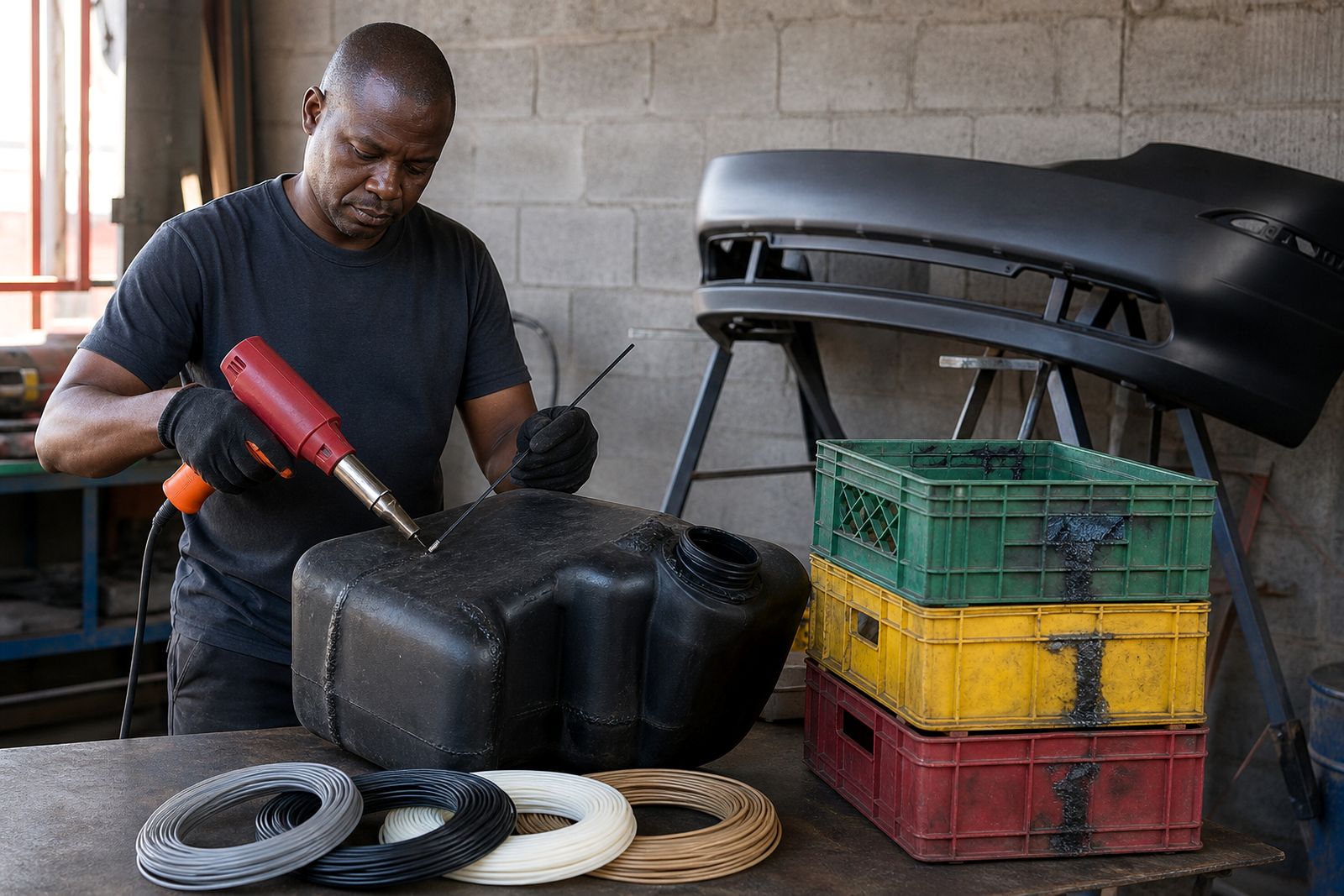
What you can weld
A practical guide to the kinds of plastic parts that suit hot-air welding and the rods that match them.
Read more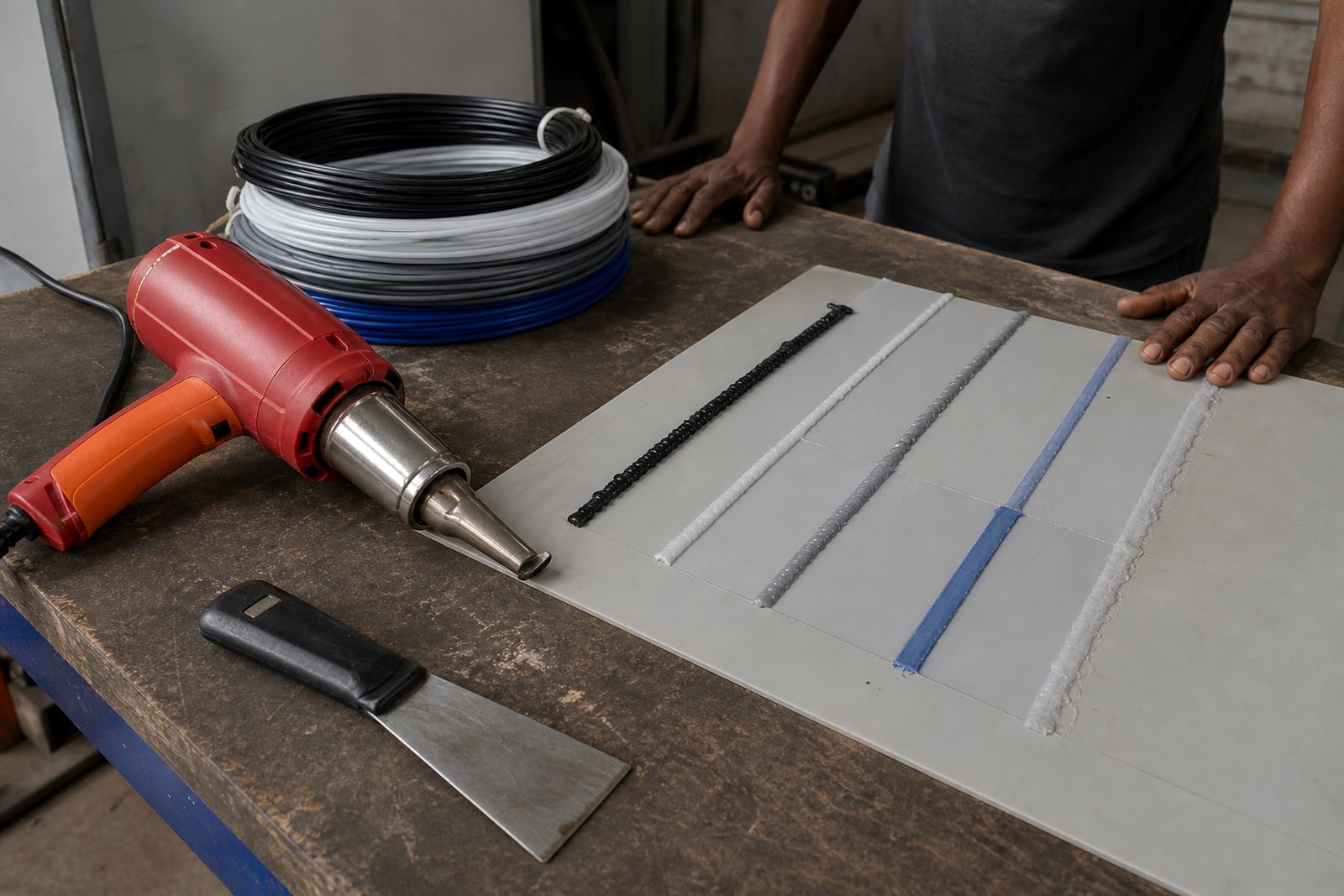
Plastic welding guides
Plain-language guides that help you identify plastics, choose rods and improve day-to-day welding results.
Read more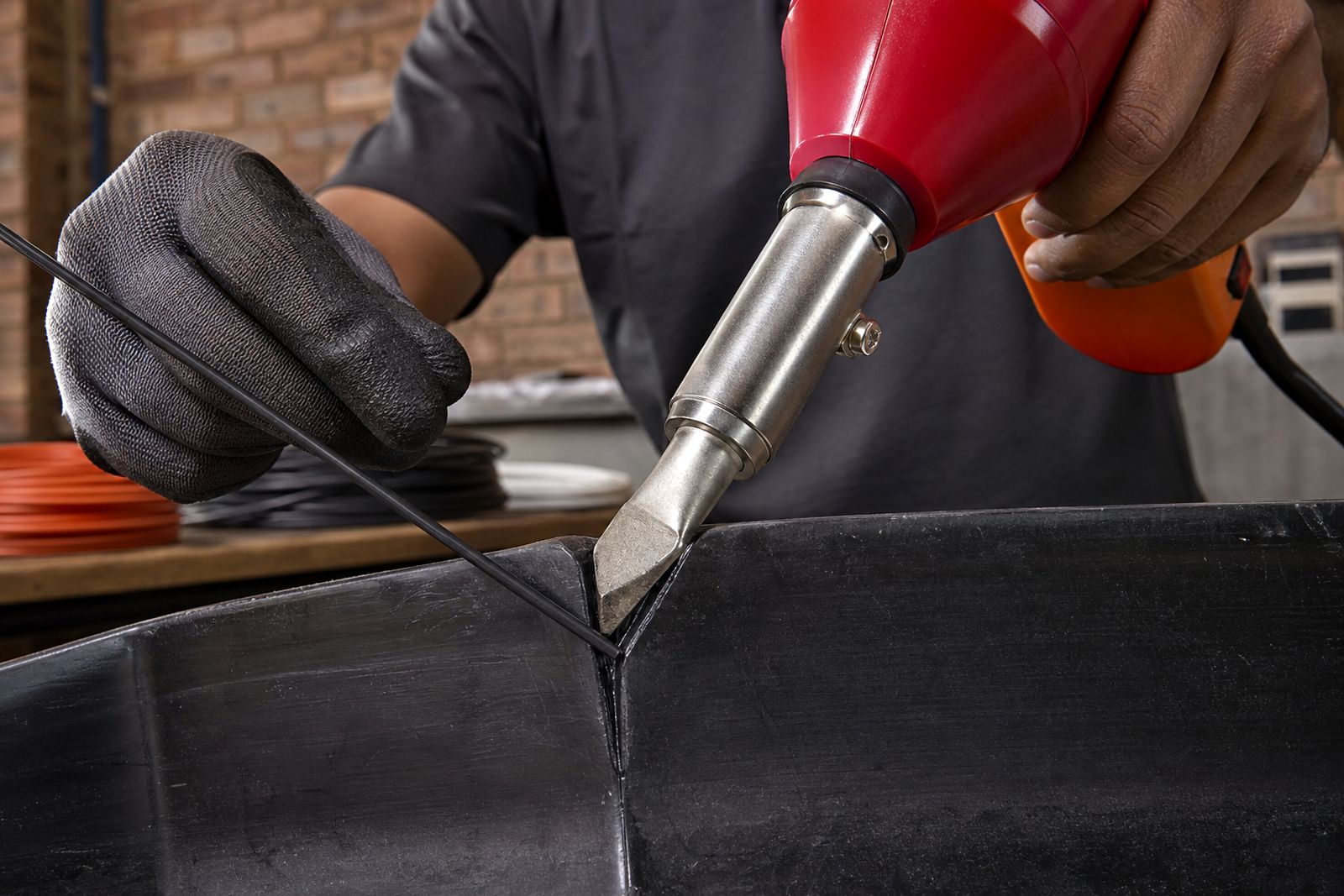
Built for panel shops, fabricators and hands-on repair work
This range suits people who need plastic repairs to hold up in service, not just look tidy on the day they leave the shop. Panel shops use it for bumper corners, tabs, clips and trims. Fabricators use it for joining plastic sheet and making up utility items. Maintenance teams use it on cracked containers, guards, covers and bins. DIY users often start with a kit when they want to repair household, farm or hobby items without guessing their way through the process.
We do not take in public repair jobs, and we do not sell extrusion welders or large fabrication machines. The focus here is the practical end of hot-air plastic welding with consumables and accessories that fit ordinary workshop work in South African conditions, from inland heat to coastal humidity where stored rods and clean prep make a visible difference.
- Panel shops handling bumper and trim repairs
- Workshops fixing tanks, crates, bins and covers
- Fabricators making small plastic assemblies
- Maintenance teams needing repeatable repairs on site equipment
- DIY users who want the right starter kit and guidance
How a normal order usually takes shape
Most enquiries start with the plastic type, the kind of crack or joint, and a clear photo of the part. If the plastic is unknown, we help narrow it down by looking at the application, the moulded marking if it has one, the feel of the material and how the part is expected to flex. That step saves wasted rod and frustration later.
Once the material is identified, we suggest rod type, profile and the basic tool setup needed for the weld. A tank seam may call for a different rod shape and prep method from a bumper tear. A fabricator joining sheet may need speed-welding gear, while a repair workshop may want tacking nozzles, mesh and scrapers in the same order. It is fairly common for one photo to tell us that a crack needs proper vee-grooving first, not just heat and filler pushed into the top.
Orders can include single rod types or a broader workshop mix, and we courier to every province from our Germiston base. If you are not sure where to start, our contact form is the place to send photos and a short note about the job.
From Germiston to every province
Our base is in Germiston on the East Rand, close to the industrial areas where many repair shops, maintenance teams and fabricators need stock without fuss. We work with customers in Gauteng every week, and we also courier to workshops and private users across the country.
Plastic welding needs differ by region. Inland workshops often deal with sun-hardened tanks, brittle bins and dust-contaminated cracks that need thorough prep. Coastal users see more moisture, salt exposure and stored parts that need careful cleaning before welding. The products are the same, but the way a repair behaves in service can shift if the base material is dirty, wet or wrongly identified.
- Germiston and the East Rand
- Johannesburg, Pretoria and wider Gauteng
- Industrial towns with maintenance and fabrication workshops
- Coastal metros where humidity affects prep and storage
- All provinces by courier
The trade detail that changes the result: matching the plastic
Plastic welding is not one generic process for every part. PP does not behave like ABS, and PVC should not be treated like PE. The most common cause of a weak repair is not the gun itself but a mismatch between the rod and the parent material. When that happens the bead may sit on top, peel away under stress or crack beside the weld after a short period in use.
Good identification starts before the tool is switched on. Look for moulded markings, think about where the part came from, and note whether it is stiff, waxy, flexible or easy to scrape. A crate, tank, bumper cover and rigid pipe each point you in different directions. Clean prep also matters more than many expect. Oils, road film, detergent residue and oxidised plastic can all spoil fusion, even when the weld looks acceptable at first glance. That small step is where many repairs go skew, not at the welding pass itself.
For customers new to the process, our training covers these basics in a hands-on way so that rod choice, prep and nozzle use make sense together rather than as separate tips.
Starter kits and training for a workable setup
A starter kit is often the neatest way to get a small workshop going without piecing together rod, gun and accessories one line at a time. Kits are useful for panel shops adding plastic repair to existing work, maintenance teams bringing common repairs in-house, and DIY users who want a proper starting point rather than improvised tools.
Training is practical and centred on the jobs people actually face: identifying the plastic, preparing the joint, choosing the correct rod, using tacking and speed nozzles properly, and understanding when reinforcing mesh helps. The point is not to make the weld look busy. The point is to make a repair that suits the part and the load it will carry in service.
If you need rods only, a gun only, or a full workshop starter setup, send the job details through our contact form and we will guide the selection from there.
From our notes
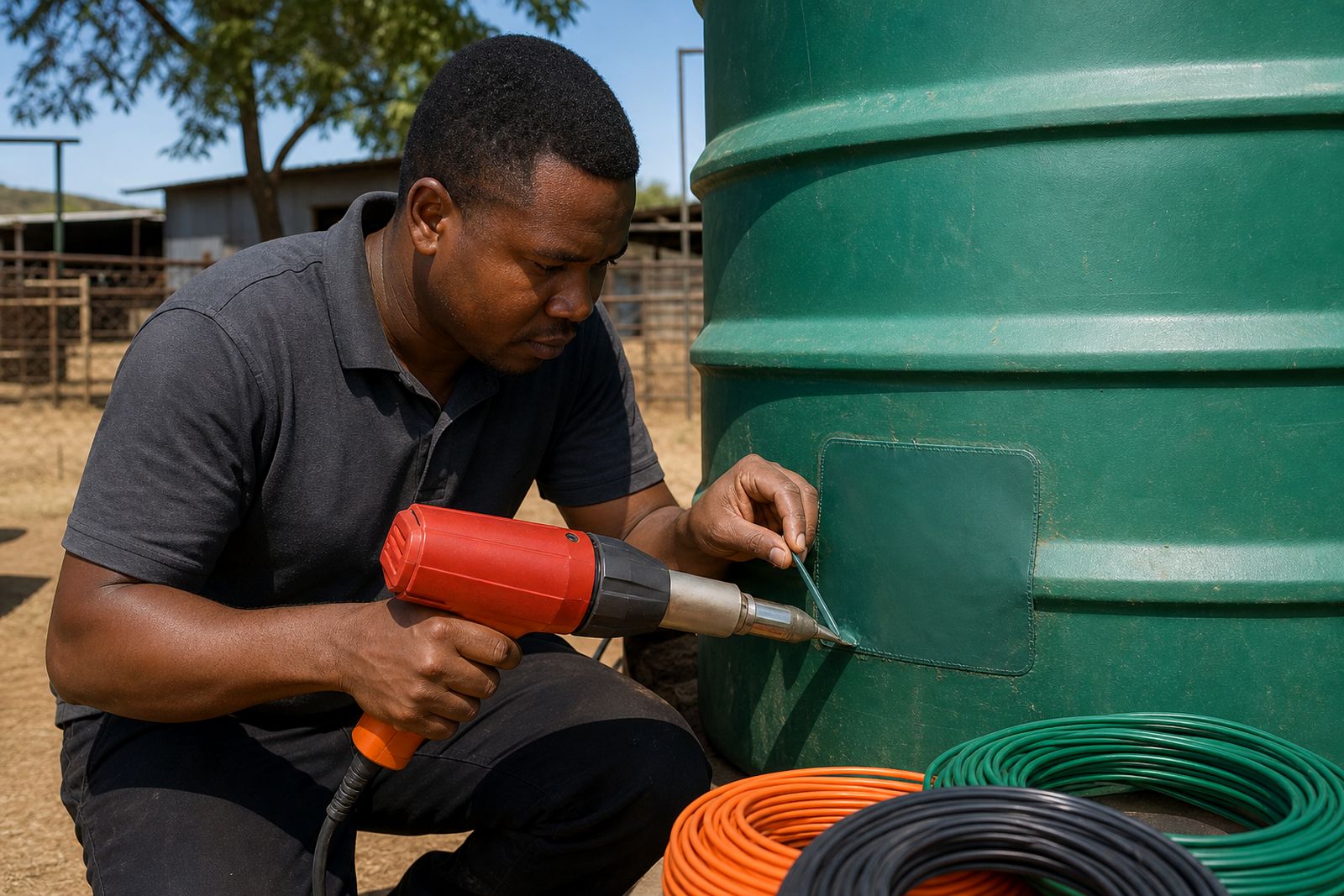
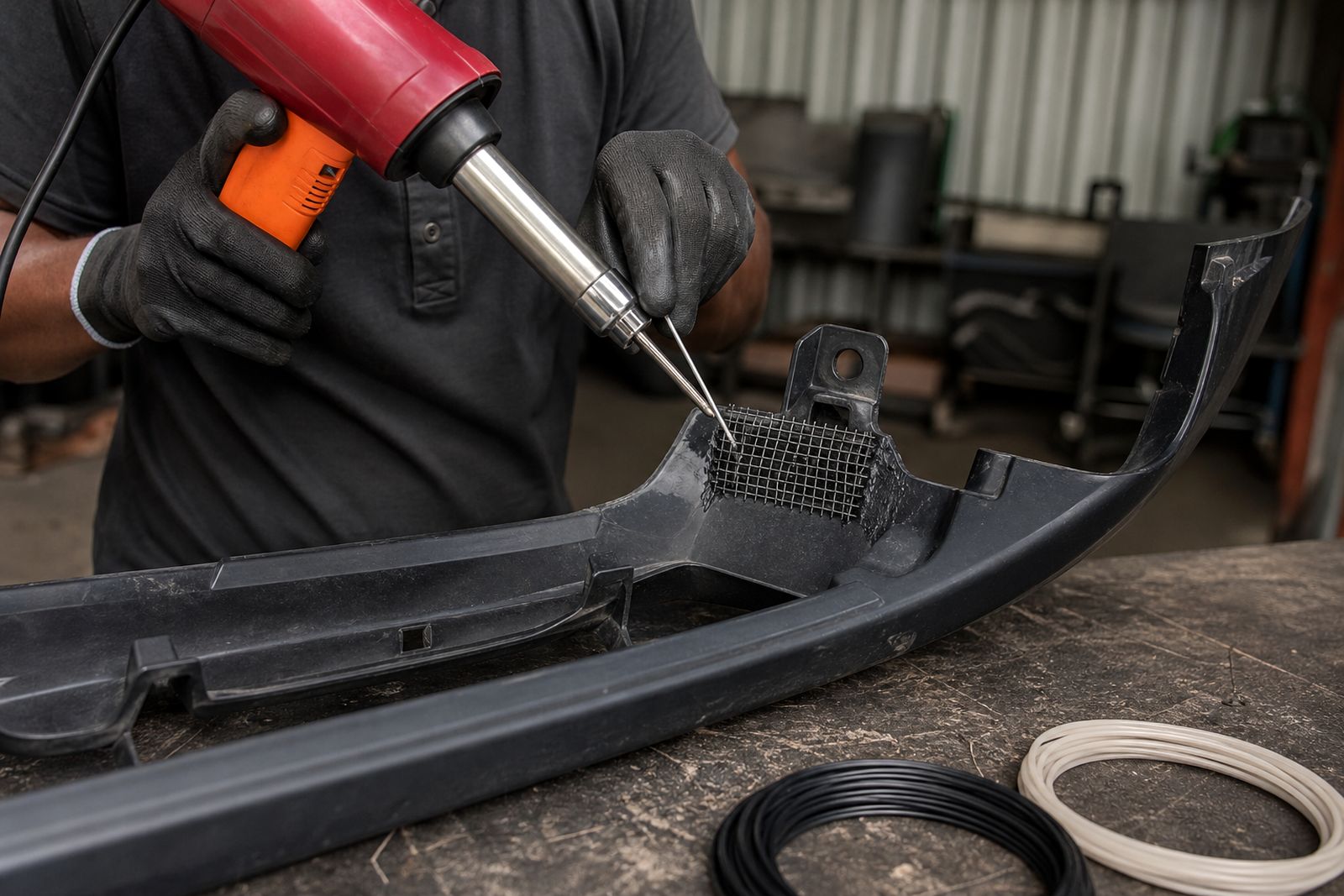
Questions we get asked
Can you help if I do not know what plastic the part is made from?
Yes. Send a photo and any moulded material marking you can find on the part. We help narrow down the plastic type and match the rod to it.
Do you repair bumpers, tanks or bins for the public?
No. We supply rods, hot-air guns, nozzles, accessories, starter kits and training, but we do not carry out repair work for the public.
Do you sell large plastic fabrication machines or extrusion welders?
No. The range is focused on hot-air plastic welding tools, rods and workshop accessories for repair and smaller fabrication work.
Tell us about the job
Send sizes, materials and where you are through our contact form, and we will come back with the practical options.
Open the contact form