Hot-air welding guns
A hot-air welding gun is the part of the kit that makes plastic rod welding controlled and repeatable. This page sets out the main gun options, where each one fits, and how to match the tool to the work on your bench.
What this section covers
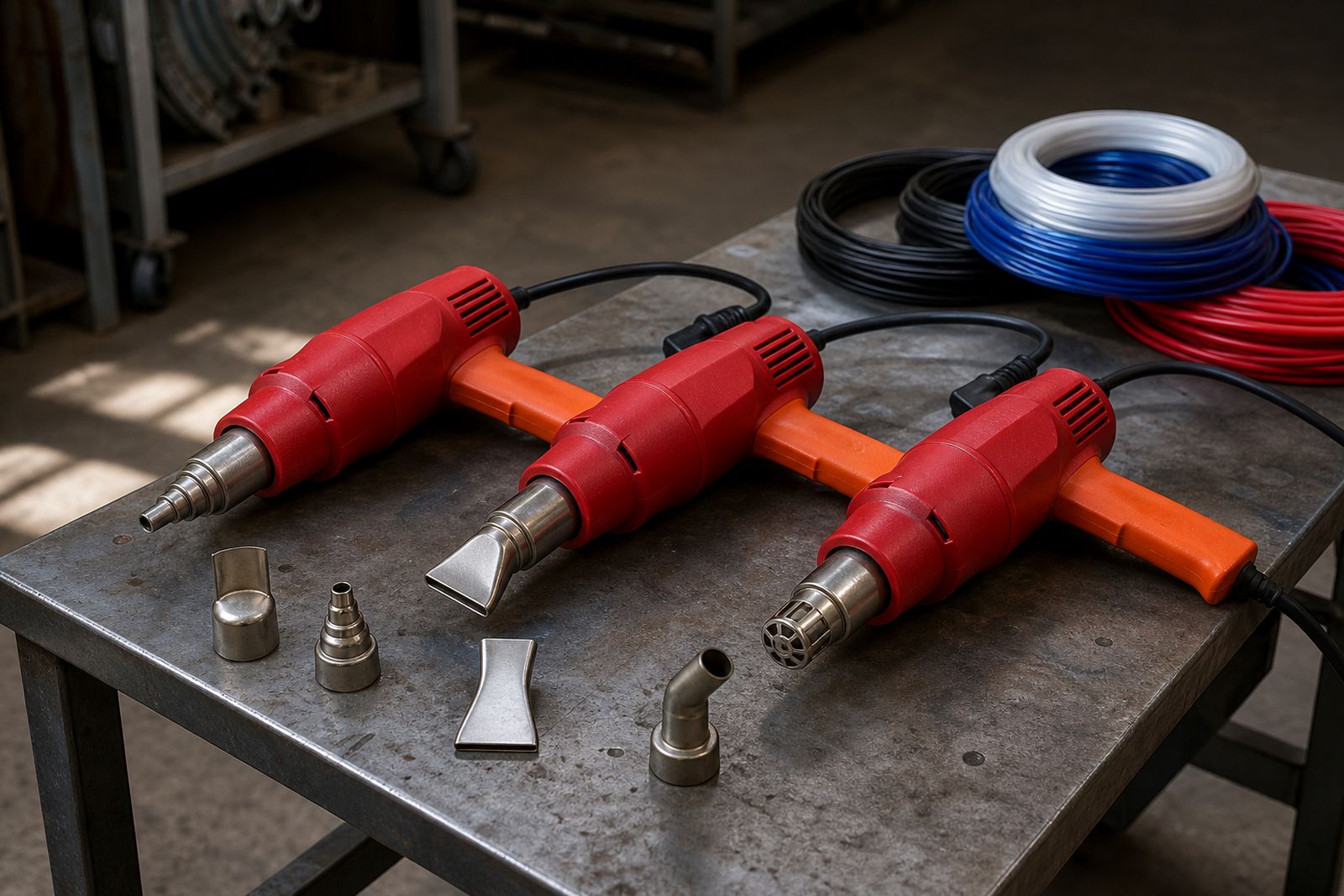
Our hot-air gun range is aimed at workshop plastic welding, from occasional repair work to regular production of small fabricated parts. We supply hand-held hot-air guns for use with the common rods on this site, including PP, PE, HDPE, ABS, PVC and bumper repair grades, along with the nozzles and accessories that make those guns useful in day to day work.
This section is here to help you choose the right gun before you move on to the individual product cards. If you already know the plastic type and joint style, the choice is usually between output, control and how long the operator needs to hold the tool in one session.
Power and airflow matter more than headline size
Two guns can look similar in the hand but behave very differently once you start welding a seam. Power affects how quickly the gun recovers heat as you move along the joint. Airflow affects how evenly that heat is carried into the base plastic and the rod. A gun that is too light for the job can leave you chasing the heat, while a gun that is too aggressive can gloss, scorch or distort thinner workpieces.
- Lower output guns suit lighter repair work, short seams and users learning rod control.
- Mid-range guns suit most panel shop, tank repair and general fabrication tasks.
- Higher output guns suit thicker material, longer runs and larger nozzles where more heat volume is needed.
- Variable heat and airflow control give better adjustment when changing between PP, PE, ABS and PVC.
On a bench in Germiston or in a mobile repair setup the difference shows quickly. A steady gun with predictable airflow makes cleaner starts and neater corners, especially on awkward shapes.
Matching the gun to the job
The right choice depends less on catalog wording and more on the work in front of you. Repairing a cracked crate is not the same as rebuilding a bumper tab, and neither job uses heat in exactly the same way as a fabricated sump or a small chemical tank fitting.
- Automotive trim and bumper repairs need controlled heat, lighter handling and access into tight sections.
- Tank, bin and pipe repairs often need more sustained output for thicker wall sections.
- Bench fabrication benefits from a gun that runs comfortably for longer periods with a stable speed nozzle setup.
- Occasional DIY use is usually better served by a simpler setup that still accepts the right nozzles.
We also help customers match the gun to the rod profile they intend to use. Round rod, triangular rod and bumper repair profiles each behave a bit differently once heat is applied so the gun and nozzle combination matters quite a lot.
A practical comparison for workshop use
If you are deciding between a lighter hand-held unit and a stronger workshop gun, this short comparison helps narrow it down.
- For short repair bursts: choose the lighter gun if comfort and easy handling matter most.
- For repeated daily welding: choose the stronger gun if you need better heat recovery on long seams.
- For mixed plastics: choose a gun with finer adjustment where you move between PP, PE, ABS and PVC in the same week.
- For thicker sections: choose more output and pair it with the correct speed nozzle.
- For new users: choose a setup that keeps control simple and gives room to learn rod feed angle and travel speed.
There is also the workshop power question. Hot-air guns rely on mains supply, so where load-shedding affects the day the operator may need to plan welding runs around available power rather than opening several jobs at once.
Nozzles change how the gun behaves
The gun is only part of the system. A plain reduction nozzle, a speed welding nozzle and a tacking nozzle each push the job in a different direction. Many welding issues that look like poor rod quality are actually nozzle mismatch, too much standoff distance, or a travel speed that does not suit the airflow.
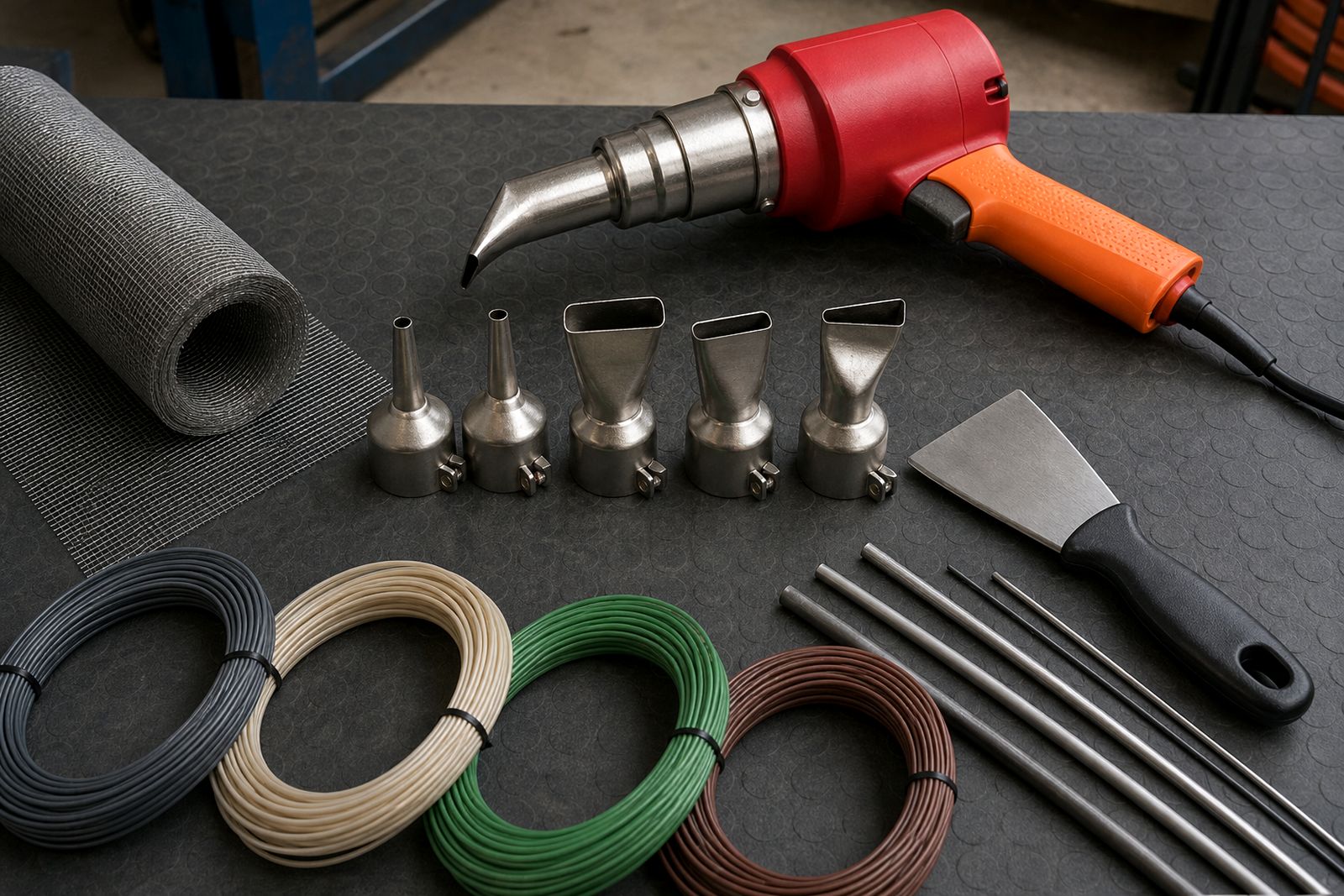
For that reason this section sits closely with our nozzles and accessories range. A speed nozzle helps feed the rod consistently into a seam, while a tacking nozzle is useful for positioning and small repair points before the final pass. Scrapers and reinforcing mesh also come into play where the joint needs preparation or added support. On bumper work in particular, the full setup counts more than the gun on its own.
Guidance, starter kits and training
Some buyers know exactly which gun they need. Others are starting plastic welding for the first time and need a working combination rather than separate parts chosen in isolation. That is where our starter kits and practical training fit in.
We can help identify the plastic, suggest a suitable rod, and point you toward a gun and nozzle arrangement that suits the repair or fabrication work you plan to do. We do not offer repair services for public walk-ins, and we do not sell extrusion welders or large fabrication machines. The focus here is workshop hot-air welding that people can put to use on tanks, crates, bumpers, pipes and made-up parts without a lot of guesswork.
If you need help choosing, send the material type, part thickness and the kind of joint through our contact form. Clear photos of the cracked area or seam detail usually make selection easier.
What our Plastic Welding customers say
Verified Google reviews
Questions we get asked
Can one hot-air welding gun handle different plastics?
Yes, provided the gun has suitable control and you use the correct rod and nozzle for the material. PP, PE, ABS and PVC do not all weld in the same way, so setup matters.
Do I need a speed nozzle for plastic welding?
Not for every task, but a speed nozzle is very useful for feeding rod consistently on longer seams. Small tacking or awkward repair points may call for a different nozzle.
Will a stronger gun always give a better weld?
No. Too much heat or airflow can damage thinner parts and make rod control harder. The better choice is the gun that suits the plastic, thickness and length of weld you need to do.
Tell us about the job
Send sizes, materials and where you are through our contact form, and we will come back with the practical options.
Open the contact form