Plastic welding guides
Good plastic welding starts with the right rod, the right heat and a clean joint. This guide section brings the basics together so workshop staff and DIY users can make sound choices before they strike an arc of hot air.
Use these guides as a workshop reference
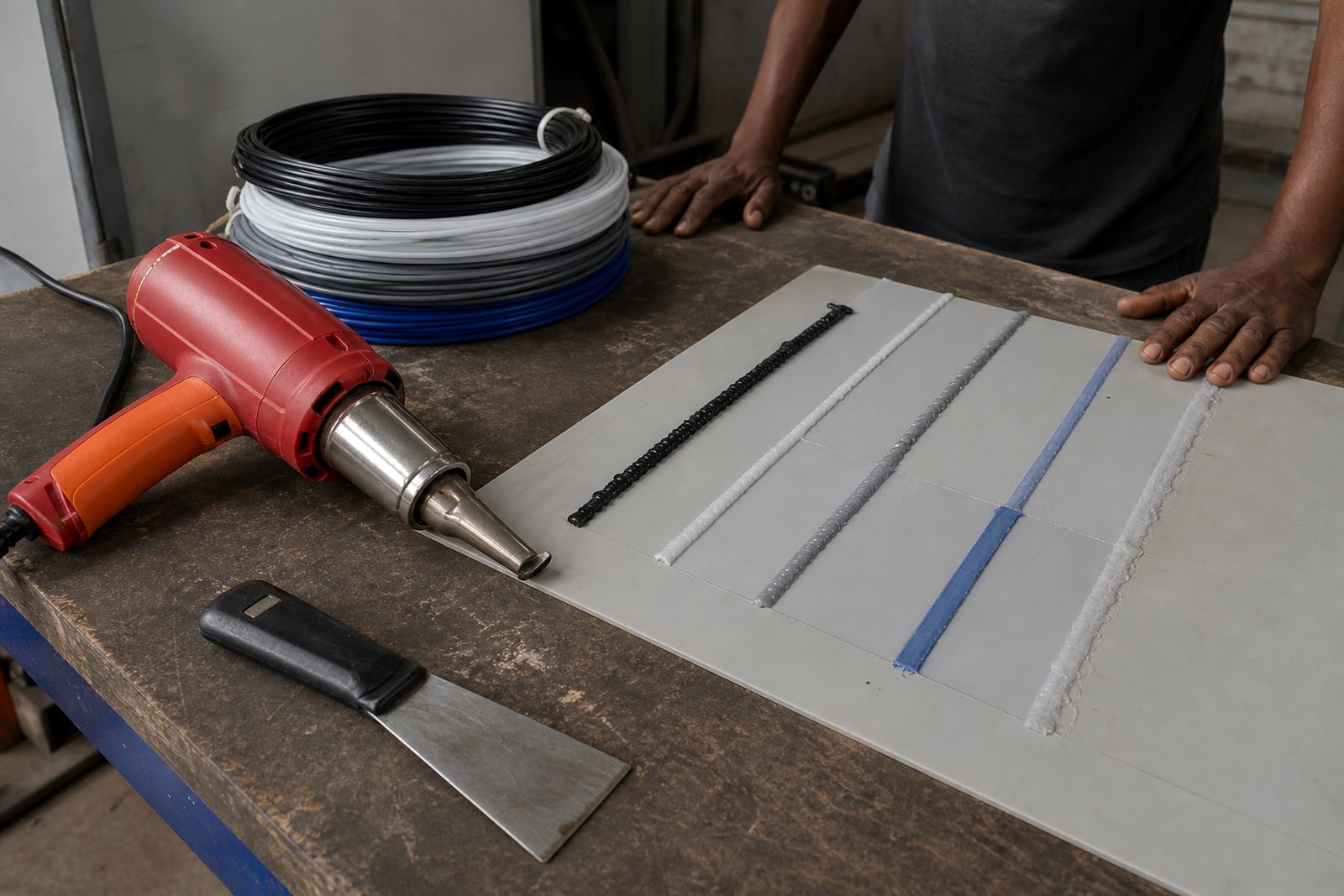
This section groups the main points that affect plastic welding results in South African workshops: identifying the base plastic, choosing a compatible rod, setting up the hot-air gun correctly and preparing the joint so the weld ties in properly. If you are repairing a tank, bumper, crate, pipe or fabricated panel, those steps matter more than trying to force a weld with extra heat.
Each guide deals with one part of the job. Start with plastic identification if the material is unknown. Move to rod selection when you know whether you are working with PP, PE, HDPE, ABS, PVC or a bumper blend such as PP/EPDM. Then check speed welding basics for nozzle choice, hand position and feed control. A lot of poor repairs start with a wrong rod rather than a weak gun.
Choose the guide that matches the job in front of you
Different repair jobs need different reading. A panel shop fixing split bumper tabs needs different advice from a fabrication team joining sheet for a water tank, and both differ from a store maintenace team patching cracked bins. The guides in this section are arranged so you can go straight to the point that usually causes trouble.
- Unknown plastic or mixed scrap parts: begin with plastic identification.
- Known plastic but weld keeps peeling away: check rod compatibility and joint preparation.
- Rod feeds badly or softens unevenly: review nozzle choice and gun handling.
- Clean looking bead but weak repair: inspect base material fusion and reinforcement method.
- Rigid pipe or tank work: confirm whether the material is PE, HDPE or PVC before welding.
Plastic ID first, rod choice second
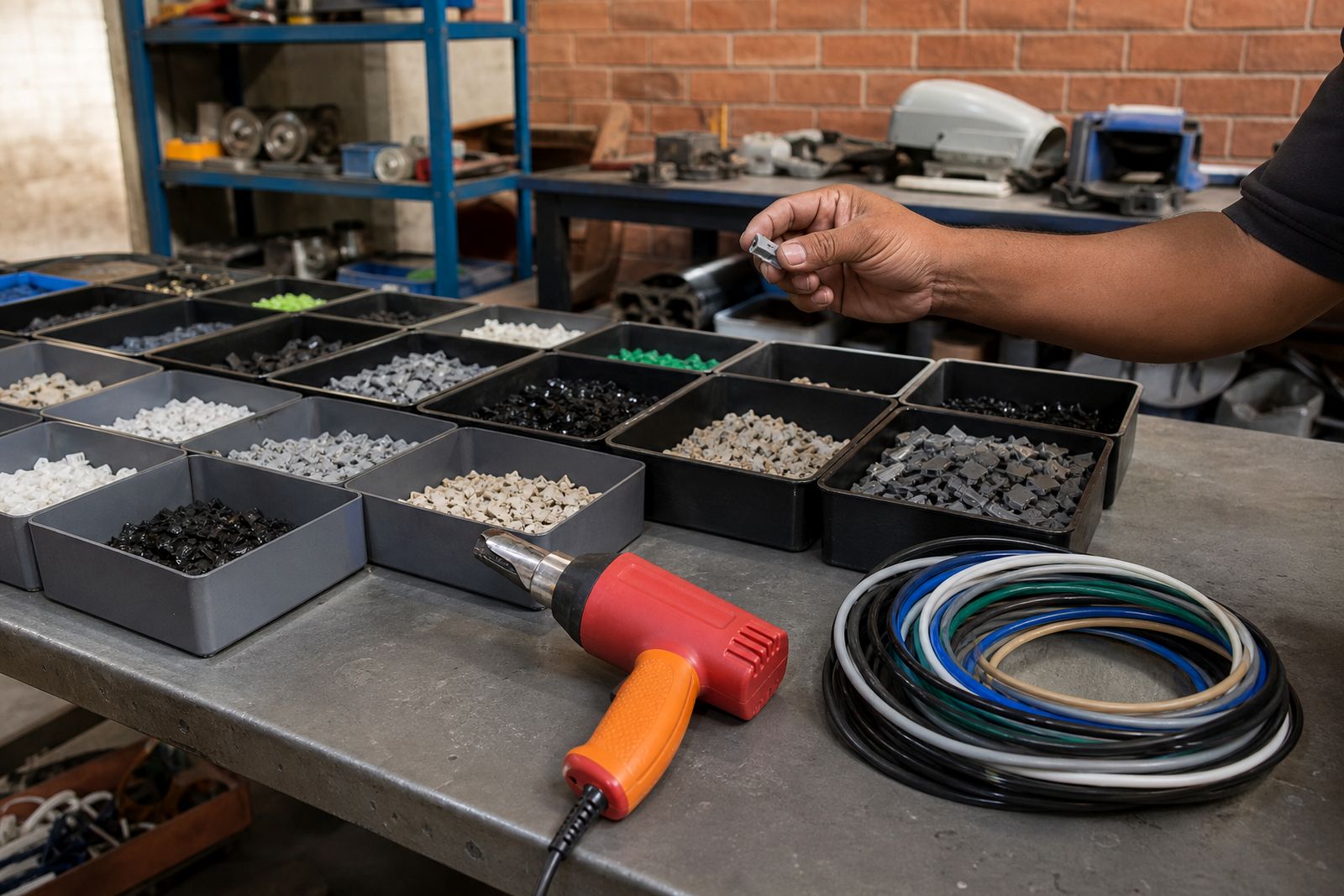
Many workshop headaches disappear once the plastic is identified properly. Markings moulded into the part help, but worn components, painted bumpers and old utility tanks often need a closer look. Surface feel, flex, shaving behaviour and the way the material responds to heat can all point you in the right direction, though you should avoid guessing when the part matters.
After that, match the rod to the base material as closely as possible. PP rod for PP parts, PE or HDPE rod for compatible polyethylene work, ABS rod for ABS housings, PVC rod for PVC fabrications, and bumper rod where the part is a PP/EPDM blend. If the rod and parent material do not soften and flow together the bead can sit on top and fail under vibration.
- PP and PE are common in tanks, crates, bins and fabricated items.
- ABS often appears on trim pieces, covers and formed components.
- PVC is common where chemical handling, ducting or rigid pipe sections are involved.
- PP/EPDM bumper rod is used where impact resistance and flexibility matter.
Hand feed or speed weld
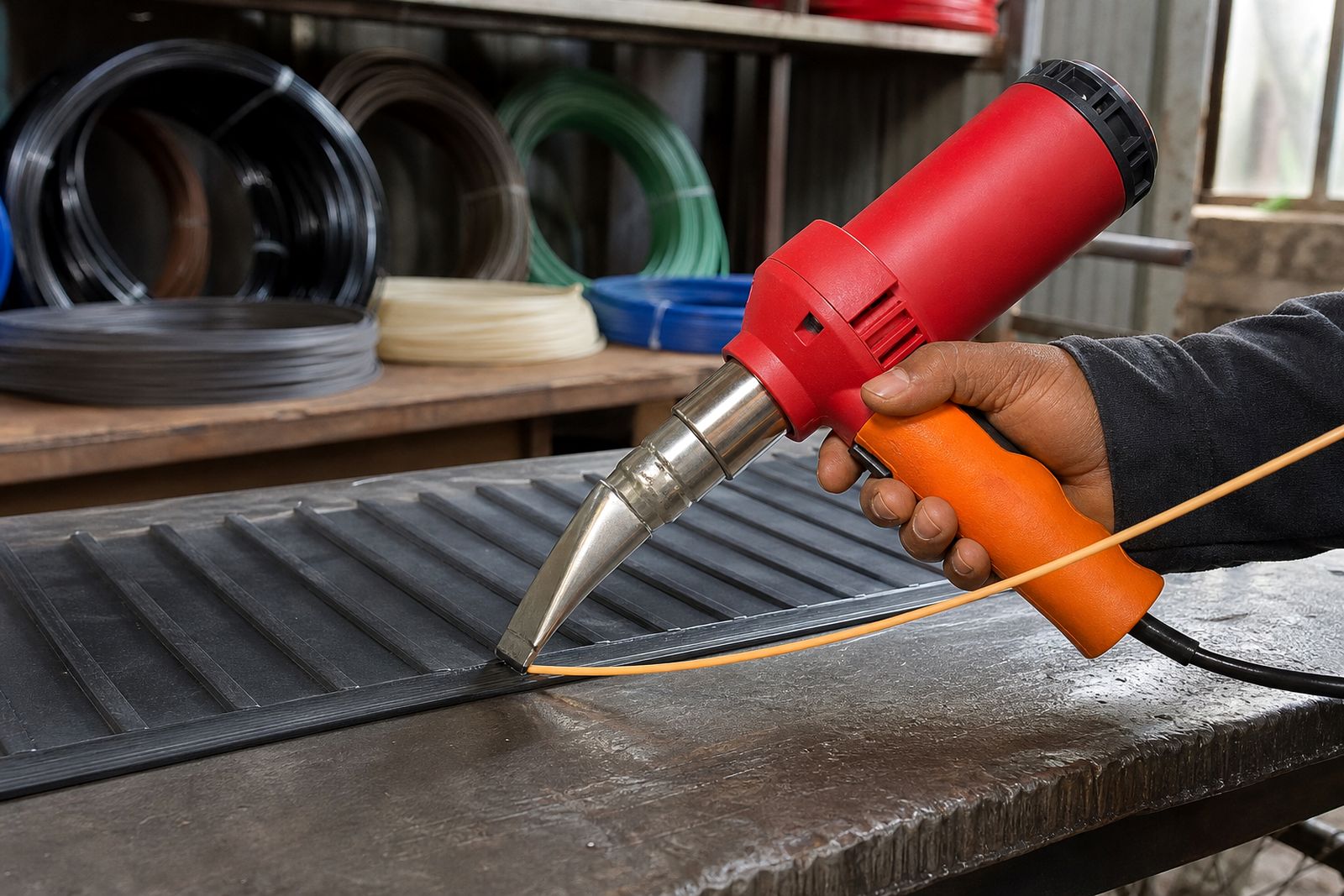
Both methods have a place. Hand feeding gives more control on awkward corners, small tabs and short cracks where you need to watch the base plastic closely. Speed welding suits longer seams once the joint is prepared well and the rod profile matches the speed nozzle. One method is not automatically better, it depends on access, thickness and the finish required.
- Hand feed is useful for spot repairs, tight spaces and delicate sections.
- Speed welding helps on longer runs where a steady bead and faster travel are needed.
- Round rod is often chosen for general work and curved runs.
- Triangular rod can suit prepared grooves where you want positive fill into the joint.
- Reinforcing mesh can help on stressed repairs, but it does not replace correct rod selection.
If you are starting out, practise both on off-cuts of the same plastic before touching the actual part. That short bit of practice shows whether the gun setting, travel speed and pressure are in the right range for teh material on the bench.
Joint preparation affects the weld more than people expect
Dirty surfaces, paint, oxidised plastic and rounded crack edges all interfere with bonding. A clean groove gives the rod somewhere to sit and lets the hot air reach both rod and parent material. On structural repairs, especially tanks and bins, this is often the difference between a bead that merely looks neat and one that holds under load.
Scrapers and trimming tools help remove loose material and shape the weld area. On some repairs a light V-groove improves penetration. On thin sections you need a lighter hand to avoid over-thinning the edge. Good preparation takes a few extra minutes but it saves a lot of frustration later.
Training helps when the work has to hold
Starter kits are useful for getting the main items together, but a short practical session can clear up problems that printed notes cannot. Training is especially helpful where a workshop needs to identify plastics with confidence, set up the hot-air gun properly and understand when reinforcing mesh adds value and when it simply hides a weak weld.
Plasti-Weld runs practical training and helps customers match rods to the plastics they see every week. We also point out where plastic welding is the wrong route, for example when the material is unknown, contaminated through its full thickness or not suited to the repair method being considered. For product advice or training details, send the job type and plastic if known through our contact form.
What our Plastic Welding customers say
Verified Google reviews
Questions we get asked
Can one rod be used on every type of plastic?
No. Plastic welding works best when the rod matches the parent material closely. A mismatch can leave a bead that looks acceptable but lifts, cracks or separates in service.
Do you repair plastic items sent in by the public?
No. Plasti-Weld supplies rods, hot-air guns, nozzles, accessories and starter kits, and offers practical training. We do not carry out repair work for the public.
What if I do not know which plastic I have?
Start with the plastic identification guide. If you are still unsure, send clear details of the part and its use through our contact form so we can help narrow down the likely material and rod options.
Tell us about the job
Send sizes, materials and where you are through our contact form, and we will come back with the practical options.
Open the contact form