About Plasti-Weld
Plasti-Weld works with the people who repair, modify and build plastic parts in real workshop conditions. From our Germiston base, we match rods, tools and training to the job so customers can weld plastics with more confidence.
What our work centres on
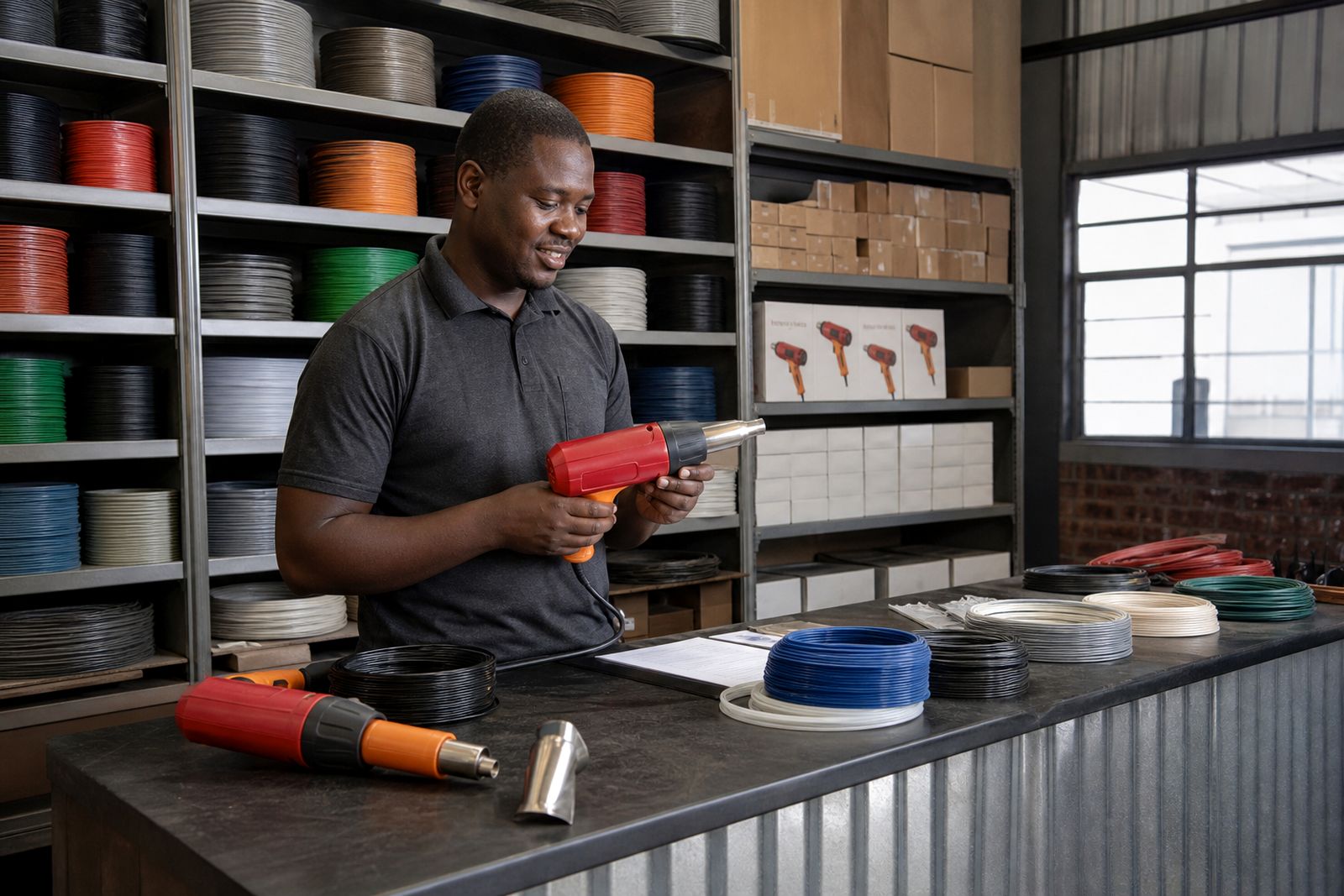
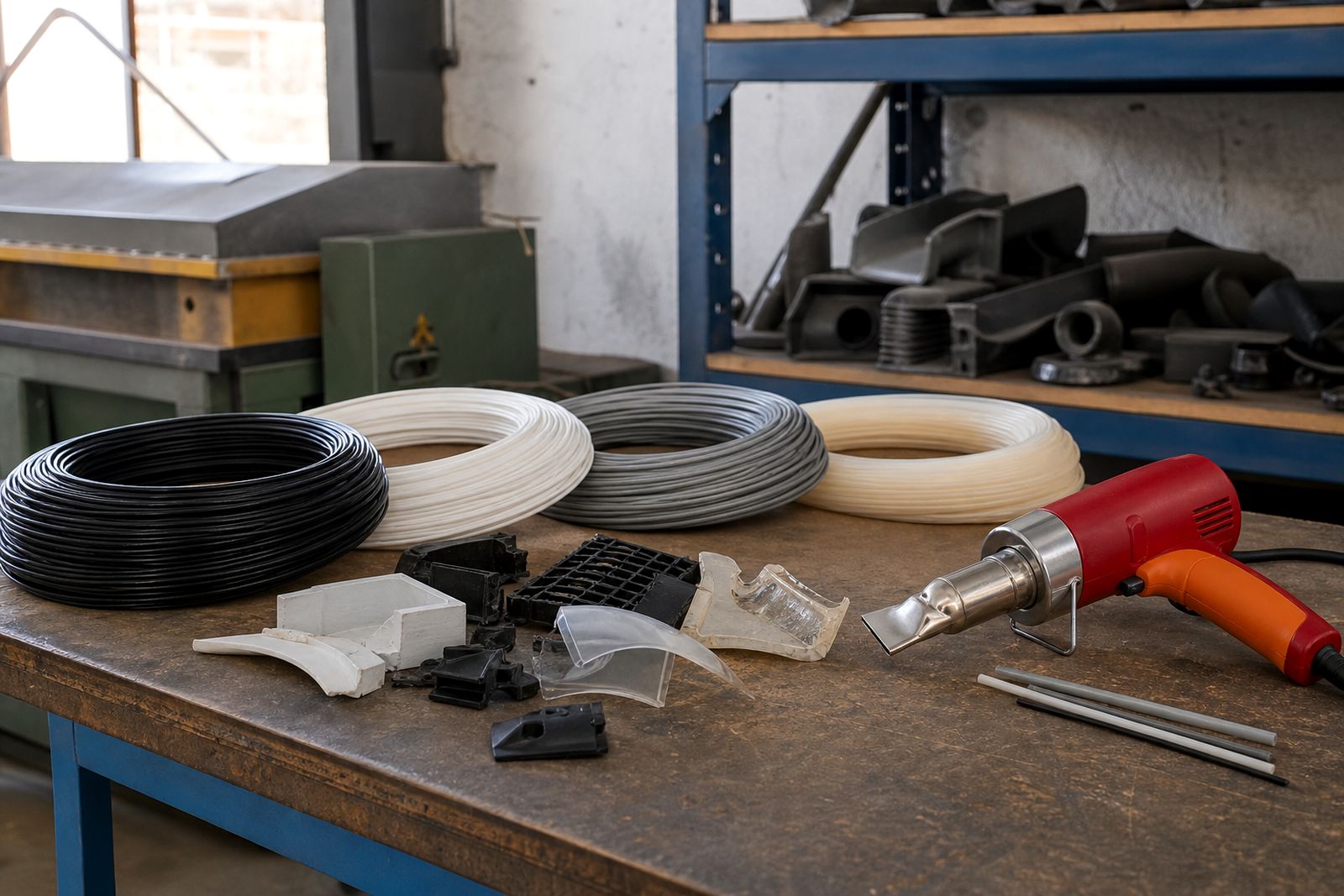
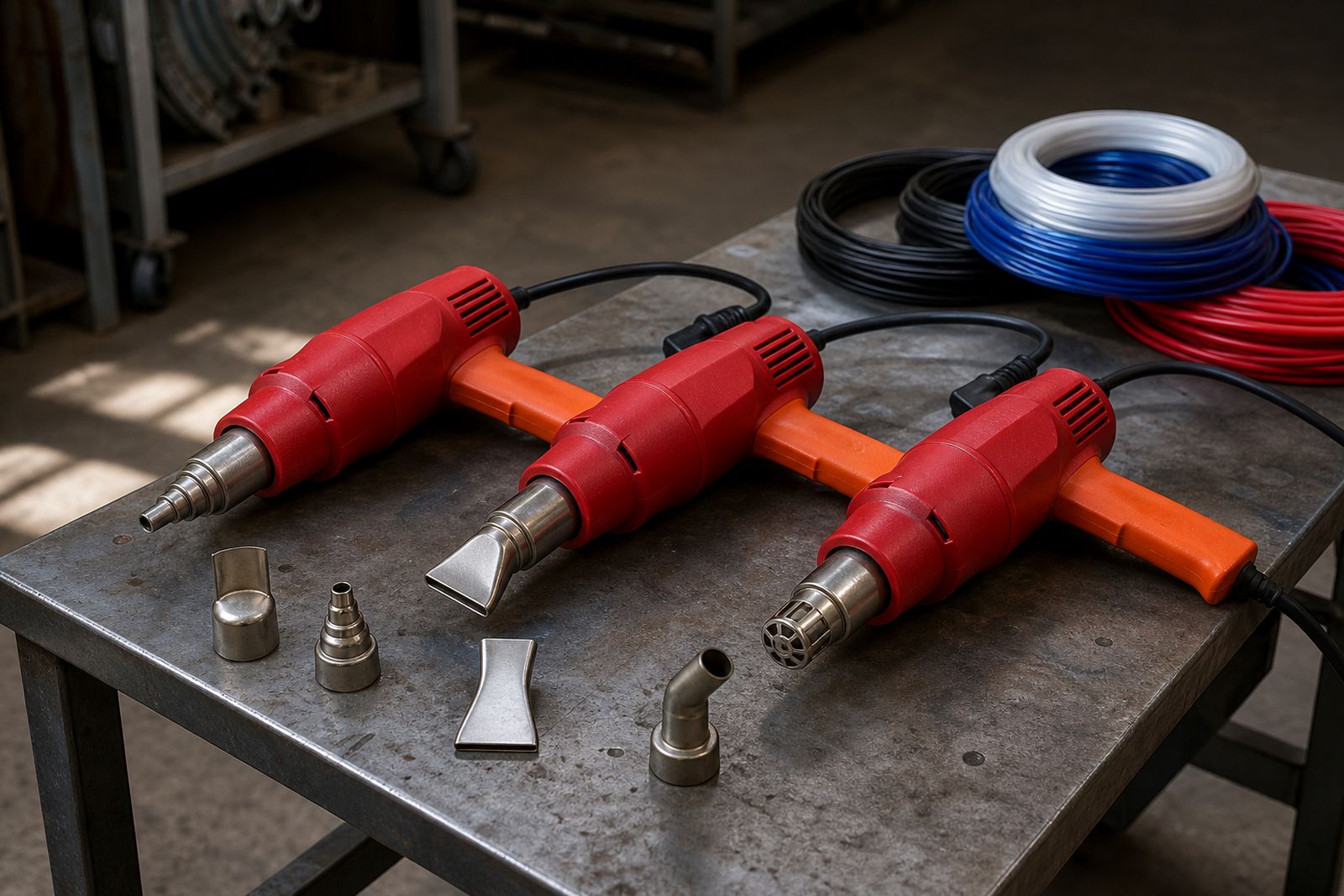
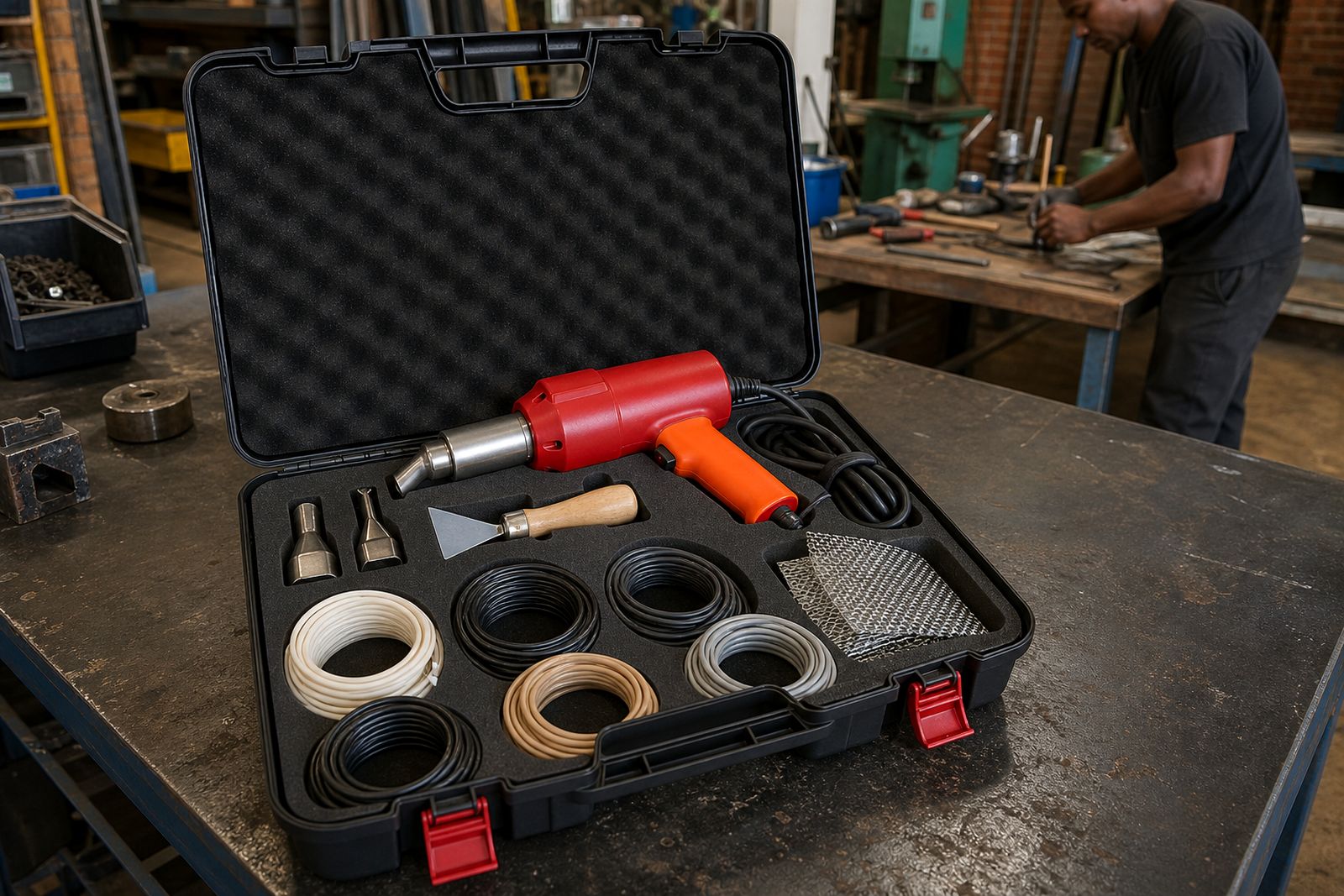
Our day-to-day work is focused on plastic welding consumables, hand-held hot-air equipment and the guidance that helps customers use them properly. We sell welding rods in the plastic types most often used for repair and light fabrication, along with hot-air guns, speed nozzles, tacking nozzles, reinforcing mesh, scrapers and starter kits. The range is aimed at workshop use as well as capable DIY work where the user needs the right material rather than guesswork.
A large part of the job is helping customers work out what they are welding. Plastic repair goes wrong quickly when the rod does not match the parent material, so we ask practical questions about the part, the use, the surface feel and any moulding marks where available. If the job points to PP, PE, HDPE, ABS, PVC or a bumper blend such as PP/EPDM, we guide the customer to the rod profile and tool setup that suits the task. We do not carry out public repair work ourselves, and we do not deal in extrusion welders or large fabrication machines.
- Plastic welding rods in round and triangular profiles
- Hot-air welding guns for workshop and field use
- Nozzles and accessories for tacking and speed welding
- Starter kits for users who need a sensible first setup
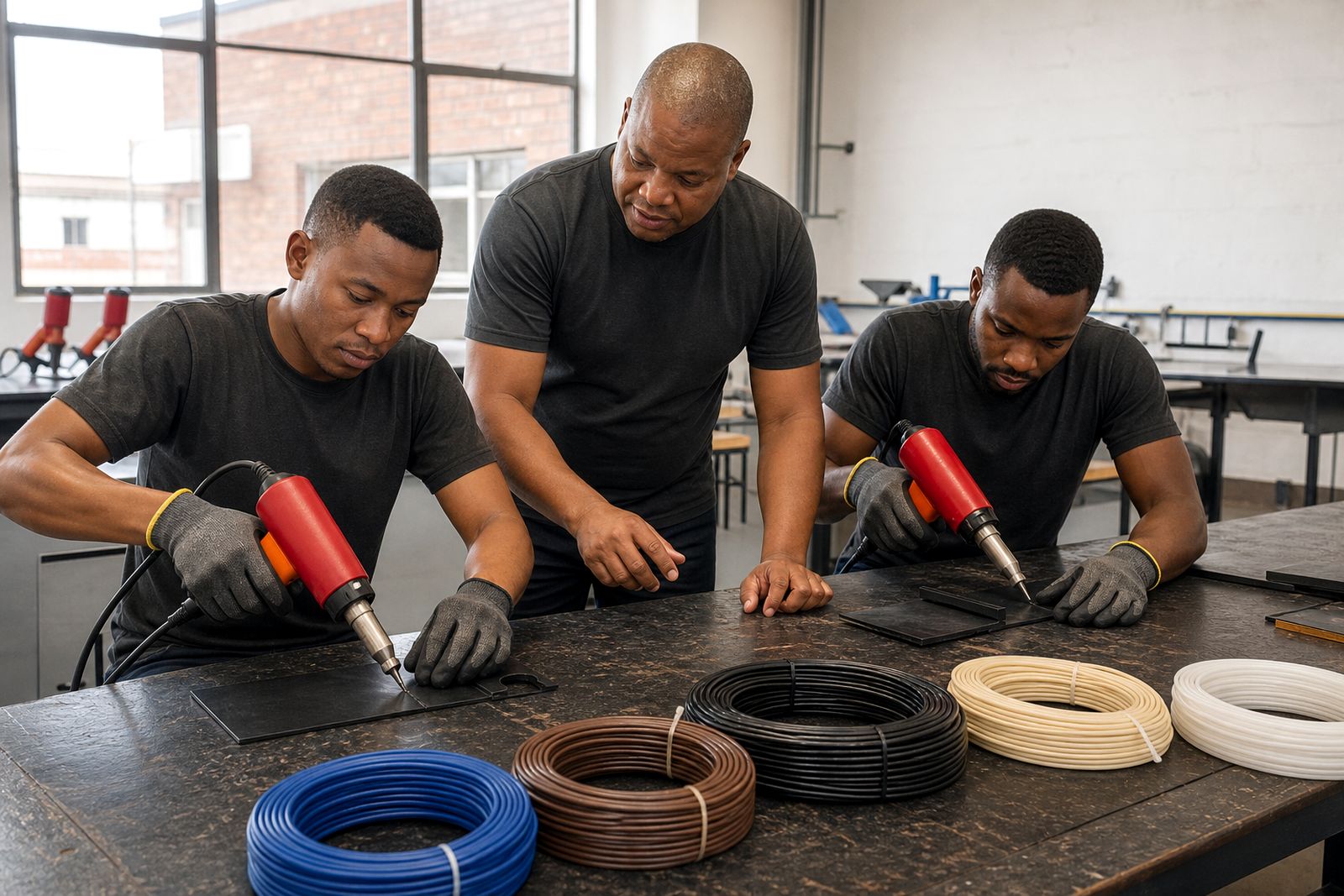
- Practical training for repair and fabrication basics
The customers we work with
Most enquiries come from people who already have a broken part on the bench or a production need that cannot wait for trial and error. Panel shops ask about bumper plastics and tabs. Fabricators look for rod consistency on tanks, guards, covers and small formed items. Maintenance teams need a workable answer for bins, crates, chutes or pipe sections. We also hear from DIY users who are repairing water tanks, storage items, motorcycle plastics or agricultural components at home.
Because we are based in Germiston on the East Rand, many customers collect locally or arrange stock around workshop schedules in the area. We also courier to every province, so a buyer in a coastal town can still get the correct rod and nozzle combination without relying on whatever is on a shelf nearby. Humidity and dirty repair surfaces matter on some jobs, and we mention that sort of thing because it affects weld quality more than people expect.
- Panel shops repairing automotive plastics
- General workshops handling tanks, bins and covers
- Plastic fabricators doing smaller production or repair runs
- Farm and factory maintenance teams
- DIY users who want proper materials not random filler
How the team is organised
The work is shared by role so each enquiry is handled by someone who understands the practical side of the item being discussed. The sales coordinator takes the first brief and checks what the part is, what the user already has and whether rods only or a full kit is needed. Product support then looks at plastic type, rod shape, likely nozzle choice and whether reinforcing mesh or prep tools should be added.
For training requests, the training lead deals with course fit, likely applications and the level of hands-on work needed. Dispatch handles packed orders and collection readiness from the Germiston shop. After the sale, the support side helps with issues such as poor feed through a speed nozzle, contamination on the joint, or the common problem where the rod looks right but the base plastic is not what the customer first thought it was. It is practical work, not sales talk and that keeps things clear.
Our Germiston shop and working setup
Our base in Germiston is set up around product knowledge, training preparation and order handling rather than public repair intake. Customers dealing with us locally can discuss rod types, compare profiles and put together a useful starter kit for the kind of repairs they do most often. The working environment is straightforward and trade-focused, with stock arranged around the items welders ask for repeatedly.
Training and product support are tied closely to what happens in an actual workshop. That means talking honestly about surface prep, joint cleanliness, reinforcement where needed, and the limits of a hand-held hot-air setup. If a job really calls for larger fabrication plant, we say so. If a cracked tank or bumper can be repaired with the correct rod, prep and nozzle arrangement, we point the customer there without making it sound more fancy than it is. A neat weld usualy starts with good identification and patient prep.
From first enquiry to the handover
Most jobs start with a short description through our contact form. The useful details are simple: what the part is, what the plastic might be, whether it is a repair or new fabrication, and which tools the customer already has. Photos help where moulding marks, crack shape or thickness can narrow things down. From there, we suggest the rod family, the profile, the gun and nozzle arrangement, and any extra items that make the setup more usable on day one.
When the order is being prepared, the focus is on a kit that fits the job rather than a pile of unrelated items. A workshop repairing bumper corners does not need the same combination as a fabricator joining sheet, and a DIY user fixing a cracked bin should not be sent into a confusing spread of options.
- We read the application before suggesting a rod
- We match accessories to the way the weld will be made
- We separate training needs from product-only enquiries
- We package local collection and courier orders with the job in mind
Support after the sale
Aftercare matters with plastic welding because small setup mistakes can ruin a sound repair. Customers often need help with rod feed, tack sequence, contamination, reinforcement placement or the difference between a surface melt and a proper bond. We help troubleshoot those points, especially for users moving from occasional repairs to more regular workshop work.
Training customers also benefit from having a team that can relate the lesson back to the next repair in front of them, whether that is a tank seam, a crate corner, a bumper tear or a fabricated guard. The point is not to flood people with theory. It is to keep them supplied with the right rods and tools and to back that up with practical guidance they can actually use on the bench.
If you need help choosing materials or putting together a sensible plastic welding setup, send the details through our contact form and we will assess the job from there.
Questions we get asked
Do you repair plastic parts for the public?
No. We supply rods, hot-air guns, nozzles, accessories and training, but we do not take in public repair jobs.
Can you help me identify the plastic before I buy rods?
Yes. We assist customers with plastic identification so the rod matches the base material as closely as possible.
Do you only serve Germiston customers?
No. We work with local customers on the East Rand and courier orders to workshops and DIY users in every province.
Also worth a look
Tell us about the job
Send sizes, materials and where you are through our contact form, and we will come back with the practical options.
Open the contact form