Plastic welding starter kits
A starter kit puts the main plastic welding items together in one case so you can begin with matched basics instead of buying piece by piece. Our kits are aimed at workshops, panel shops, fabricators and hands-on users who want practical equipment for common repair work.
What a starter kit is meant to cover
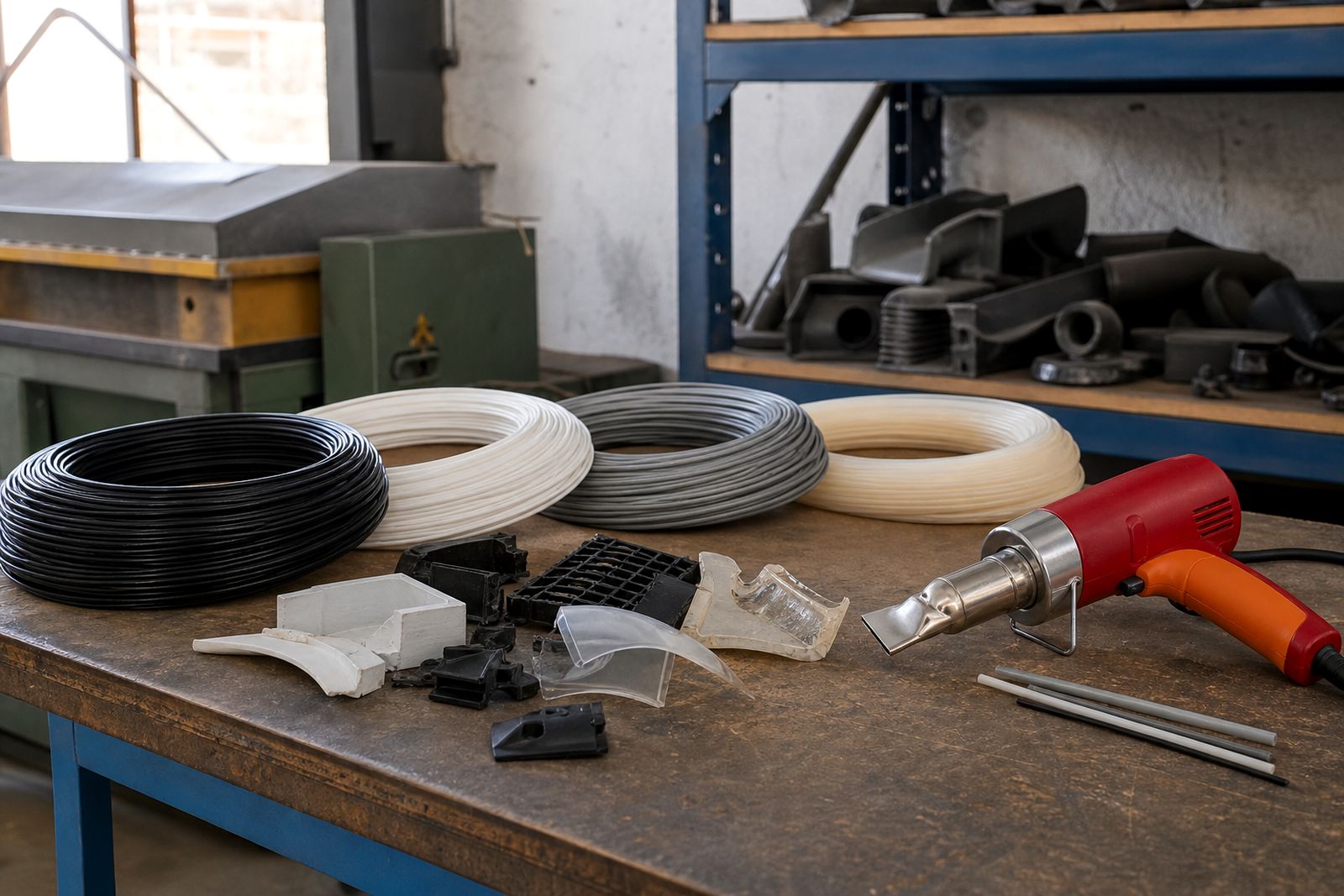
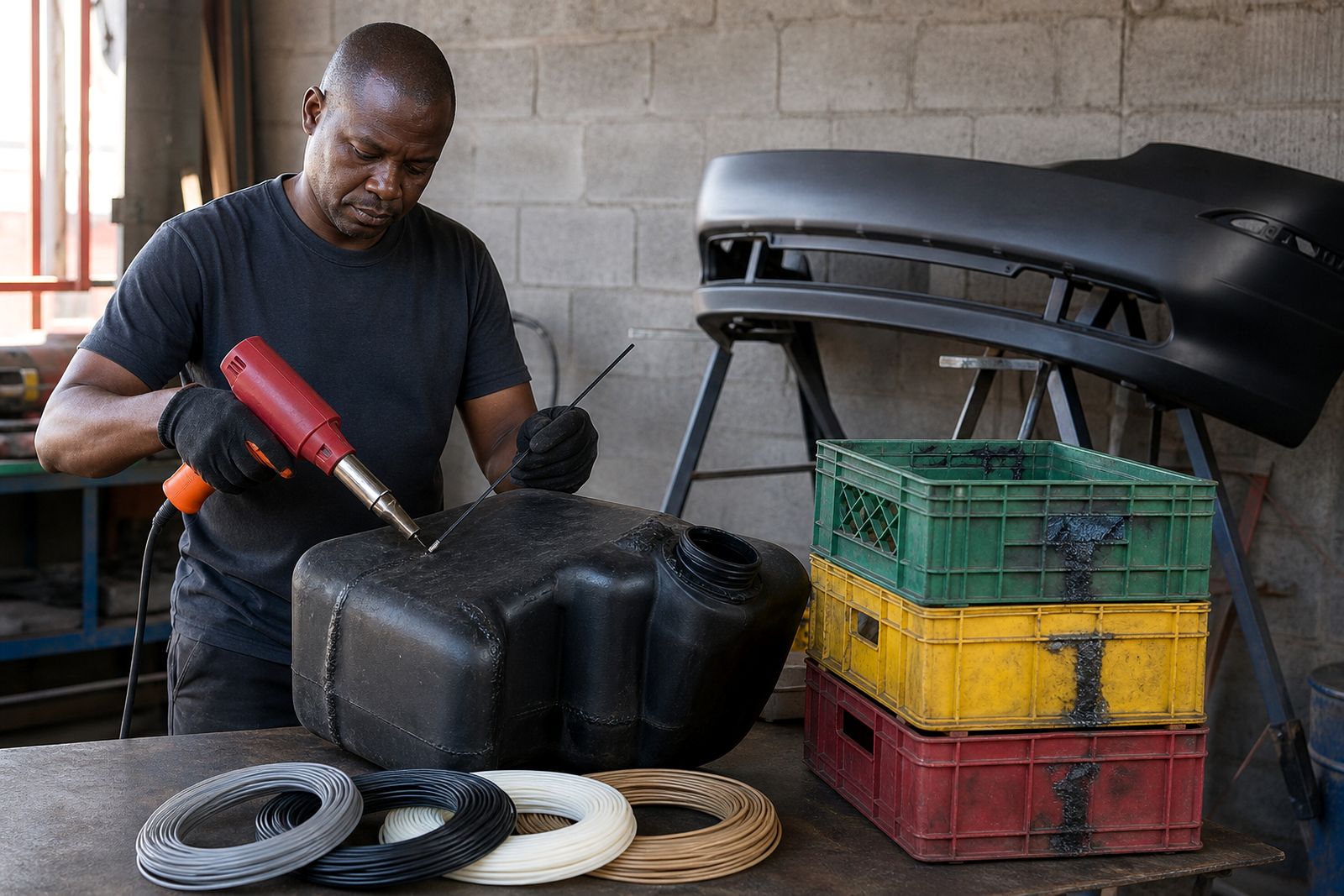
Plastic welding can feel confusing at the start because the tool, the rod profile and the plastic type all need to line up. A starter kit narrows that down. It gives you a usable combination for early repair and fabrication jobs such as cracked tanks, split bins, bumper tabs, plastic pipe fittings and light workshop repairs where you need to test, tack and run short seams with some control.
At Plasti-Weld in Germiston, we put the focus on workshop-ready items rather than novelty tools. The kits in this section are built around hot-air welding, supported by rods and accessories that help you prepare the joint and keep the weld bead more consistent. We also assist with plastic identification, because choosing the wrong rod is one of the most common reasons a repair fails even when the operator handles the gun properly.
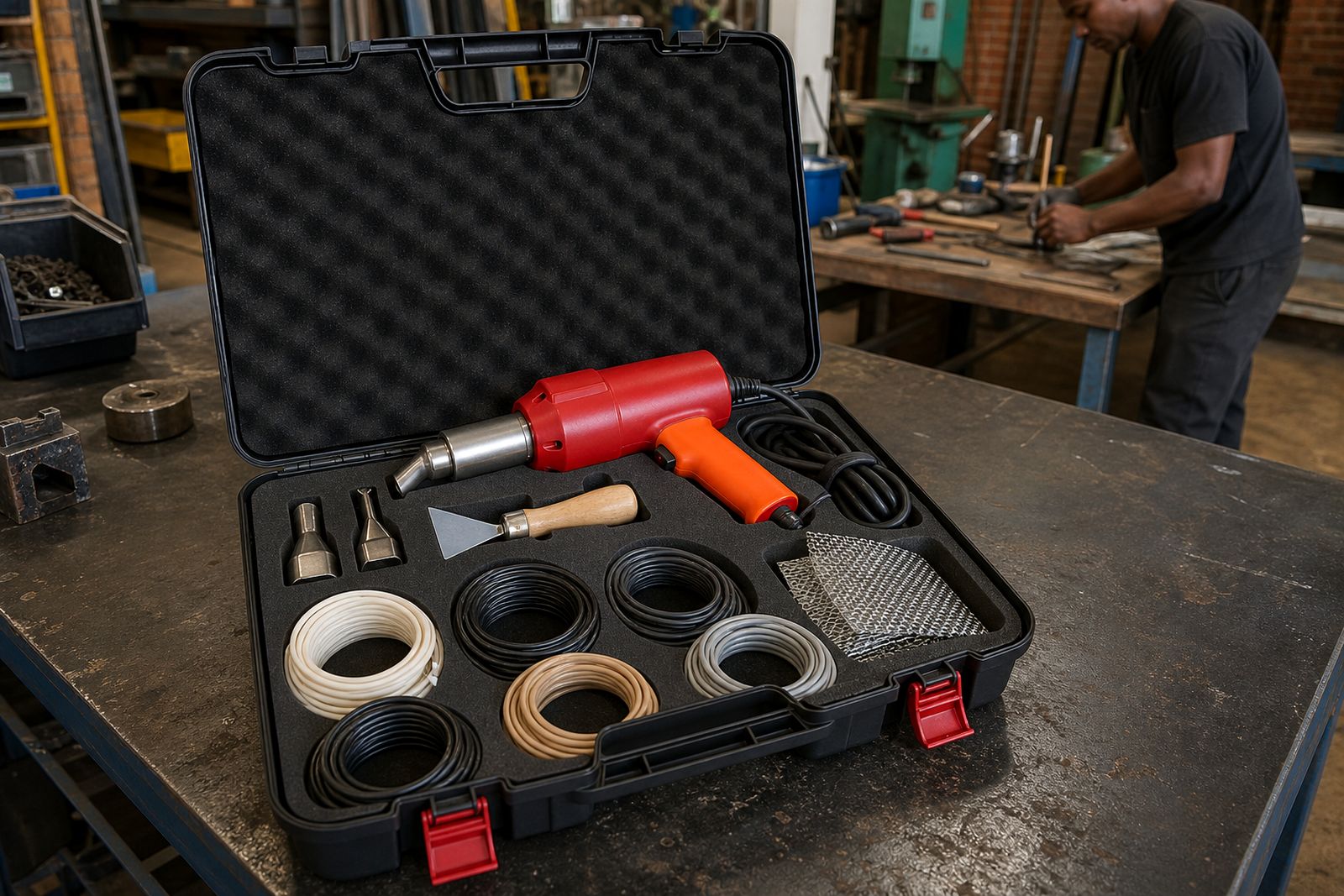
What you will usually find in the case
Contents vary between kits, but the idea stays the same: give you the core items needed to practise and then move onto live work. A useful starter set should not be overloaded with bits that never leave the case. It should cover the plastics you expect to see most often and include the attachments used for tacking and speed welding.
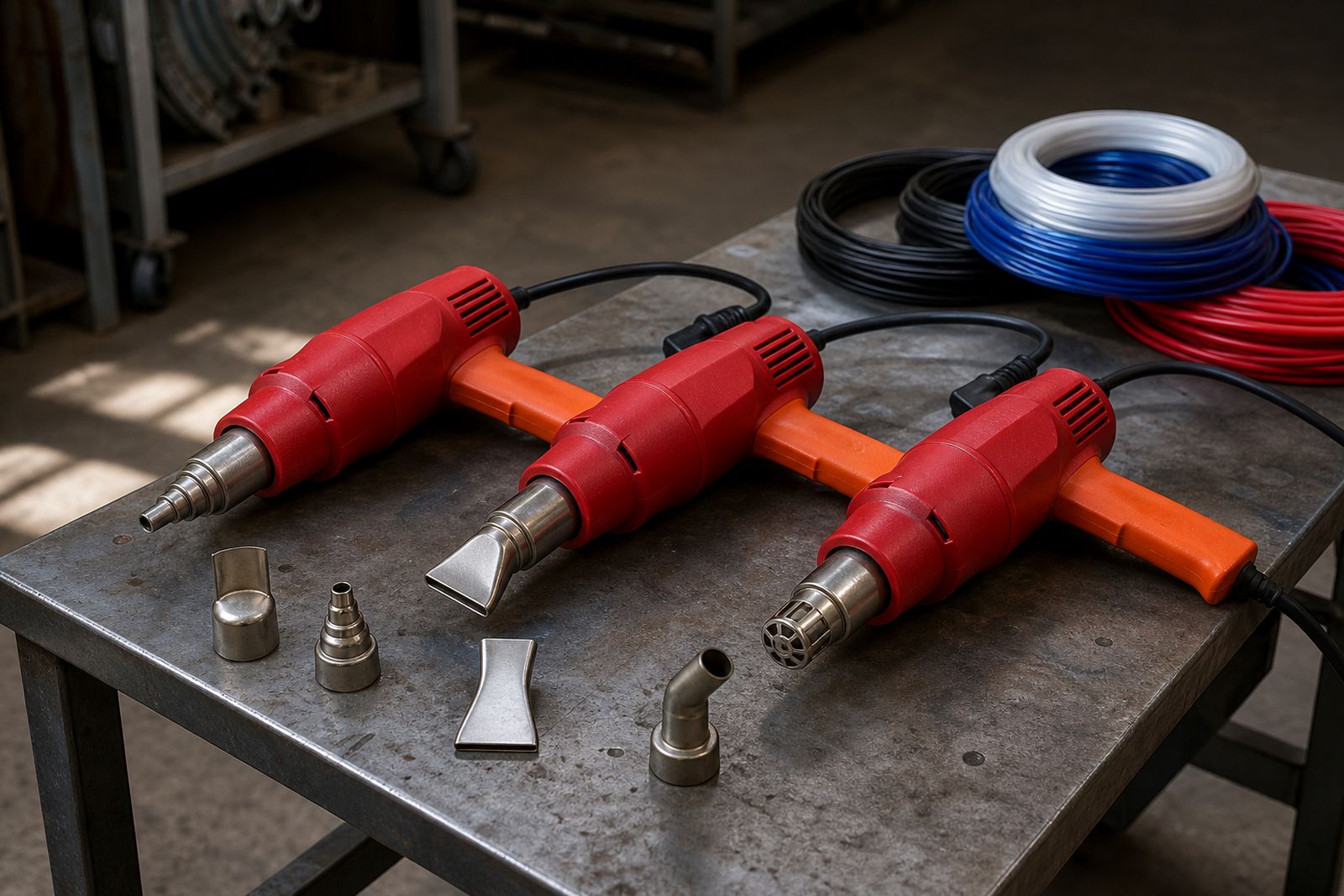
- Hot-air welding gun for workshop use
- Selection of plastic welding rods, often in common materials and profiles
- Speed welding nozzles and a tacking nozzle
- Scraper or trimming tool for joint preparation and finishing
- Stainless reinforcing mesh for selected repairs
- Carry case to keep rods, nozzles and hand tools together
- Basic guidance on rod matching and weld setup
If your work regularly involves PP crates and PE tanks, the rod mix should reflect that. If you are dealing with bumper covers and interior trims, a kit with PP/EPDM and ABS rods makes more sense. That sounds obvious, but many buyers only realise the gap after the first few jobs, so it helps to think through your usual repair mix before choosing.
Choosing between light workshop kits and broader mixed kits
Not every buyer needs the same spread of materials. Some shops mainly repair one family of plastics and need depth in a few rod types. Others see whatever arrives through the door and want a broader starter case with several materials for testing and matching. The right option depends on the jobs on your bench, not on how many items can be packed into a case.
- Choose a focused kit if you mostly weld PP, PE or HDPE containers, liners, crates or fabricated parts.
- Choose a mixed repair kit if you handle tanks one week and vehicle plastics the next.
- Choose a bumper-oriented kit if your daily work includes cracked tabs, bumper corners and trim repairs.
- Choose a training-oriented kit if the goal is to learn joint prep, tacking and bead control before moving into regular workshop use.
For some users a smaller, well-chosen kit is better than a large assortment. It is easier to learn heat control and travel speed when you are not switching materials every few minutes. Once your operator understands how each plastic behaves, expanding the rod range is straightforward.
A practical comparison before you decide
These points help narrow the choice without getting lost in technical terms. Think about the parts you see most often, where the weld sits, and whether the job needs strength, flexibility or a neat visible finish.
- Tank, bin and container work: usually needs PP, PE or HDPE rods and a setup that handles longer seams.
- Automotive plastic repair: often needs PP/EPDM and ABS rods, plus better control on smaller nozzles.
- PVC work: needs the correct rod family kept separate from other plastics to avoid mix-ups.
- Fabricated parts and ducting: usually benefit from triangular rod options for groove filling and consistent seam build-up.
- General workshop learning: a balanced mix of rods and nozzles is more useful than a very specialised pack.
Also consider who will use the kit. An experienced fabricator may want a more selective setup with the exact rods used on site, while a panel shop may need a broader case for varied daily repairs. If you are not sure which plastic you are facing, our contact form is the right place to send the job details and photos of the part.
Starter kits paired with training
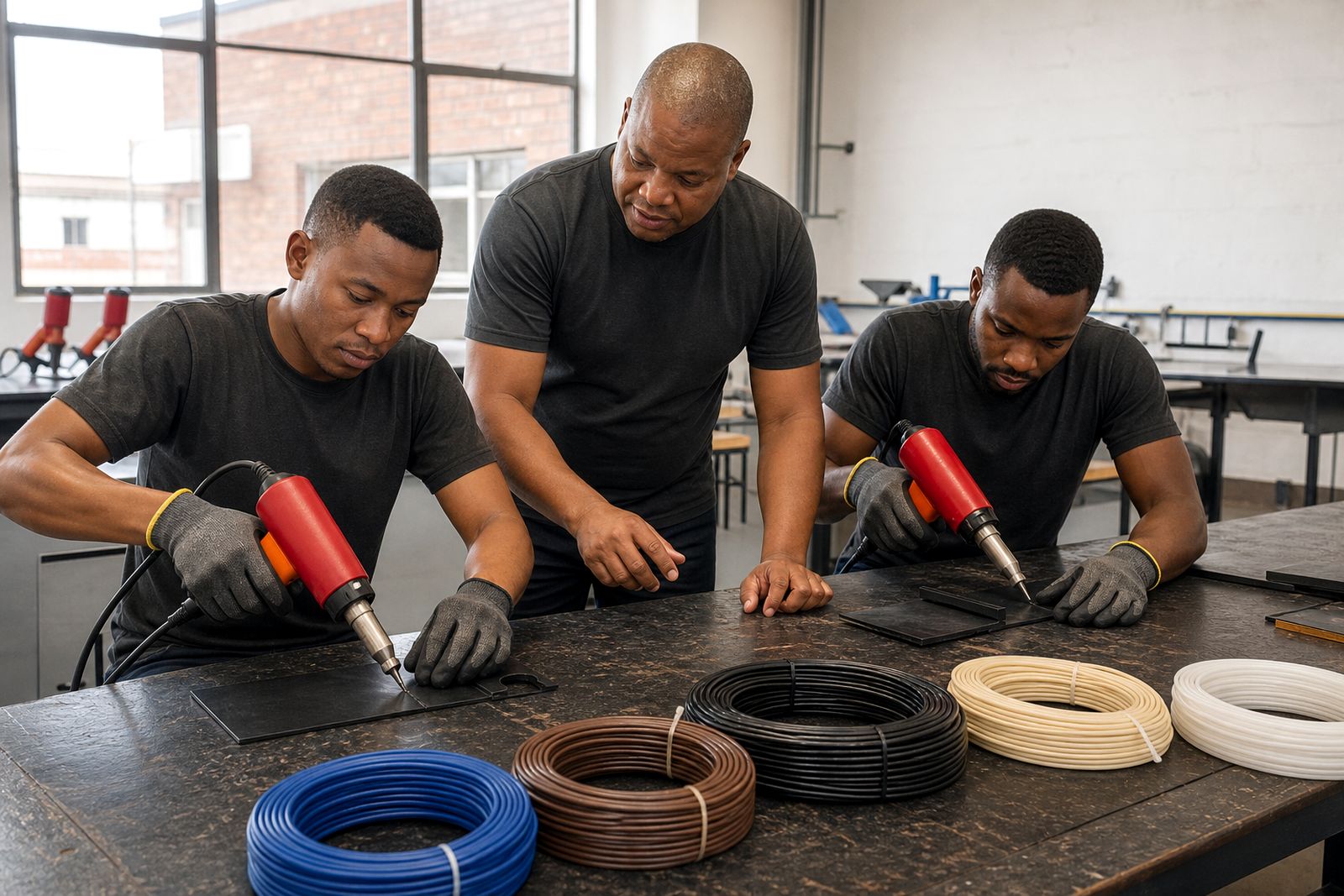
A kit gives you the gear, but training shortens the trial-and-error stage. We run practical plastic welding training that covers material identification, joint preparation, rod choice, nozzle use and the difference between a cosmetic bead and a weld that actually bonds. For workshops bringing a new operator into plastic repair, this matters more than simply buying a larger kit.
Training is especially useful where repairs carry a bit of consequence, such as tanks, process containers, workshop bins and fabricated components. You learn when to vee out a crack, when mesh helps, how to avoid contamination in the joint and what signs suggest the base plastic is not the rod you picked. Those small checks save time and reduce waste, even on ordinary shop jobs.
Where starter kits fit, and where they do not
These kits are intended for hot-air plastic welding work in repair and light fabrication settings. They suit workshops, East Rand panel shops, maintenance teams and hands-on users who need a practical entry point without assembling every item separately. We courier throughout South Africa, including inland and coastal areas where storage matters because rods should be kept clean, dry and sorted by plastic type.
There are also limits. We do not offer public repair services, large fabrication machines or extrusion welders. If your requirement is for rod, gun and accessory selection with guidance on matching the plastic properly, this section covers the right starting place. For a kit recommendation based on the parts you repair most often, send the details through our contact form and include the plastic type if known, the thickness and the kind of crack or seam you need to tackle.
What our Plastic Welding customers say
Verified Google reviews
Questions we get asked
Who are plastic welding starter kits for?
They suit workshops, panel shops, fabricators, maintenance teams and DIY users who want a practical set of hot-air welding essentials for plastic repair or light fabrication.
Can one starter kit weld every plastic item?
No. The base plastic still needs to be identified and matched to the correct rod. A mixed kit helps with common materials, but rod choice remains job-specific.
Do you repair plastic parts for the public?
No. We supply rods, hot-air guns, nozzles, accessories, starter kits and training, but we do not take in public repair work.
Also worth a look
Tell us about the job
Send sizes, materials and where you are through our contact form, and we will come back with the practical options.
Open the contact form