

Tank and container repair
Cracks in plastic tanks and drums can often be repaired well if the base material is identified properly and the joint is prepared before heat is applied. The difference between a tidy weld and a short-lived patch usually comes down to rod choice, cleanliness and steady technique.
Start with the plastic, not the crack
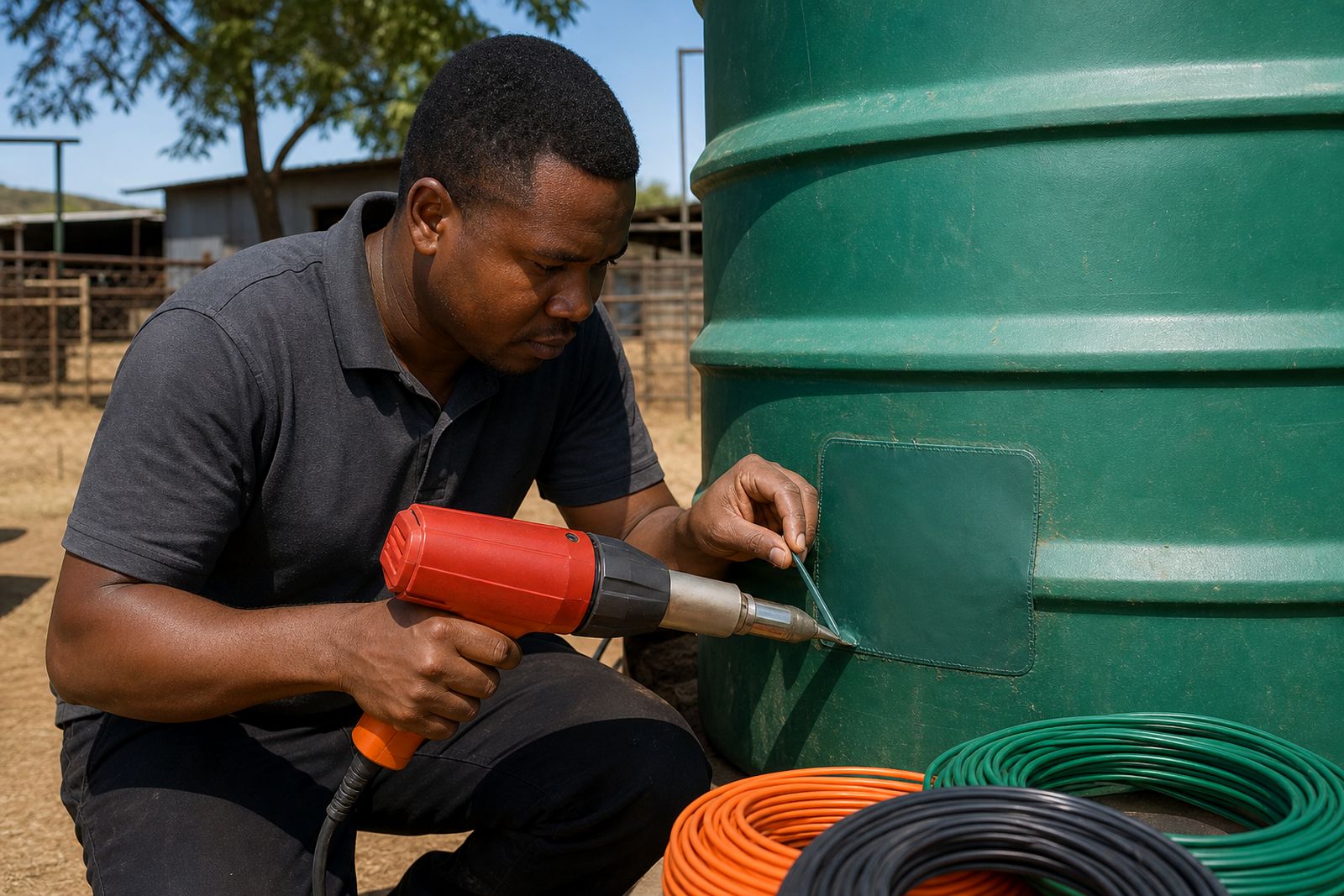
Tank and container repair goes wrong when the weld starts before the plastic is identified. A water tank, chemical drum, diesel container or process hopper may all look similar on the outside, but the weld rod must suit the parent material. In local workshop work the most common tank plastics are PE and PP, with some rigid PVC parts on pipework and fittings. ABS is less common on larger containers but does show up on certain formed components and covers.
The first step is to check mould markings where they still exist, then look at the way the crack formed. PE tanks often split with a slightly waxy edge and tend to flex more. PP can feel stiffer and may show a cleaner fractured line. If you are unsure, do not push ahead with a random rod because a neat looking bead on the wrong substrate can peel away under load. Matching the rod matters more than making the surface look smooth.
- Use PP rod on polypropylene tanks and bins.
- Use PE or HDPE rod on polyethylene containers and drums.
- Use PVC rod only on PVC parts intended for hot-air welding.
- Keep bumper rod for automotive plastics, not general tank work.
We help customers match rod to material before they buy, which saves wasted time in the workshop and avoids stacking incompatible plastics into one repair.
Why tanks crack in real workshop conditions
A split tank is not always just impact damage. Across Gauteng workshops we often see failures caused by vibration on brackets, overtightened fittings, repeated filling and emptying, forklift knocks, and sun-hardened plastic around mounting points. A repair that ignores the source of the stress can fail even if the weld itself was clean.
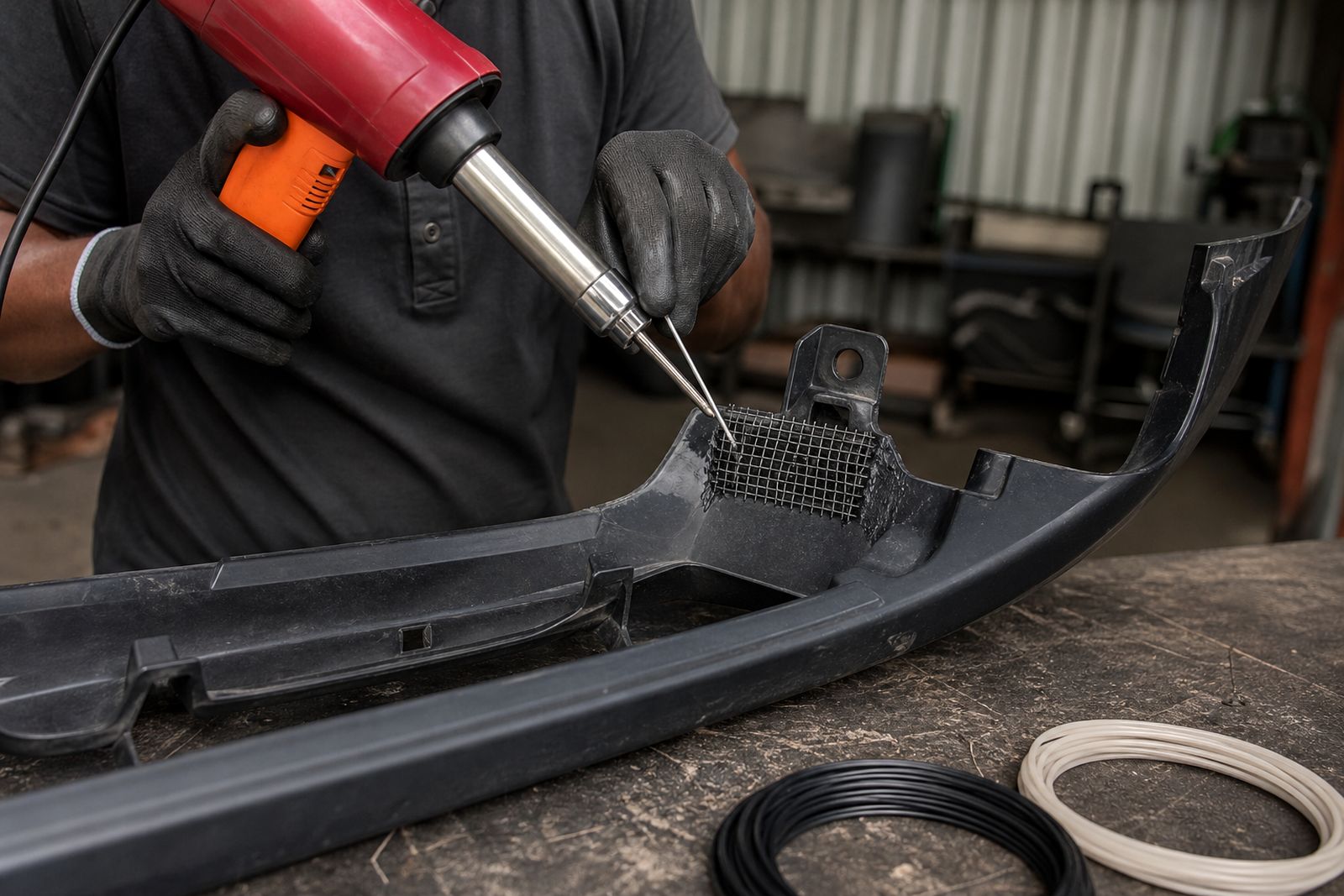
Look around the damaged area before stripping out the crack. If the tank is hanging on one side, rubbing on a frame, or carrying weight through a small unsupported patch, the joint will stay under strain. Sometimes the right answer is to weld the crack and then spread the load with a formed patch, stainless reinforcing mesh where suitable, or a revised clamp position. On chemical containers, make sure the contents are fully drained and the vessel is safe to handle before any hot-air work starts. That part sounds obvious but in practice it gets skipped too often.
- Stress cracks around threaded outlets usually need the outlet area inspected, not only the split.
- Long sidewall cracks often point to impact or poor support during transport.
- Hairline splits at corners can indicate fatigue from repeated flexing.
- Leaks returning beside the weld often mean the original stress point is still there.
Preparation decides whether the weld holds
Good prep is slow compared with laying a bead, but it is the part that makes the repair last. The damaged area must be clean, dry and free of oil, product residue, paint and oxidation. On tanks used for detergents, agricultural liquids or industrial chemicals, surface contamination can sit deep in the crack line, so the groove should be opened properly and cleaned before welding starts.
A practical method is to stop-drill the ends of a running crack where appropriate, vee out the line with a scraper or suitable tool, then clean the area and allow it to dry completely. The groove should give the fresh plastic somewhere to key in, rather than leaving the rod perched on top like a surface patch. If both sides are accessible, a root pass from one side and a finishing pass from the other can produce a stronger result. Thin container walls need a lighter hand because too much heat can sink the panel or enlarge the damaged section.
Reinforcing mesh can help on some repairs, particularly where the wall has torn and the area still sees movement, but it should not be used as a substitute for correct rod choice or poor joint prep. Mesh buried into a contaminated groove will not rescue a bad weld.
A Germiston workshop example
One East Rand workshop brought in a cracked rectangular wash-water tank from a production line, with a split running away from a lower outlet. The first attempt on site had been made with a mixed bundle of offcuts and a general heat gun, so the bead sat hard on the surface and leaked on refill. Once the tank was stripped and assessed, the material proved to be PE. The operator cleaned back the stained area, opened the crack into a controlled groove, and stabilised the ends before welding with the correct rod and a proper hot-air gun fitted with the right nozzle.
The outlet area was the real culprit. A rigid connection had been pulling on the wall each time the line vibrated, so the repair included support changes to reduce the load around the fitting. After cooling, the tank was checked for seepage under working conditions rather than judged by appearance alone. The important lesson was not that the crack could be welded, it was that the surrounding stress had to be dealt with as well, otherwise the leak would simply move a few millimetres down the wall.
That pattern is common on drums, dosing tanks and process containers. A tidy bead means little if the tank is still being twisted in service.
Tools that make tank repairs more controlled
For this kind of work the tool set does not need to be huge, but it does need to be right. A hot-air welding gun with suitable nozzles gives better control than improvised heating, especially on long seams and outlet repairs. Speed nozzles are useful once the operator has the rhythm for feeding rod and moving heat together, while a tacking nozzle can help set a crack before the main passes are laid. Scrapers are needed for clean groove prep and finishing, and reinforcing mesh has a place where added support is justified.
- Hot-air welding gun for controlled heating.
- Speed welding nozzle for longer runs with matching rod profile.
- Tacking nozzle for positioning and short stabilising passes.
- Round or triangular rod to suit the joint and the base plastic.
- Scraper for groove preparation and trimming the finished bead.
- Stainless reinforcing mesh where extra support is appropriate.
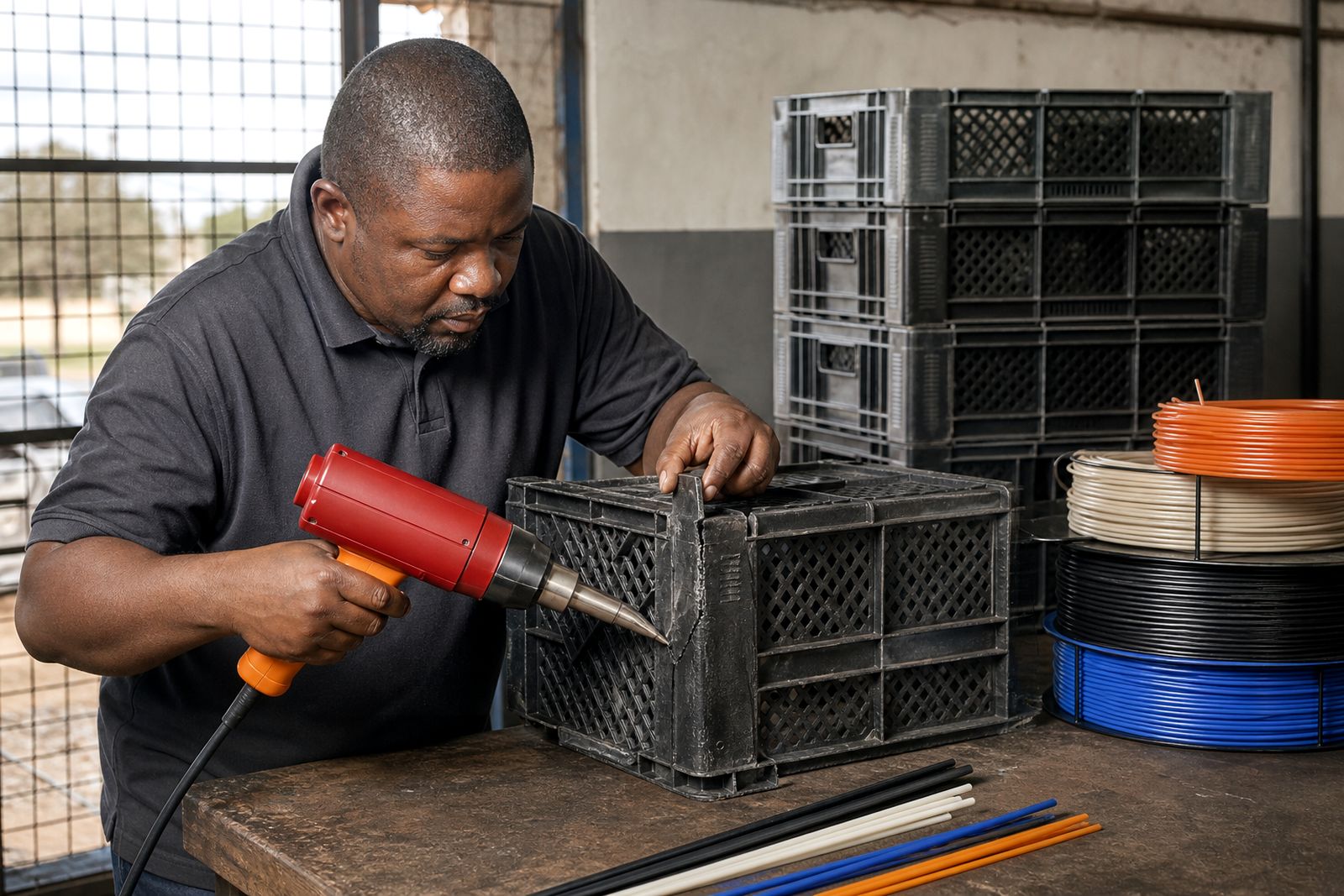
Starter kits work well for maintenance teams and smaller workshops that need the core items in one place. For larger repair volumes, separate rod types and accessory choices make more sense because tanks, crates, bumpers and fabricated parts do not all use the same consumables.
When to repair and when to replace
Not every tank should be welded. If the plastic has gone brittle over a wide area, if chemical attack has softened the wall, or if the damage runs through heavily loaded mounting points that have already distorted, replacement may be the safer route. The same applies where previous repairs have stacked several incompatible materials into one weak patch. A fresh weld onto unstable plastic can look acceptable for a day or two then open under use.
For workshops that handle their own maintenance, training helps a lot. Plastic welding is practical work rather than guesswork, and a short hands-on session usually clears up the common mistakes: overheating the base, using the wrong rod, rushing prep, and trying to bridge contamination with extra filler. We supply rods, hot-air guns, accessories and starter kits, and we run practical training for teams who want to handle repairs in-house. We do not carry out repair jobs for the public, and we do not sell extrusion welders or large fabrication machines.
If you need help choosing rod for a tank or container job, send the material details and photos through our contact form so the team can point you to the closest match.
What our Plastic Welding customers say
Verified Google reviews
Questions we get asked
Can a cracked HDPE water tank be welded?
Yes, many HDPE and other PE tanks can be welded if the plastic is still sound and the crack is prepared properly. The rod must match the base material, and the cause of the crack should be checked before the tank goes back into service.
Is stainless mesh always needed in tank repair?
No. Mesh is useful on some tears and stressed areas, but it is not required for every repair. Correct rod selection, clean preparation and proper heat control are more important than adding mesh by default.
Do you repair tanks for customers?
No. Plasti-Weld supplies welding rods, hot-air guns, accessories, starter kits and practical training. We can help you identify the plastic and choose the right consumables for workshop repair work.
Tell us about the job
Send sizes, materials and where you are through our contact form, and we will come back with the practical options.
Open the contact form