What you can weld
Plastic welding covers far more than cracked bumpers. With the right rod, nozzle and surface prep, many common plastic parts used in workshops, panel shops and small fabrication jobs can be repaired or built up neatly.
Where plastic welding makes sense
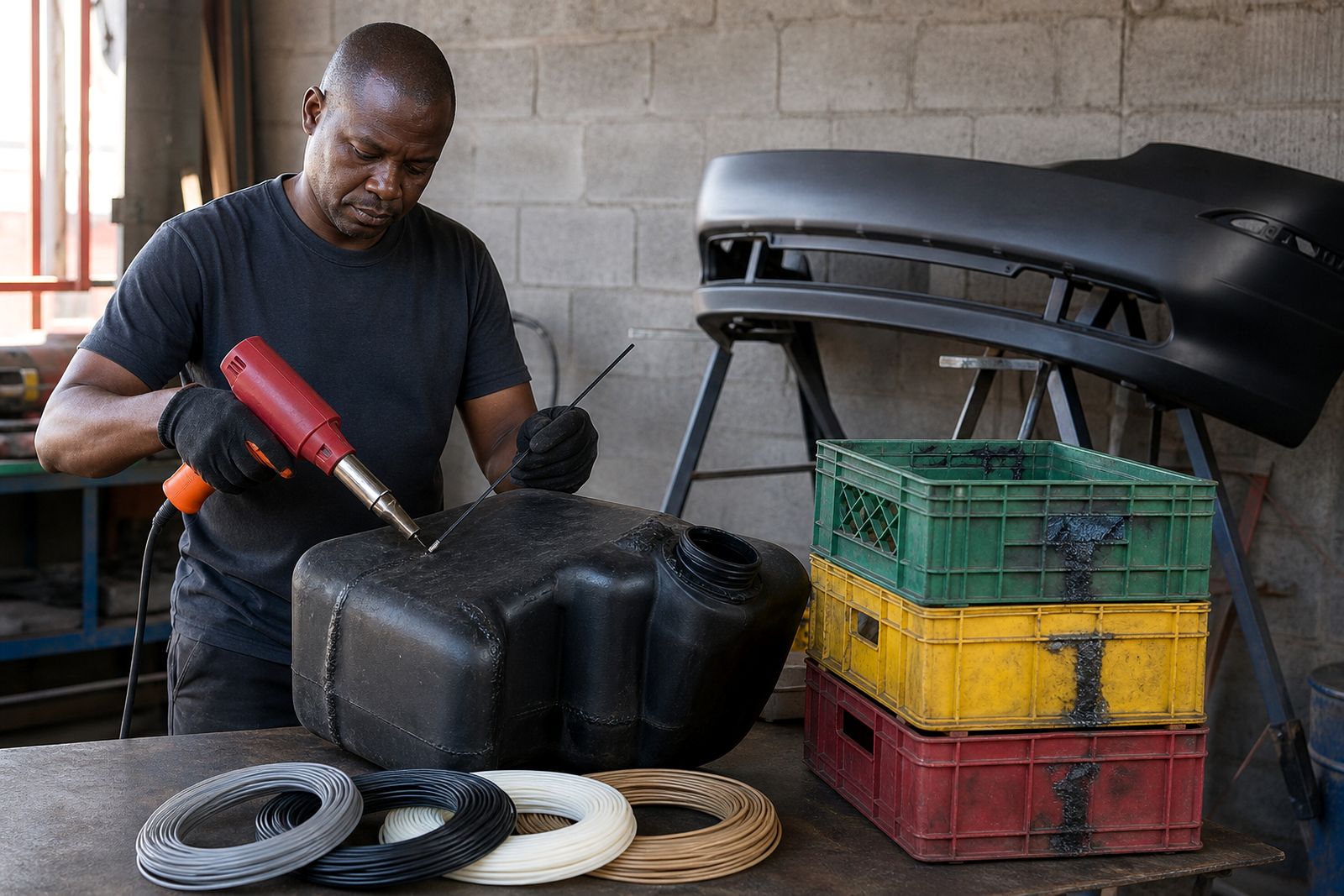
Hot-air plastic welding is best suited to thermoplastics that soften with heat and accept a compatible filler rod. That includes many tanks, drums, crates, bumper skins, duct sections, guards, bins and pipe-related components used in workshops and on working vehicles. Where the base material is sound and the crack, split or worn area can be cleaned and prepared properly, welding is often a workable repair method.
It is also used for small fabrication tasks such as joining sheet, adding tabs, building up worn edges or sealing corners on plastic items. The important part is not the shape of the item but the plastic type, wall thickness and the service conditions it faces after the repair.
Common jobs we help customers prepare for
Customers from Germiston and the wider East Rand often ask for rods and hot-air guns for the same core applications. Some are workshop repairs, some are maintenance jobs, and some are one-off DIY fixes at home or on site.
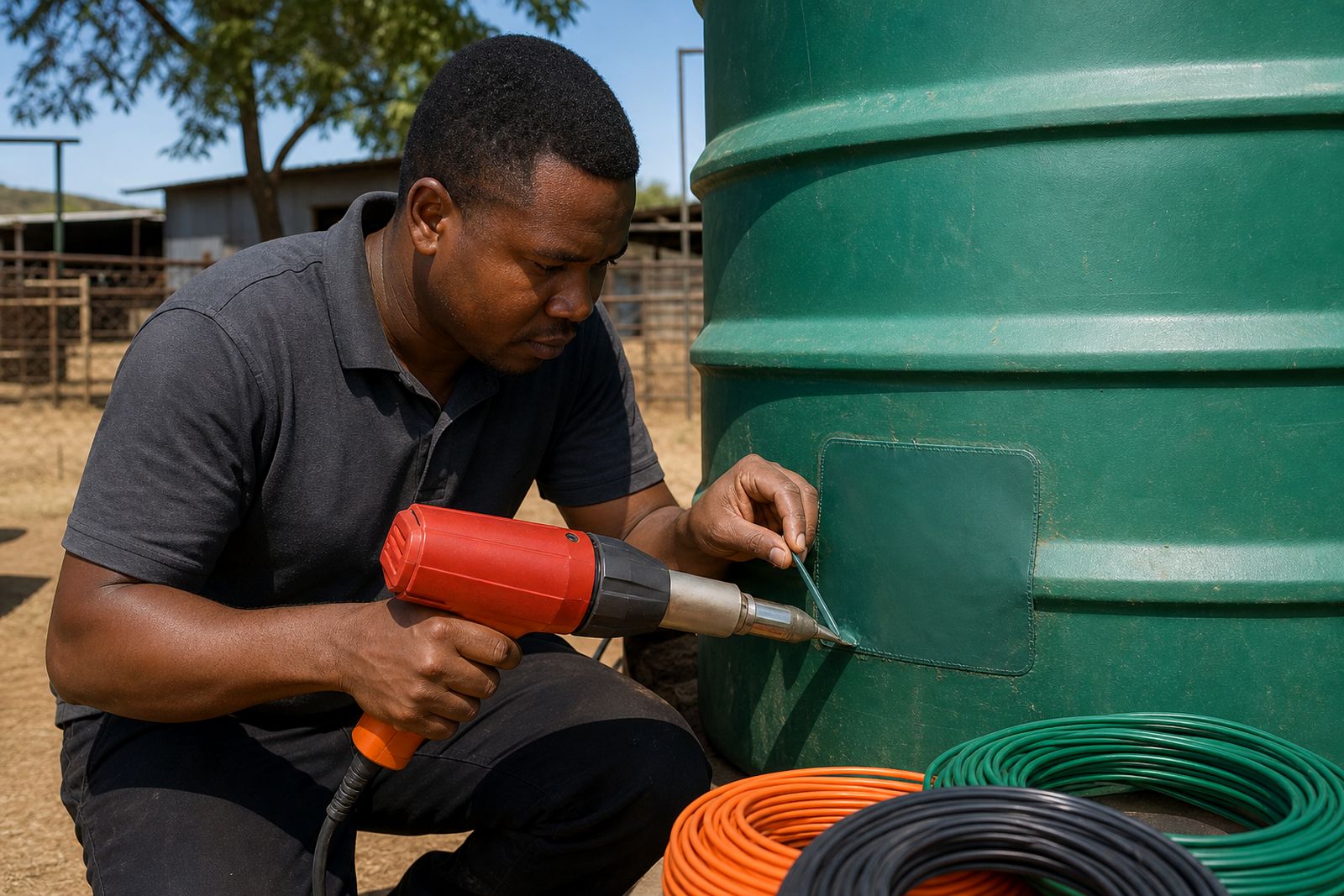
- Water and chemical tanks with splits, worn corners or outlet area damage
- Automotive bumper covers, trims and brackets in PP, PP/EPDM or ABS
- Crates, pallets, bins and tote boxes cracked through impact points
- Plastic pipe fittings, ducting and fabricated guards
- HDPE and PP containers, drums and lids used in handling or storage
- Small sheet fabrication where edges or seams need welding
Not every damaged part should be welded. If the plastic is badly burnt, heavily contaminated, missing large sections or made from a non-weldable material, another repair route may be better. We can help you identify the plastic and match a rod before you buy, which saves a lot of frustration later.
Choosing between tanks, bumpers, crates and pipe work
The job type affects the rod profile, the nozzle setup and how much control you need from the gun. A bumper repair is usually finer work than a crate corner, while a tank seam asks for clean prep and a steady bead over a longer run.
- Tank and container work usually needs careful cleaning, a matching rod, and attention to leak paths around seams and fittings.
- Automotive plastic repairs often involve thinner sections, shaped surfaces and materials such as PP/EPDM or ABS.
- Crates, pallets and bins are commonly thicker, more impact-damaged and suited to practical reinforcement where needed.
- Pipe and fabricated parts depend on correct material ID first, especially where PVC, PP and PE can be confused by appearance alone.
If you are unsure where your job fits, start with the base plastic and the thickness of the part. Those two details narrow the rod choice quickly, and they also point to whether a speed nozzle or a more controlled tack-and-run method is the better route.
A practical comparison of the main application types
These broad comparisons help when you are deciding what setup to use. They are not hard rules, but they reflect what operators see in real workshop conditions.
- Tanks and containers: usually larger repair areas, often PE or PP, with more emphasis on cleanliness and leak resistance.
- Bumpers and trims: lighter sections, more shaping, often PP/EPDM or ABS, with appearance mattering more after the weld.
- Crates and bins: frequent corner cracks and impact splits, commonly PP or HDPE, where strength matters more than finish.
- Pipes and fittings: alignment is important, the plastic must be identified correctly, and access around the joint can be tight.
- Fabricated sheet parts: edge prep and consistent bead placement count for a lot, especially on long seams.
In short, tank work tends to punish poor prep, bumper work punishes poor control, and crate repairs punish weak reinforcement. Pipe work can look simple but can go wrong fast if the material is guessed rather than identified properley.
Matching the rod to the base plastic
The rod must suit the parent material. PP rod is used on PP parts, PE and HDPE rods on compatible polyethylene items, ABS rod on ABS parts, and PVC rod on PVC components. For many bumper skins, PP/EPDM rod is the right choice where standard PP would not be ideal.
Profile matters too. Round rod is common for general welding and flowing a bead into a prepared groove. Triangular rod is often chosen where the joint shape and groove preparation suit it better. On some repairs, stainless reinforcing mesh can help spread load across a weak area, especially on impact-damaged items, but it does not replace correct rod choice.
If the part has no clear marking, we can guide you through basic identification steps before you place an order through our contact form. That usually starts with the application, the appearance of the break, and any moulded material code on the back of the part.
Tools, kits and training for the job
A good repair depends on more than the rod alone. Hot-air guns, speed nozzles, tacking nozzles, scrapers and prep tools all play a part in getting a clean joint that bonds well. For many customers, a starter kit is the easiest place to begin because the main items are grouped for workshop use rather than bought one by one.
Training is useful when the team needs to stop guessing heat, travel speed and rod pressure. Our practical sessions cover the basics of identifying the plastic, preparing the groove, selecting the nozzle and laying a workable bead on typical repair pieces. We sell the equipment and training for these jobs, but we do not take in repair work for the public and we do not supply extrusion welders or large fabrication machines.
Explore the range
Tank and container repair
A workshop guide to repairing plastic tanks, drums and containers without guessing the rod or the weld prep.
Read more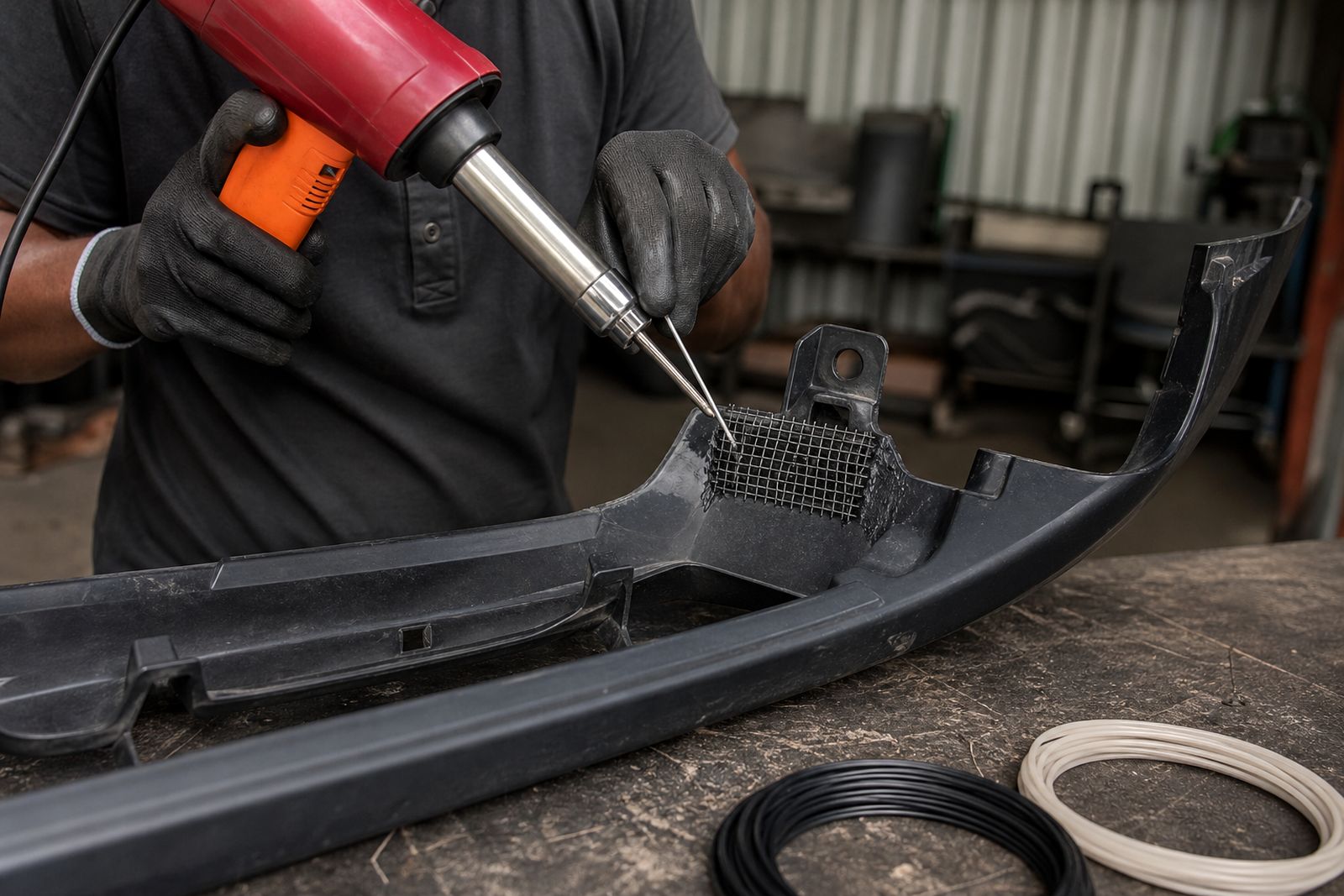
Automotive plastic repair
A workshop guide to welding bumper plastics, broken tabs, grille sections and trim parts properly.
Read more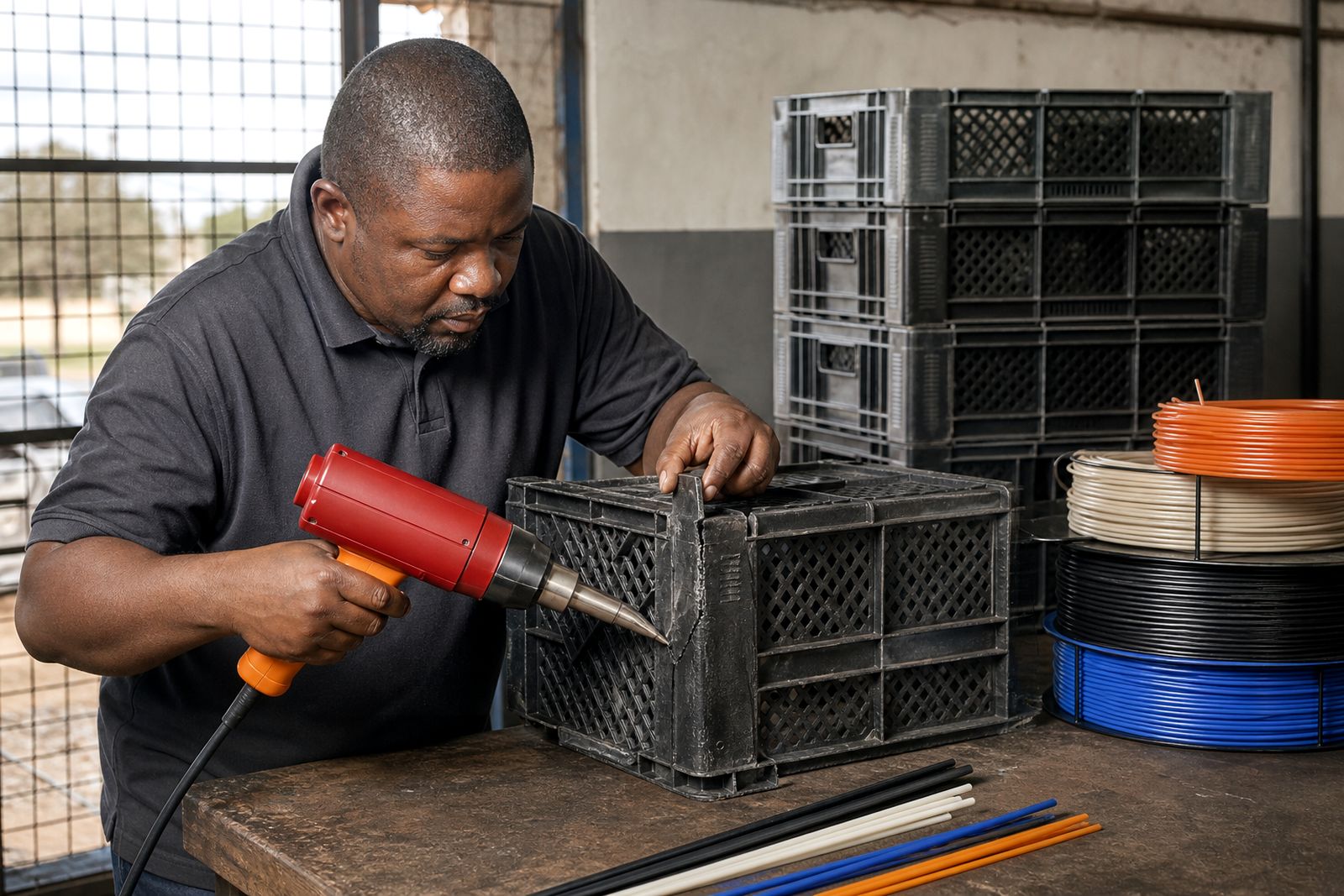
Crates, pallets and bins
Workshop notes on repairing cracked crates, bins and pallets with the right rod, prep and weld support.
Read moreWhat our Plastic Welding customers say
Verified Google reviews
Questions we get asked
Can all plastics be welded?
No. Plastic welding is for compatible thermoplastics such as PP, PE, HDPE, ABS and PVC. The first step is identifying the material correctly before choosing rod and nozzle setup.
Is bumper repair the same as tank repair?
Not really. Bumpers are often thinner and shaped, with finish and flexibility both mattering. Tank repairs usually focus more on cleanliness, compatibility and sealing the damaged area properly.
Do I need a full workshop setup to start?
For many small repairs, a hot-air gun, suitable nozzles, matching rods and a few prep items are enough to begin. A starter kit is often the simplest route for a first setup.
Tell us about the job
Send sizes, materials and where you are through our contact form, and we will come back with the practical options.
Open the contact form