Plastic welding rods
Plastic welding starts with the right rod for the base material, not just a rod that looks close enough. This section covers the common rod types, profiles and repair uses so you can choose a practical match before you weld.
Rod choice starts with the parent plastic
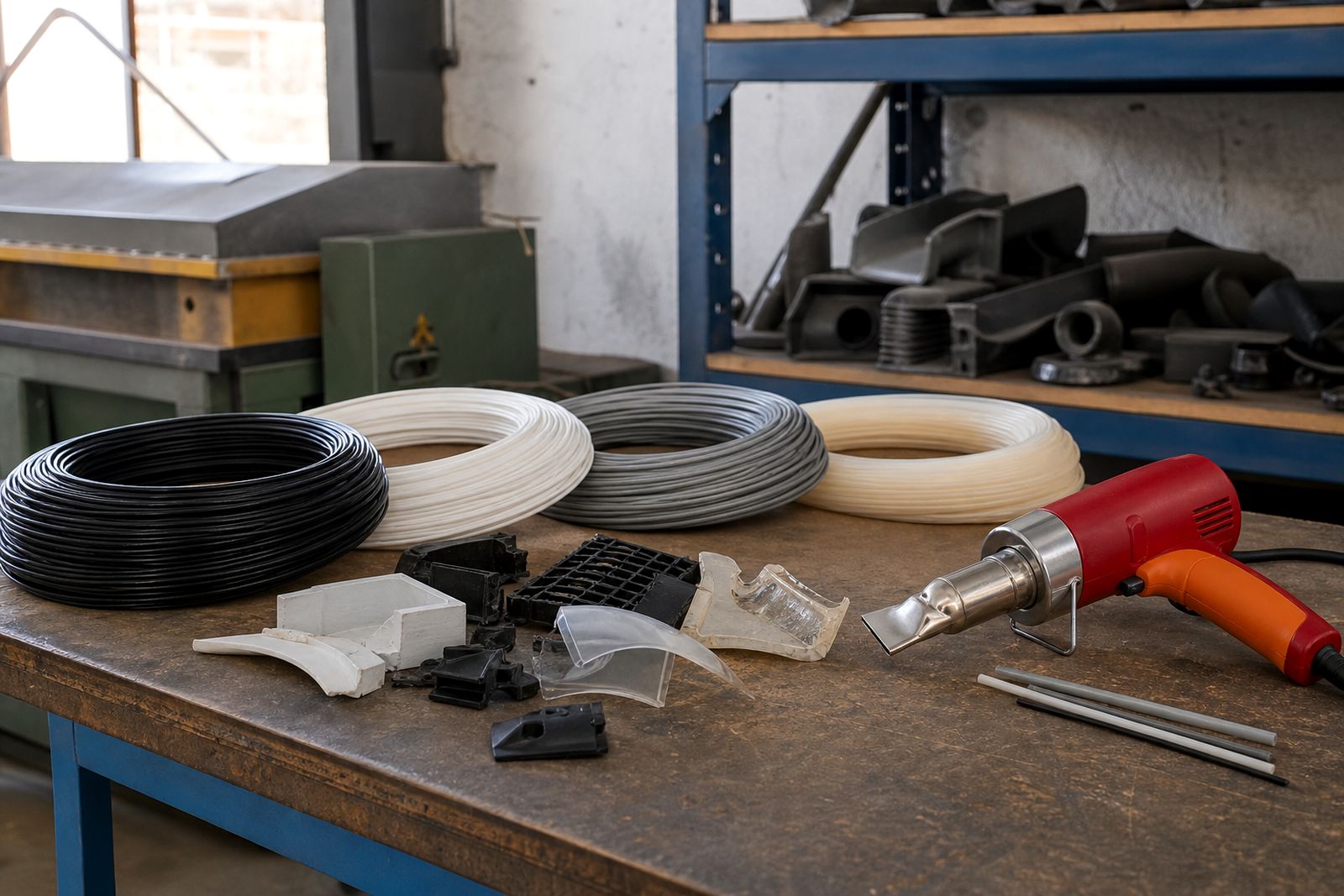
A sound weld depends on compatibility between the item being repaired and the rod being fed into the joint. Using the wrong plastic can leave the bead brittle, waxy, difficult to fuse or prone to lifting once the part cools. We help customers identify the material first, then match the rod to the job whether the part is a tank, crate, bumper, pipe section or fabricated panel.
Our range covers workshop staples such as PP, PE and HDPE, along with ABS, PVC and bumper grades including PP/EPDM. Rod is available in common workshop profiles so you can choose a shape that suits the groove you are preparing and the nozzle you are using.
- PP and PE rods for many agricultural, storage and fabrication repairs
- HDPE rods for tougher polyethylene components and thicker wall sections
- ABS rods for rigid moulded parts and many automotive trim repairs
- PVC rods for compatible sheet, duct and pipe work
- PP/EPDM bumper rod for flexible bumper covers and related vehicle plastics
Round or triangular, and when each one makes sense
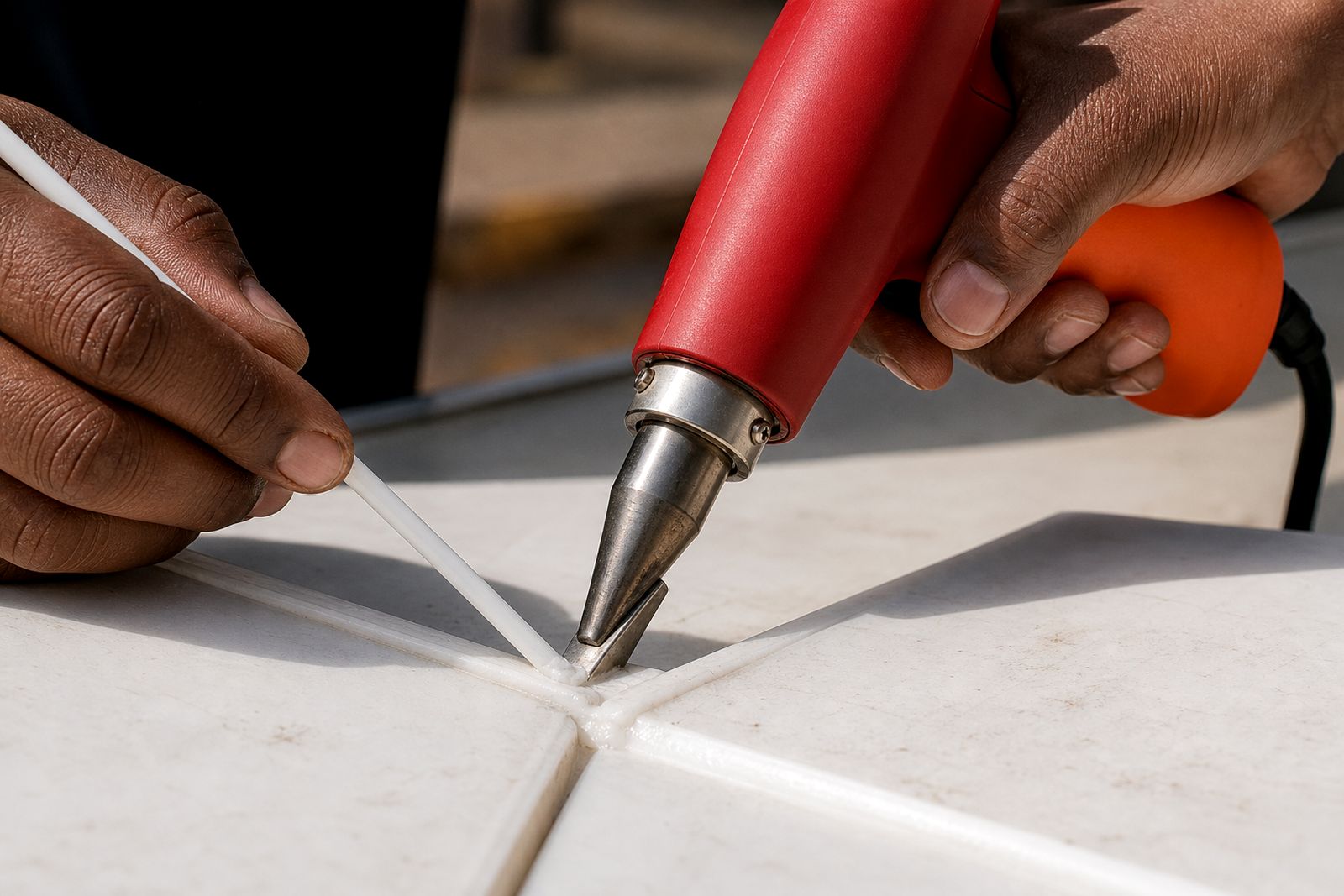
Profile matters more than many first-time users expect. A round rod feeds smoothly and is often preferred for general repair work, especially where the operator is building a bead into an open V-groove. Triangular rod is useful where the groove has been cut to accept that shape, giving good contact on both sides as the weld forms.
For finer cracked sections a smaller rod can help with control, while broader repairs may call for a heavier bead and more filler. If the joint prep, nozzle and rod profile are working together, the weld usually flows more neatly and needs less trimming afterwards.
- Round rod suits many general repairs and hand-fed welds
- Triangular rod sits well in a prepared V-groove
- Smaller profiles help on narrow cracks and lighter components
- Larger profiles are useful on thicker wall repairs and fabricated joins
A workshop comparison of the main rod families
Different plastics behave differently under heat, pressure and cooling. Some stay fairly forgiving in a repair, others need cleaner preparation and tighter control. The notes below are meant as practical workshop guidance rather than a lab chart.
- PP: common on crates, tanks, battery covers, fabricated items and many moulded parts. Often a good choice where the base material has some flex.
- PE and HDPE: widely used on bins, chemical containers, water tanks and liners. These grades can feel slightly waxy and need the surface cleaned well before welding.
- ABS: often found on rigid automotive and equipment panels. It machines and finishes neatly, which helps where appearance matters.
- PVC: used on certain pipe, duct and sheet applications. Matching the correct PVC rod to the job is important for a clean fused seam.
- PP/EPDM bumper rod: intended for compatible bumper plastics where standard PP rod may not give the right flexibility.
If you are unsure whether a part is PP, PE or a blended bumper plastic, send clear photos and any moulded identification marks through our contact form. That saves guesswork and reduces wasted rod on test passes.
Matching the rod to the repair, not only the label
Two parts may both be called plastic, yet need completely different filler. A water tank repair, for example, often has very different welding behaviour from a bumper corner or a PVC duct seam. The best match takes into account the base polymer, part thickness, whether the item flexes in service and how the joint has been prepared.
We usually suggest looking at the moulded material code first, then checking the way the part cuts and responds to gentle heat. For worn workshop parts that have no clear marking, a small test weld can be useful before moving onto the actual repair. It sounds basic but this step prevents plenty of avoidable failures.
Where reinforcement is needed on a split or stressed section, stainless mesh may be added as part of the repair method, then covered with the correct rod. The reinforcement does not replace proper rod selection, it supports it.
Where these rods are commonly used
Plastic welding rod is used across repair and fabrication work in panel shops, maintenance workshops and small production environments. The application often determines the rod shape and grade as much as the material itself.
- Tank and container cracks, worn corners and outlet areas
- Crates, pallets and bins with split sides or broken lips
- Automotive bumper tears, tabs and mounting points
- Pipe and duct work in compatible plastic grades
- Fabricated guards, covers, liners and formed panels
We do not carry extrusion welders or large fabrication machines, and we do not take in repair work from the public. Our role is to supply the rods, hot-air equipment and starter kit items needed for customers doing the work in their own shop or workshop.
Getting the right rod into your workshop
If you already know the material and profile you need, this section will point you to the rod pages for PP and PE, bumper and ABS, or PVC. If you are still identifying the plastic, we can help narrow it down before you order. A photo of the damaged area, the moulded marking if present and the intended use after repair are usually the most useful details.
Workshops in Germiston and across the East Rand can source rods for routine repair stock, and we courier to customers in every province. Many customers pair rod orders with a hot-air gun, speed nozzle, tacking nozzle, scraper or a starter kit so they have a workable set-up from the start.
Training is also available for teams that need a practical grounding in plastic identification, joint preparation and rod handling. That is especially useful where staff have handled metal welding before but are new to thermoplastic repair.
Explore the range
PP and PE welding rods
Material-matched PP and PE rods for practical plastic repairs in workshops, yards and fabrication jobs.
Read more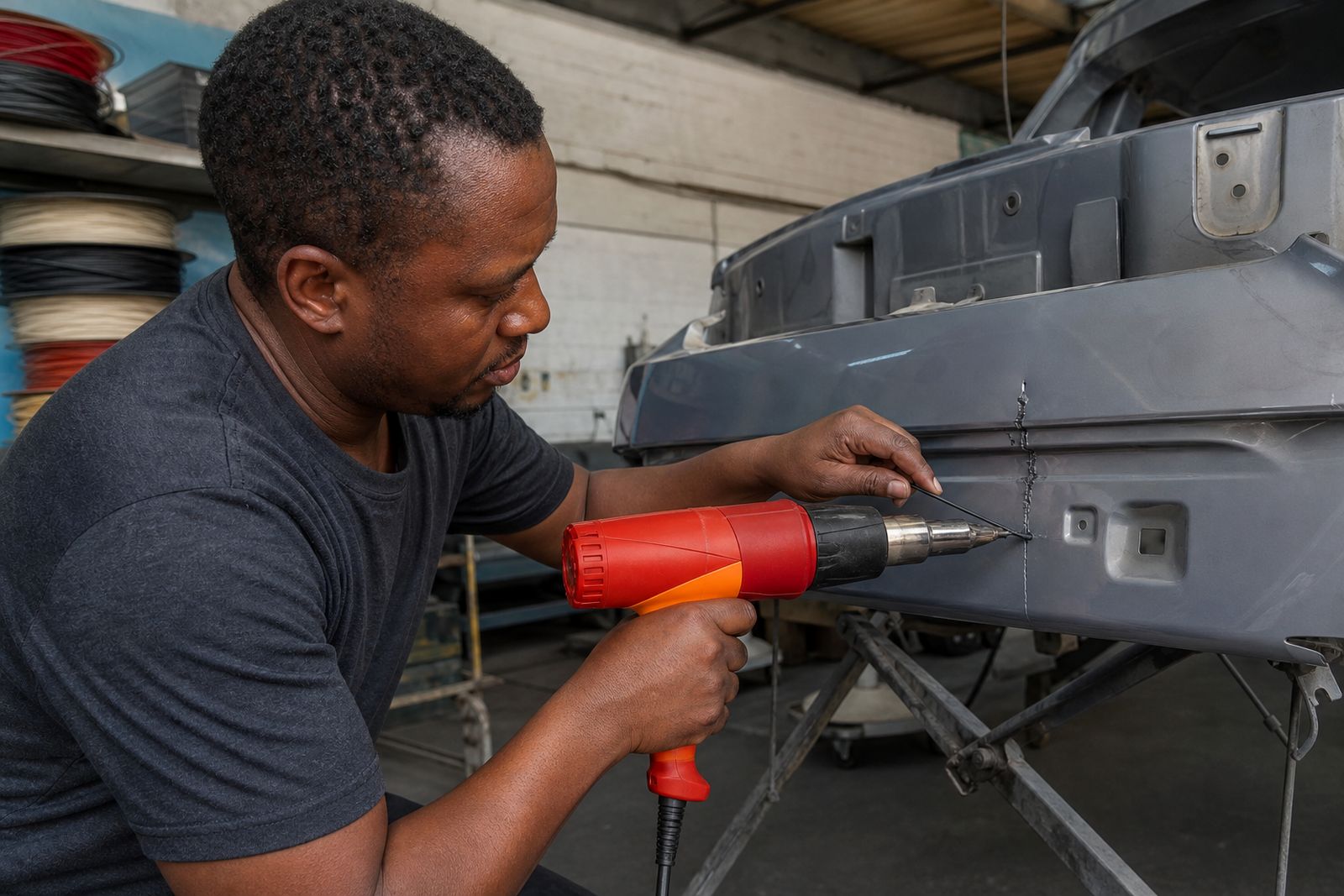
Bumper, PP/EPDM and ABS rods
Plastic welding rods for bumpers, trim and ABS housings where material match is critical.
Read more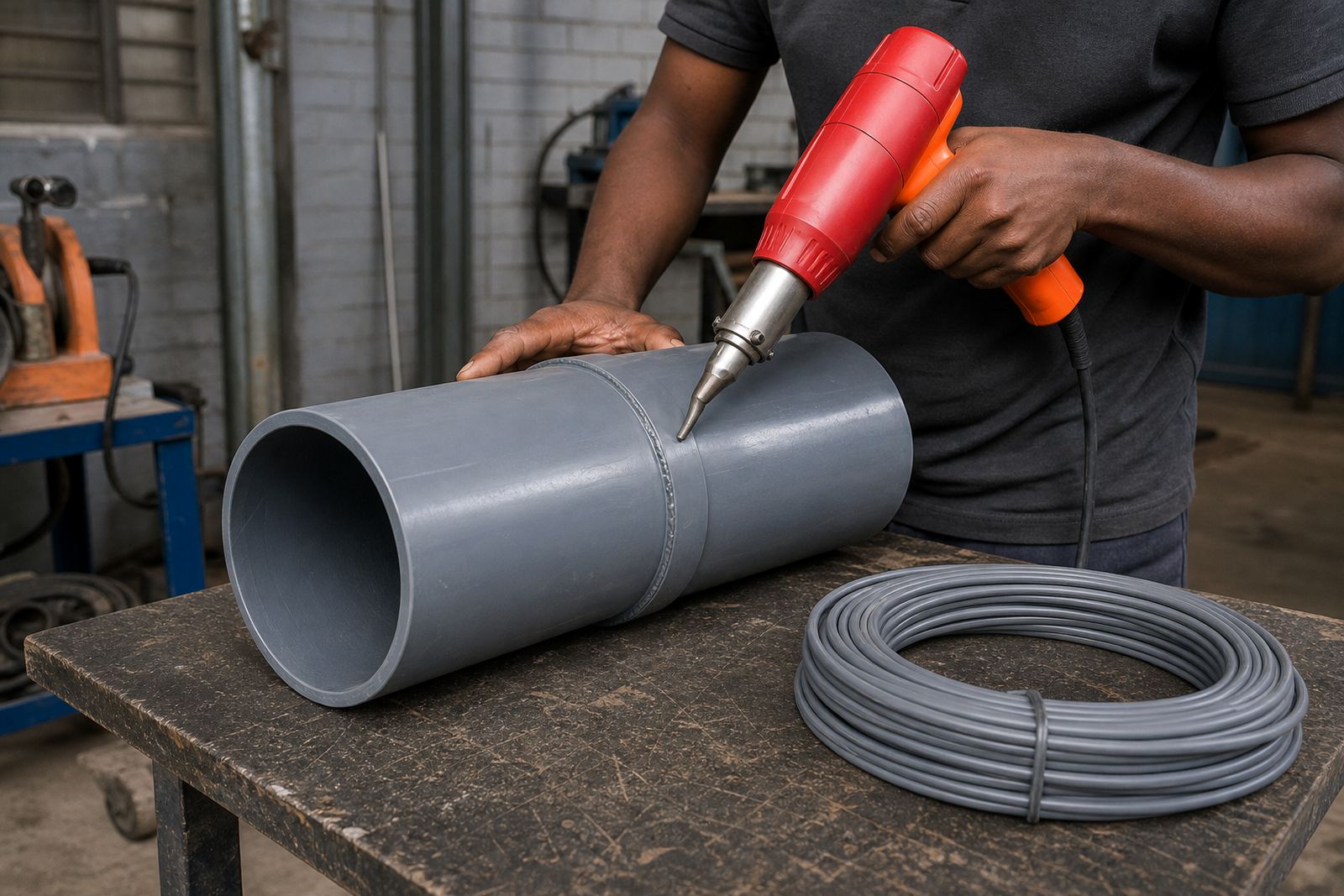
PVC welding rods
Rigid PVC welding rod for ducting, tanks and fabricated parts, in practical profiles for workshop repairs and build work.
Read moreWhat our Plastic Welding customers say
Verified Google reviews
Questions we get asked
Can I use any plastic rod if the colour looks similar?
No. Colour is not a reliable guide. The rod needs to match the base plastic grade as closely as possible or the weld may not fuse properly and can fail under stress.
Do you help identify the plastic before I order rods?
Yes. We can assist with identification from moulded material marks, photos and a short description of the part and its use. If needed, we may suggest a small test approach before full production work.
Do you repair tanks, bumpers or bins for customers?
No. We supply rods, hot-air guns, accessories, starter kits and training, but we do not carry out repair work for the public.
Tell us about the job
Send sizes, materials and where you are through our contact form, and we will come back with the practical options.
Open the contact form