PVC welding rods
PVC welding rods are used on rigid PVC repairs and fabricated parts where the parent material must be matched properly. We supply rod for workshop use on ducting, tanks and formed sections, and we help you confirm that the plastic is actually PVC before you start.
Made for rigid PVC, not mixed plastics
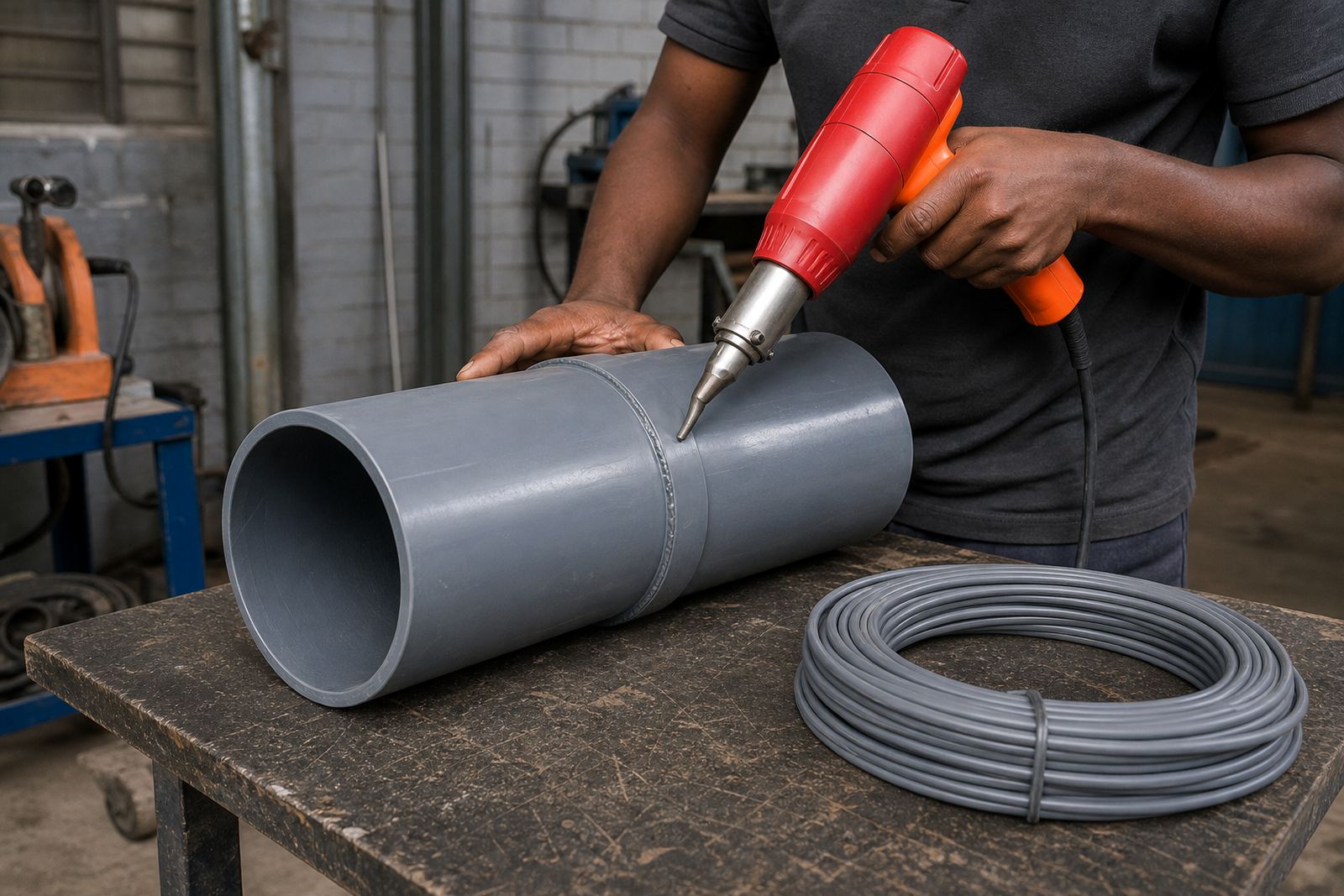
PVC welding rod is a filler material used with a hot-air welding gun to join or repair rigid PVC components. It suits fabricated ducting, chemical tanks, pipe fittings, guards, covers and sheet-built items where the base material is also PVC. The point is not only to fill a crack or seam, but to bond like with like so the finished weld moves and ages closer to the parent part.
On this type of job material ID matters more than many people expect. A grey panel, pipe or tank section can still be PP, PE or ABS, and the wrong rod will leave you with a weak bead that looks acceptable at first then opens under load or vibration. If you are unsure, we can guide you through the plastic ID checks before matching the rod.
PVC rod is generally chosen for rigid parts rather than soft vinyl items. Where the job involves flexible sheeting, heavily plasticised material or unknown imported mouldings, it is worth checking first instead of assuming a colour match means a material match.
Profiles and sizes that suit hand welding
For most workshop work, PVC rod is selected by profile and diameter to match the groove size, wall thickness and welding method. Smaller rods help on neat repairs and thinner sheet, while thicker rod gives more fill on heavier sections and longer seams.
- Round rod for general hand welding, crack repair and freehand filling.
- Triangular rod for prepared grooves and sheet fabrication where a shaped filler sits neatly into the joint.
- Common diameters for workshop use include 3 mm, 4 mm and 5 mm, depending on joint size and part thickness.
- Standard lengths are usually straight rods around 1 metre for easy handling and clean feeding.
Round profile is often the better choice for repairs on formed parts and awkward corners. Triangular profile tends to suit V-grooved seams on fabricated sections, covers and duct pieces where a controlled bead is needed. If the work includes inside corners, flange areas or narrow return edges, tell us that up front so the rod shape can be matched properly.
Where PVC rod works well on the floor
Rigid PVC rod is regularly used where corrosion resistance, chemical handling or fabricated air movement systems matter. It is common in workshops that build or repair utility plant components, process ducting, wash areas and storage items made from PVC sheet or rigid extrusions.
- Ducting sections, branches and elbows made from PVC sheet.
- Tanks, lids, baffles and overflow boxes where the parent material is rigid PVC.
- Pipe fittings, collars and guards that need local crack repair.
- Fabricated parts for industrial, agricultural and water handling setups.
It is less suitable where the base plastic is PP, PE, HDPE, ABS or a bumper blend. It also does not replace proper fabrication design on large structural work. If a tank wall is badly thinned, distorted or chemically attacked through the full section, the weld can only do so much and the damaged area may need a cut-out patch rather than a surface pass.
Limits that matter before you weld
The neatest bead in the workshop will still fail if the joint faces are dirty, stressed or made from the wrong plastic. PVC rod performs best where the edges are clean, dry and freshly prepared, with a proper groove on thicker material and steady support behind the joint. Oil, powder residue and chemical contamination can spoil fusion even when the operator technique is good.
- Not for PP, PE, HDPE, ABS or mixed-plastic repairs.
- Not the right choice for flexible vinyls and very soft PVC items.
- Not intended for extrusion welding or large fabrication machinery.
- Not a substitute for sound joint design on heavily loaded structures.
In plant rooms and coastal areas, old PVC can turn brittle after years of heat, sun or chemical exposure. In those cases a test weld on a trimmed sample is often the safer route. Sharp corners and old stress cracks may need to be stopped, grooved and rebuilt in stages rather than chased with one hot pass. A slighly chalky surface can still weld, but it needs honest prep.
Workshop setup, handling and rod care
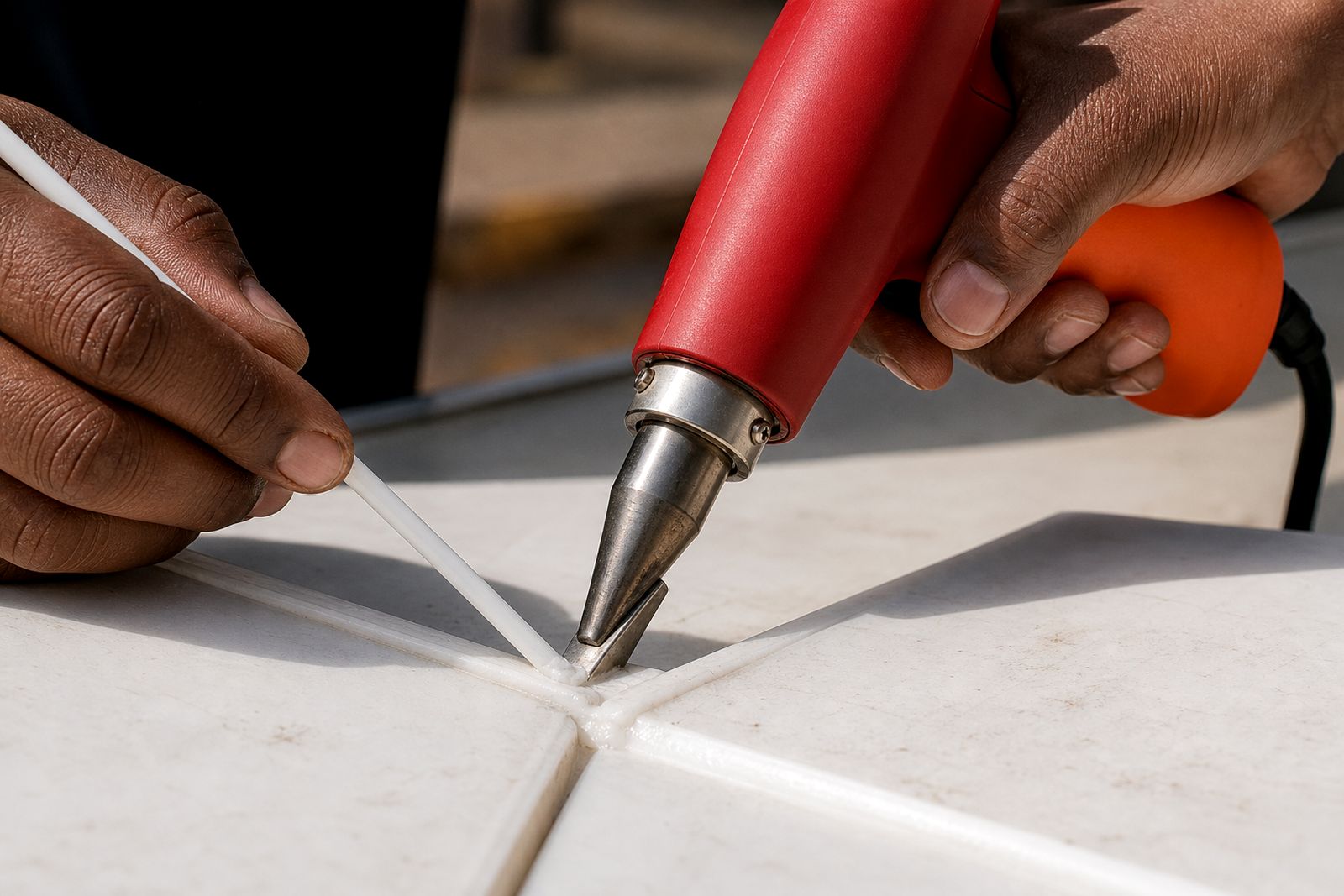
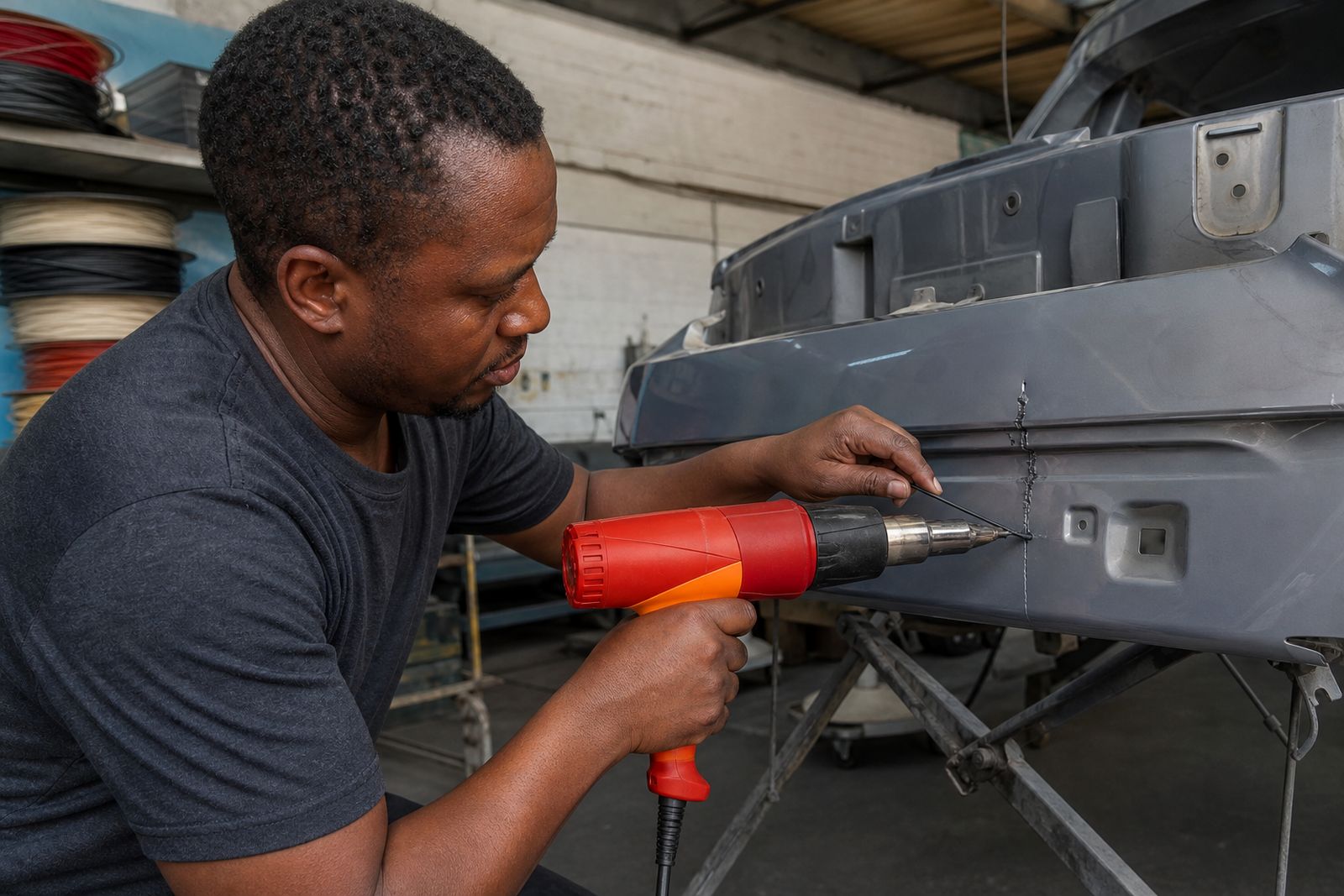
PVC welding rod is used with a hot-air welding gun and the correct nozzle arrangement for the job, whether that is tacking, freehand work or speed welding on straight seams. Good fit-up helps more than people think. Gaps that wander in width force the operator to overheat one section and starve the next, which usually shows later as pinholes or an uneven bead.
Keep rods clean, straight and out of direct dirt on the shop floor. They should be stored dry and away from heavy heat exposure before use. Wipe off dust before welding, and avoid mixing loose offcuts from different plastics in one bin. In a busy workshop that small habit saves a lot of guesswork later.
For site work, allow for stable power to the welding gun, a clean bench or trestle area, and enough room to support long duct or tank sections without twisting the joint while it cools. On repairs to tanks or process parts, make sure the item has been drained, cleaned and made safe before any hot-air work starts.
Details that help us match the right PVC rod
When you send an enquiry, include as much job detail as you can. That lets us narrow the rod profile and accessory setup without sending you down the wrong track. A quick photo of the part and joint area often helps, especially on fabricated ducting and tank work.
- Whether the part is rigid PVC sheet, pipe, fitting or a fabricated assembly.
- Approximate wall thickness in mm and the type of joint or crack.
- Round or triangular rod preference, if you already know it.
- Whether you need rod only or a hot-air gun, nozzles, mesh, scrapers or a starter kit as well.
- If the work is repair, fabrication or training-related.
- Your town or province if courier delivery is needed.
If you are not certain the plastic is PVC, mention that in your message through our contact form and include a clear photo of the part, any markings, and where it is used. We do not carry out repair work for the public, but we do help workshops, panel shops, fabricators and DIY users choose the right rod and basic setup for the material in front of them.
What our Plastic Welding customers say
Verified Google reviews
Questions we get asked
Can I use PVC rod on a crack in a plastic water tank?
Only if the tank is actually made from rigid PVC. Many tanks and containers are PE or HDPE, and those need a different rod. If you are unsure, send photos and any moulded markings so we can help identify the plastic.
Is triangular rod better than round rod for PVC sheet work?
It depends on the joint. Triangular rod is often preferred for prepared grooves and fabrication seams, while round rod works well for general repairs, uneven areas and freehand filling.
Do you do the welding repair for me if I bring the part in?
No. We supply welding rods, hot-air guns, accessories and starter kits, and we offer practical training, but we do not carry out repair work for the public.
Tell us about the job
Send sizes, materials and where you are through our contact form, and we will come back with the practical options.
Open the contact form