Nozzles and accessories
The nozzle and accessory you fit to a hot-air gun changes how heat and rod meet the job. We stock practical welding attachments and hand tools for repair work on tanks, bumpers, bins, pipe and fabricated plastic parts.
What these accessories do on the job
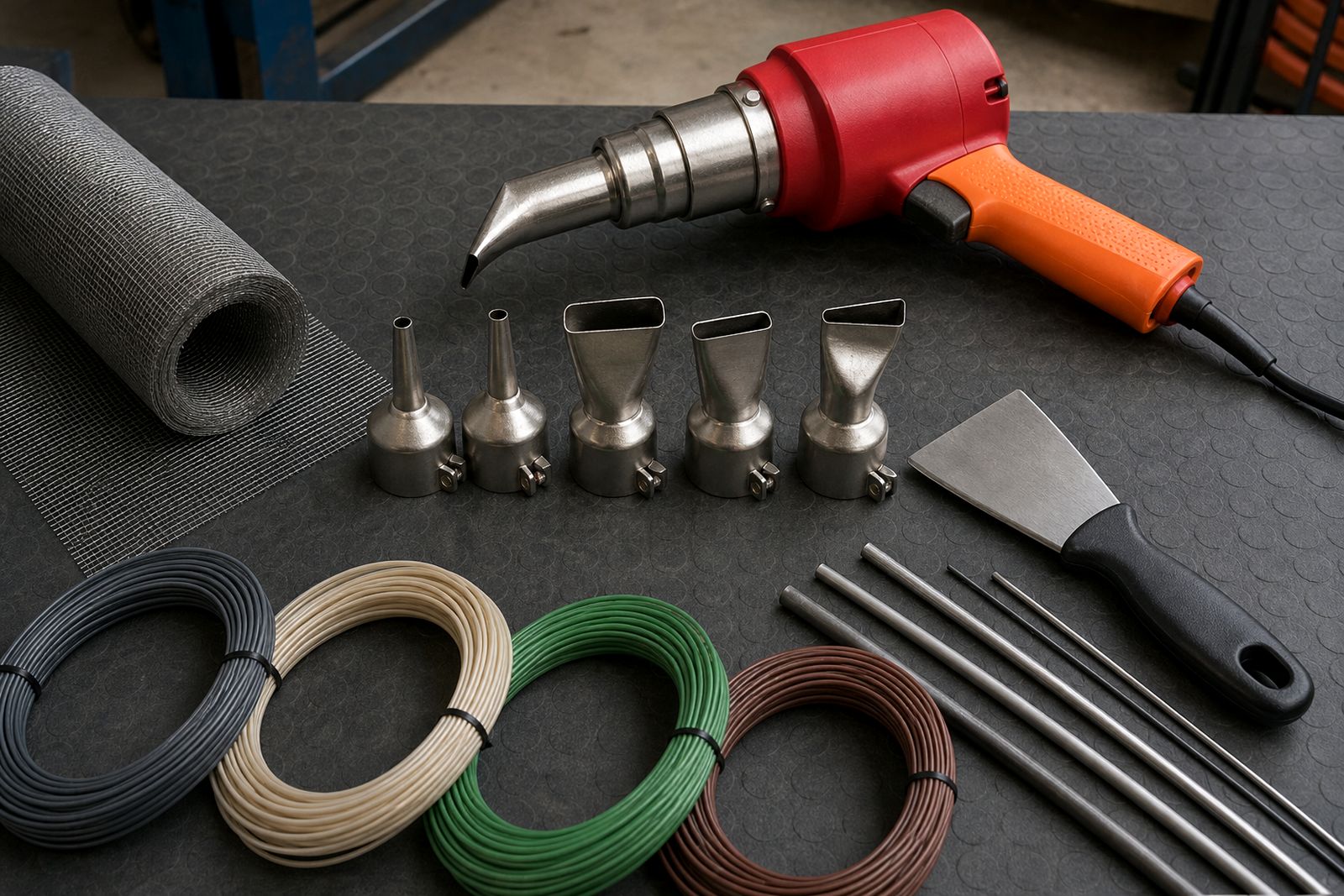
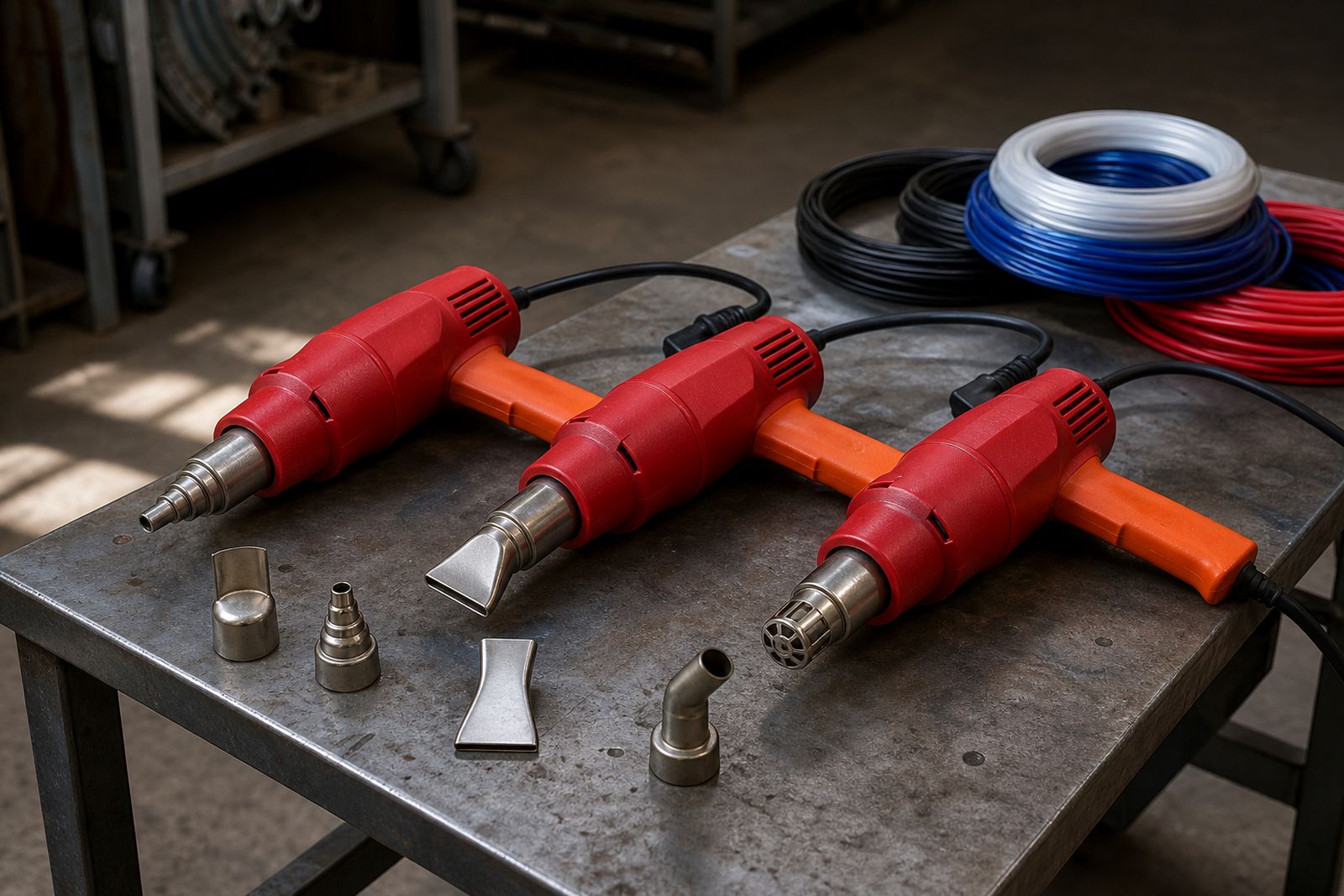
Nozzles and accessories are the small parts that make a hot-air welding gun useful on real repair work. A speed nozzle guides the rod and concentrates airflow where the weld needs it. A tacking nozzle gives a narrow stream for holding pieces in place before full welding. Round nozzles are used where you need directed heat without feeding rod through a shoe, such as pre-heating, shrinking a local area slightly, or warming the base material ahead of hand feeding.
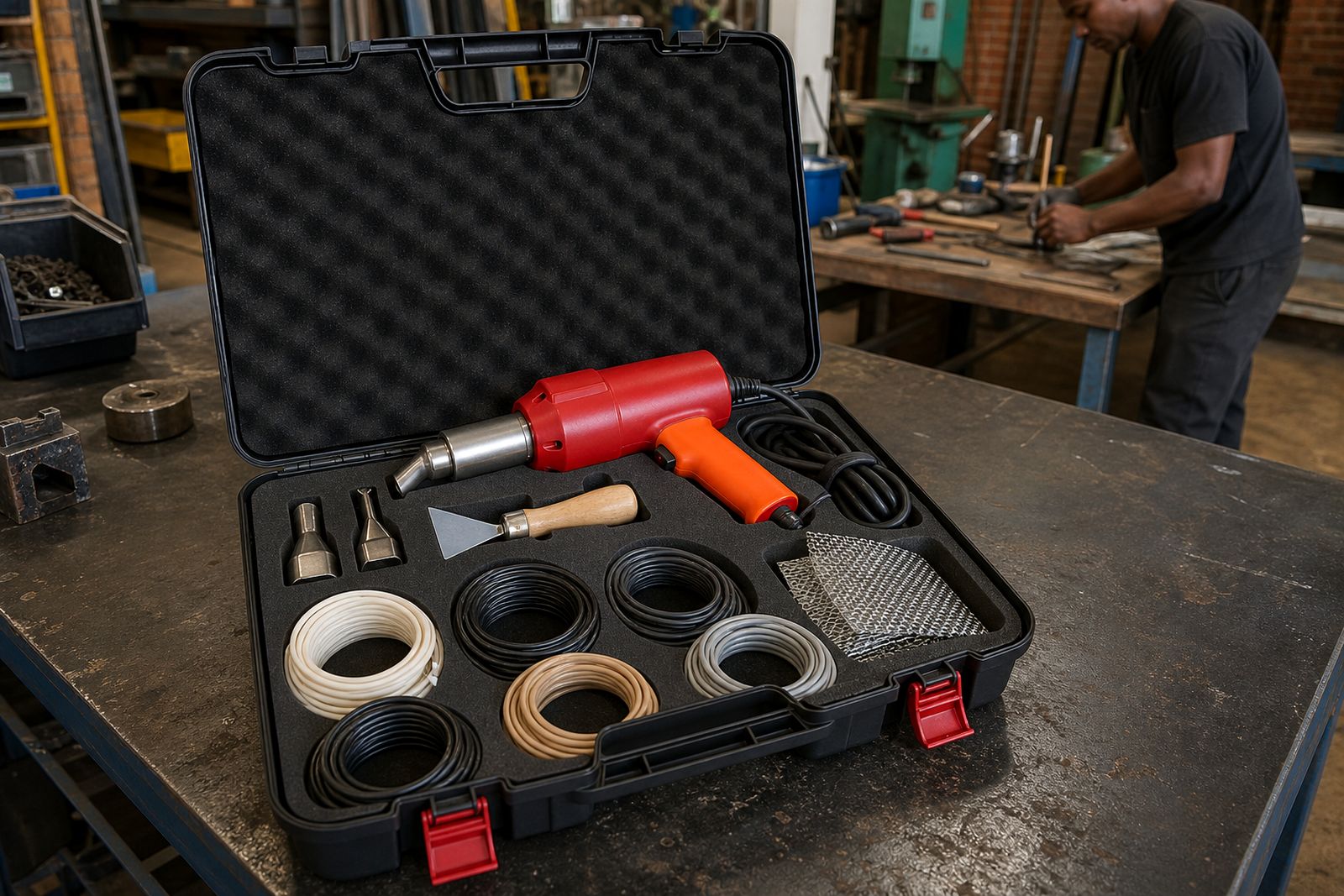
We also carry scrapers for dressing the weld area and trimming proud material, plus stainless reinforcing mesh for repairs that need extra support across a crack or split. These items suit workshop use where operators need a neat, repeatable setup rather than trying to improvise with a general-purpose outlet. The result is better control and less wasted rod, especially on awkward shapes.
- Speed nozzles for guided rod feeding on longer seams.
- Tacking nozzles for spot fixing before a full pass.
- Round nozzles for concentrated hot air on detail work.
- Scrapers for surface prep and weld finishing.
- Stainless mesh for reinforcing selected plastic repairs.
Options, sizes and working limits
The correct nozzle depends on the gun outlet, the rod profile and the width of the weld area. Speed nozzles are commonly selected to suit round or triangular rod profiles and must match the rod size closely enough to feed cleanly without excessive drag. A poor match causes snagging, uneven heating, and rod that curls before it beds into the joint.
Tacking nozzles and round nozzles are chosen by outlet size and the concentration of heat needed. Smaller openings help with localised work and edge preparation. Larger openings spread the heat more broadly but are less precise. Scrapers vary by blade shape and reach, while reinforcing mesh is cut to the repair area and embedded where the plastic type and wall thickness allow it.
- Speed nozzle options to suit common rod shapes such as round and triangular profiles.
- Round nozzles in sizes for narrower or broader heat concentration.
- Tacking nozzles for controlled spot work on cracks, tabs and alignment points.
- Scrapers for flat, curved and corner access.
- Mesh supplied for cut-to-size reinforcement on selected repairs.
Working limits matter. These accessories are meant for hot-air plastic welding guns, not for extrusion welding equipment or large fabrication machines. Mesh is not a cure-all for weak or contaminated plastic, and a speed nozzle will not compensate for the wrong rod material. On thin plastic, too much concentrated heat can distort the part before the weld even starts so setup needs a bit of care.
Where they suit, and where they do not
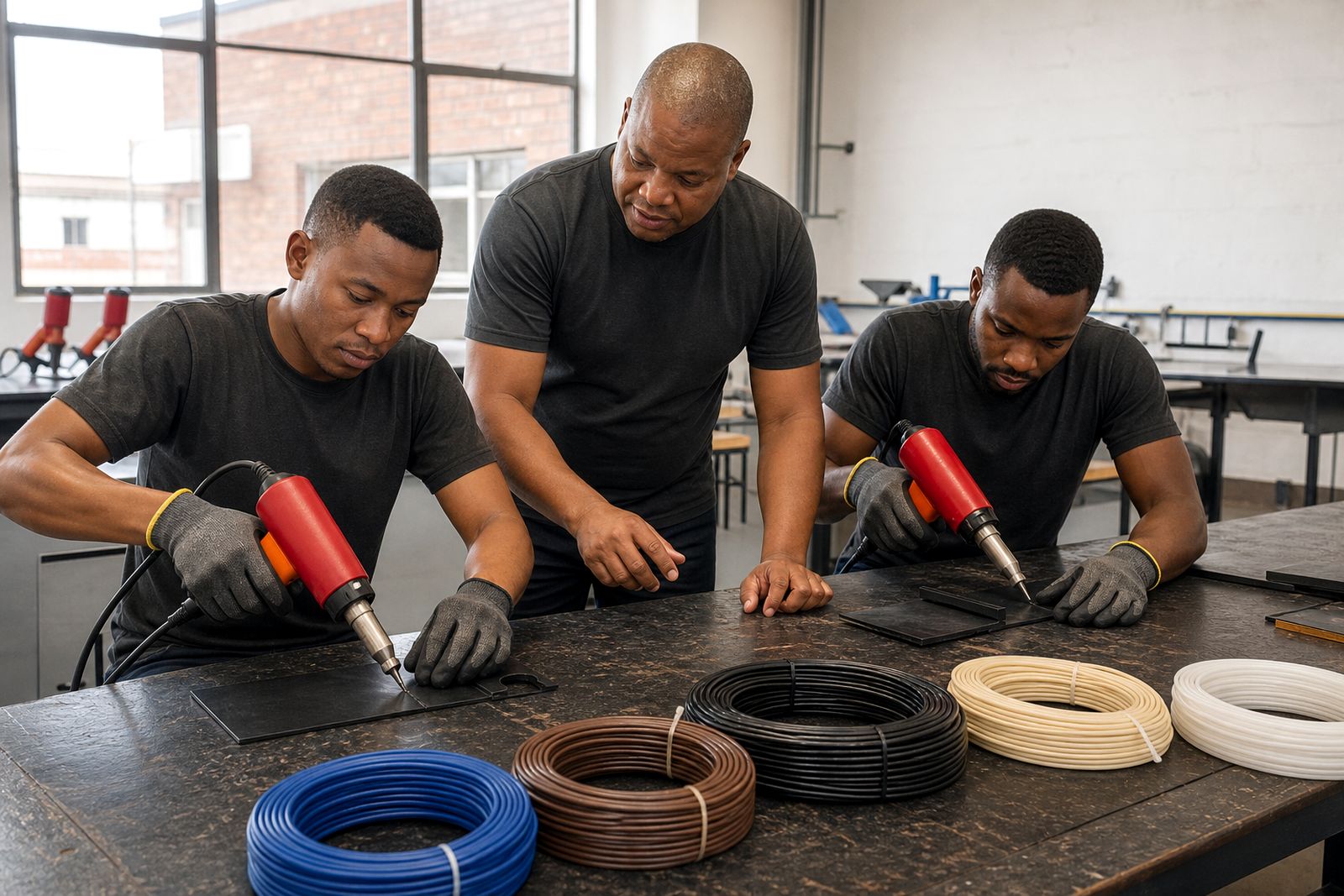
These accessories are useful in panel shops, maintenance workshops, fabrication shops and technical training setups. Common work includes cracked tanks, split bins, pallet edges, bumper tears, pipe fittings, crates and guards on equipment. A speed nozzle suits straight or gently curved seams where consistent rod feed is possible. Tacking nozzles are handy when a part needs to be held in alignment first. Round nozzles help when you must warm a small area before pressing material together by hand.
They do not suit every plastic repair. If the parent material cannot be identified, if it has absorbed oil or chemicals, or if the crack runs through a heavily stressed mounting point, results may be limited. Mesh should not be used as a substitute for proper joint preparation. These accessories are also not intended for decorative heat work or for welding sheet at production scale where specialised machinery is normally used.
We do not carry extrusion welders or large fabrication machines, and we do not offer public repair work. Our role is to supply the rods, hot-air guns and accessories, and to help you choose a workable setup for your own repair or workshop process.
Fitting and workshop requirements
Nozzles must fit the gun outlet correctly and sit securely before heat is applied. A loose fitting nozzle can leak hot air, reduce control and overheat the gun at the wrong points. Before use, check that the nozzle type matches the task and that the rod profile suits the speed shoe if one is being used. For workshops on the East Rand and coastal areas alike, clean storage helps because dust, moisture and salt air can mark metal parts over time.
Basic workshop needs are straightforward but important.
- A compatible hot-air gun with the correct outlet size.
- A stable workbench and safe place for the hot tool to rest.
- Clean plastic surfaces, free of loose paint, dirt and grease.
- Good ventilation, especially on older or contaminated parts.
- Enough access around the repair so the gun angle stays consistent.
On larger items such as tanks or bins, plan the weld path before heating. It sounds obvious, but many poor repairs start with a good rod and the wrong hand position. If you are welding outdoors or near open workshop doors, airflow can cool the joint too quickly and make the pass erratic.
Care, wear and replacement
Accessories last longer when they are kept clean and used for the task they were meant for. After the nozzle has cooled, remove any softened plastic build-up from the opening and guide surfaces. Do not force rod through a speed nozzle that has picked up residue, because the drag usually gets worse and then the operator turns up the heat too far trying to compensate.
Scraper blades should be kept free of nicks so they do not gouge the surrounding plastic. Mesh should be stored dry and flat where possible. If a nozzle becomes distorted, loose on the outlet, or blocked beyond sensible cleaning, replace it. Worn accessories often show up as poor bead shape, patchy gloss on the seam, or a weld that takes too much effort to lay down cleanly. A small accessory problem can waste plenty of rod before someone notices it.
What to send with your enquiry
To help us match the right nozzle and accessory set, tell us what plastic you are welding, which rod profile you use, and what gun you already have if any. A few practical details save time and reduce the chance of ordering a nozzle that does not fit or does not suit the repair. If you are unsure about the base plastic, say where the part is used and whether it is rigid, waxy, brittle or marked with a moulding code.
- Type of job, such as bumper repair, tank crack, crate corner or pipe work.
- Plastic type if known, for example PP, PE, HDPE, ABS or PVC.
- Rod profile and size, such as round or triangular.
- Whether you need speed welding, tacking, pre-heating or reinforcement.
- Photos of the part, crack, seam length and wall thickness if possible.
- Whether you also need scrapers, mesh or a starter kit.
You can send those details through our contact form and we will help narrow down a workable combination. If you are new to plastic welding, mention that too and we can point you to starter kit and training options rather than only listing loose parts.
What our Plastic Welding customers say
Verified Google reviews
Questions we get asked
Can I use one speed nozzle for every rod type?
Not usually. The nozzle needs to suit the rod profile and size closely enough for smooth feeding and even heating. A mismatch can cause snagging, poor bead shape and unnecessary heat build-up.
Is reinforcing mesh suitable for all plastic repairs?
No. Mesh is useful on selected cracks and splits where the plastic type and thickness can support it, but it is not a substitute for correct rod choice, surface prep or sound welding technique.
Do I need a round nozzle if I already have a speed nozzle?
Often yes. A speed nozzle is best for guided rod welding, while a round nozzle helps with pre-heating, detail areas and jobs where rod is fed by hand rather than through a speed shoe.
Also worth a look
Tell us about the job
Send sizes, materials and where you are through our contact form, and we will come back with the practical options.
Open the contact form